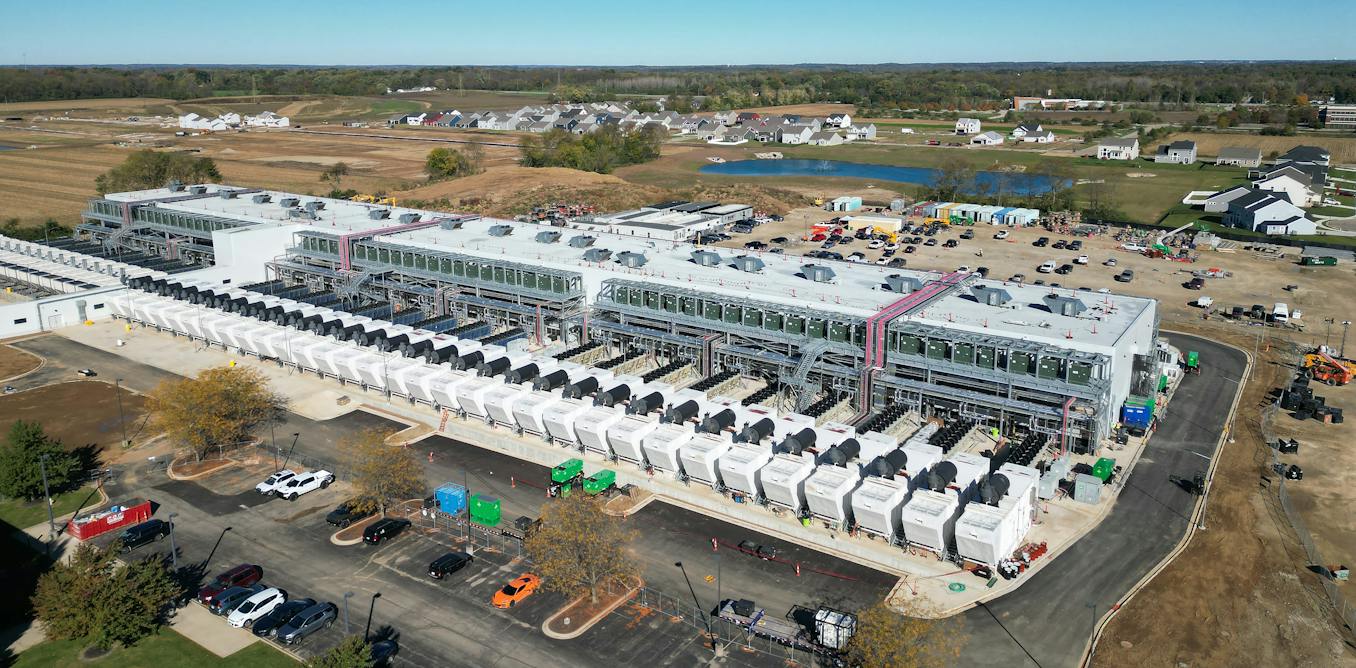
As the digital economy expands, data centers have become essential yet controversial fixtures in many communities across the United States. With substantial investments required for land, buildings, and infrastructure, communities are left wondering about the tangible benefits these facilities provide, particularly in terms of job creation. This has led to increasing opposition to their construction, delaying ambitious projects worth billions of dollars.
Despite the billions invested in new data centers, many of which employ only a handful of IT specialists and security personnel, these installations are facing resistance from local communities. Concerns about their true economic benefits are fueling opposition from states like Ohio to Texas, contributing to the postponement or cancellation of $156 billion in proposed data center projects in 2025 alone.
Researchers, including professors specializing in real estate and urban economics, have been examining whether data centers genuinely stimulate job growth in their host communities. To answer this question, a team of researchers analyzed the impact of data centers on local employment, revealing that while initial job creation is modest, significant job growth occurs in subsequent years.
Understanding Employment Growth from Data Centers
Data centers foster local job creation through several avenues beyond their direct employment. Firstly, they increase demand for services from local suppliers, such as security firms and electrical contractors. Secondly, the spending power of data center employees and supplier workers can boost local businesses, including restaurants and retailers. Lastly, the presence of necessary infrastructure may encourage existing operators to expand and new companies to enter the area.

Noah Berger/Getty Images via Amazon Web Services
Investigating Data Center Impact
Researchers compiled data on 1,584 U.S. data centers opened between 2000 and 2023, tracking their locations, opening dates, and power capacities. This was then correlated with federal employment data to discern any job growth patterns. By comparing counties with and without data centers, the study aimed to isolate the centers’ effects on local employment.
Findings indicate that while little employment change is seen in the first two years after a data center’s opening, job numbers begin to grow significantly three to five years later. Larger facilities correlate with greater employment gains, with each additional megawatt of capacity translating to approximately 7.4 nonconstruction jobs.

Brandon Bell/Getty Images
Job Growth: Industries and Areas Benefited
Most job gains occur in sectors like transportation, warehousing, professional services, and real estate, which directly serve or benefit from data centers. Surprisingly, little growth is seen in local service sectors like dining and retail. Notably, further data center investments often follow in the same counties, primarily by existing operators expanding their facilities.
Beyond Employment: Other Considerations
Although data centers can create jobs beyond their immediate workforce, the broader impact on communities remains complex. While larger data centers do not proportionally increase job numbers, their environmental and economic costs, including resource consumption and tax incentives, are significant factors. These considerations highlight the ongoing debate about the true value of data centers to local communities.