As tensions rise over dwindling water resources, a legal battle intensifies over the Colorado River cutbacks, with Arizona agencies contesting the significant reductions to their water supplies. The dispute, originally initiated by Nevada, now sees Arizona joining forces to oppose federal mandates.
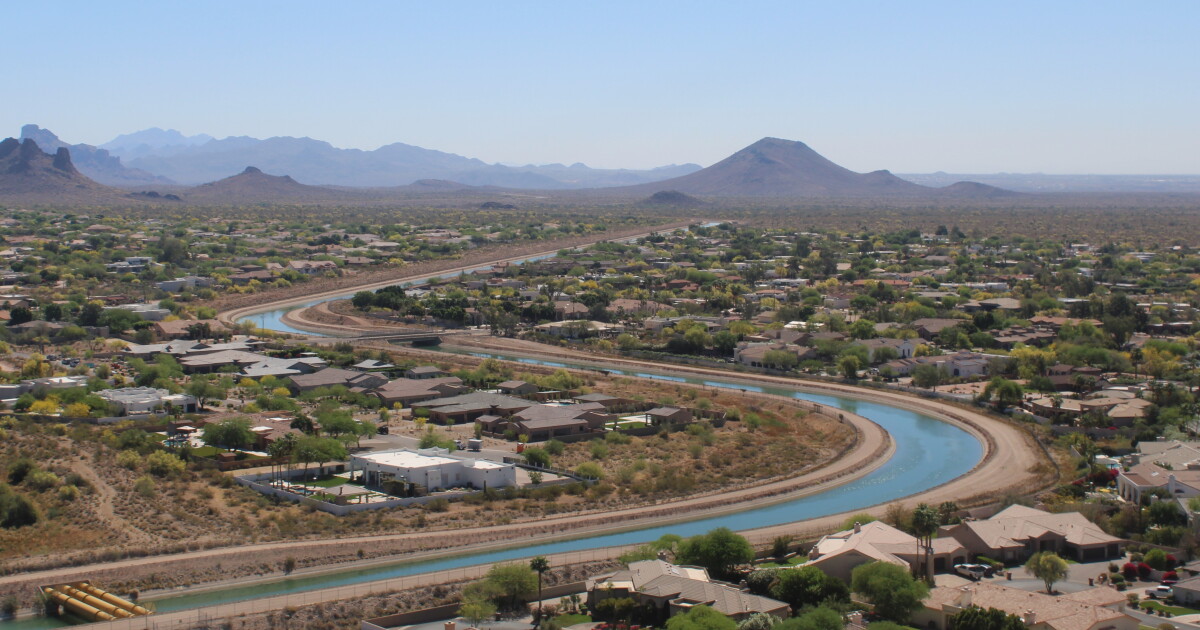
The Central Arizona Project (CAP), which manages the 336-mile canal system delivering Colorado River water to Phoenix and Tucson, has intervened in an ongoing lawsuit against the federal government. This suit, spearheaded by Nevada in August, claims that the Interior Department’s proposed cutbacks are excessively detrimental to the state’s residents and economy.
Arizona’s water department also joined the legal challenge in mid-October, arguing that federal authorities disregarded the adverse impacts on water users in Arizona, California, and Nevada when implementing new regulations potentially slashing their Colorado River allocations by up to 40%.
Under the new federal plan, CAP is expected to endure the most severe cutbacks. Its water supply could be reduced by half as early as next year, with further reductions looming over the coming decade.
The lawsuit contends that the federal government’s Colorado River water cuts are excessive and demand a revision.
The federal plan arose after attempts by the seven states sharing the Colorado River to devise a collective strategy for reducing water usage fell through. Years of negotiations aimed at addressing extreme drought conditions exacerbated by climate change ultimately failed.
Faced with the lack of a state-led compromise, federal officials unveiled their own plan aimed at safeguarding water levels at the nation’s largest reservoirs. However, Nevada, Arizona, and CAP argue that the federal strategy is both inadequate and unlawful.
“CAP has spent years negotiating with the federal government to avoid the need for this litigation,” stated Brenda Burman, CAP general manager. “Our goal has been to stay out of court, but not at the expense of defending our rights and the laws governing the Colorado River. The law should be upheld.”
Burman emphasized that the reductions disproportionately affect the canal system and the three Lower Basin states of Arizona, California, and Nevada.
While the federal proposal mandates reduced water intake for these three states, it does not enforce similar reductions for the Upper Basin states — Colorado, New Mexico, Utah, and Wyoming.
The lawsuit insists that upstream states must fulfill their legal obligation to deliver more water downstream, as stipulated by the 1922 Colorado River Compact, and criticizes the federal plan for failing to uphold this requirement.
“The federal government can’t ignore the obligations and watch the Compact be breached without any plan to bring it back into compliance and at the same time manufacture a drought for the Lower Basin,” Burman said. “Particularly, they can’t put that burden all on CAP’s shoulders.”
The lawsuit is anticipated to be a prolonged legal process, unlikely to yield a swift judicial outcome, and it does not preclude the possibility of a separate, more significant legal dispute among Colorado River states.
States might litigate against each other, potentially escalating Colorado River issues to the Supreme Court. Arizona leaders have been clear about their capacity to pursue such action. Water experts, including state negotiators, have advised against such a lawsuit, but Arizona water managers claim that upstream states’ failures to ensure adequate water delivery downstream have made it more likely.
The precise extent of the cuts for the three downstream states remains unresolved. Efforts to reach a side agreement to distribute the reductions more equitably remain stalled ahead of a January 1 deadline.
“Between the three states, everyone is still talking,” Burman said on Tuesday. “We are hopeful of having something we can announce and bring to our boards and get agreement with in the coming weeks.”
EDITOR’S NOTE: This story has been updated to correct the day CAP general manager Brenda Burman spoke to reporters.