Democrats Move to Restrict Data Centers on Public Lands Ahead of 2027 Congressional Control
Even before officially taking control of Congress in January 2027, Democrats are gearing up to address a significant campaign issue: limiting the spread of data centers. Several Democratic lawmakers have recently introduced or endorsed legislation aimed at prohibiting the development of data centers on federally owned public lands.
Efforts by President Donald Trump and Interior Secretary Doug Burgum to develop these centers as a way to circumvent local and state objections have sparked controversy. In response, Oregon Rep. Maxine Dexter introduced the Protecting Our Public Lands from Data Centers Act on November 11, stating, “These treasured lands are where people hunt, fish, hike and graze livestock. My bill keeps these lands safe from data centers now, and for the generations who come after us.” More details can be found in her press release.
Data centers, which are essential for running AI systems and other digital services, have been criticized for their substantial electricity and water usage, leading to increased utility costs in nearby areas. Residents have also raised concerns about persistent noise pollution, often likened to the hum of an air conditioning unit, as reported by The New York Times.
In many municipalities, laws have been enacted to prohibit data center development. New York is considering enacting the first statewide ban. Allowing data centers on federal lands could effectively create a loophole, enabling developers to bypass local restrictions.
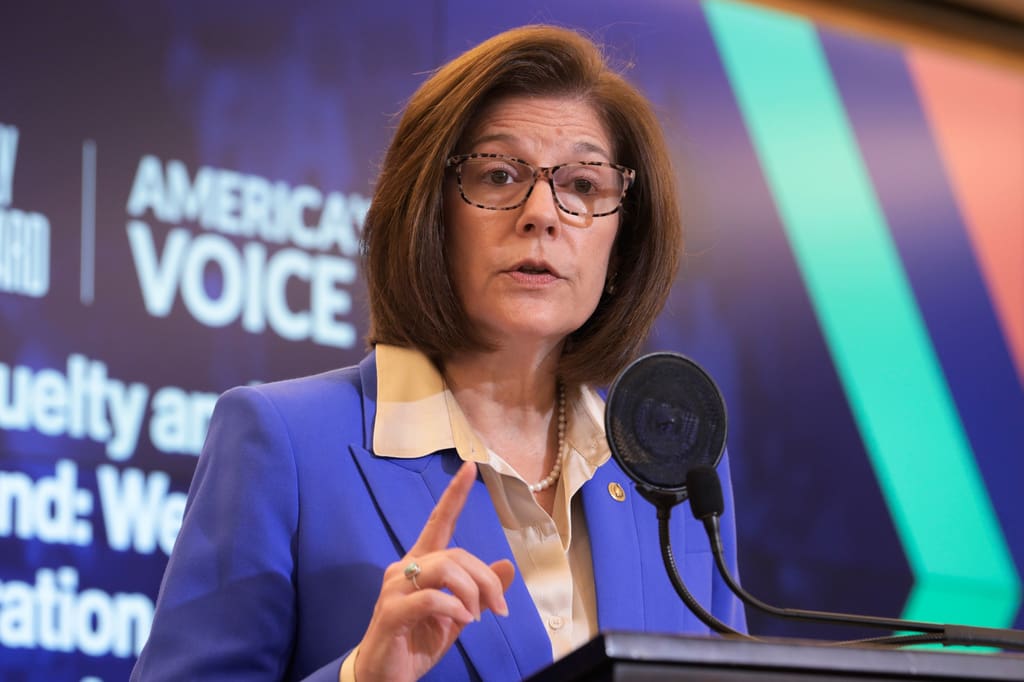
Nevada Sen. Catherine Cortez Masto criticized the administration’s approach, stating on social media, “Our public lands aren’t a piggy bank for Trump’s powerful friends.” As the incoming chair of the Senate Energy and Natural Resources Committee, she plans to introduce legislation to address these concerns.
In July, Michigan Rep. Rashida Tlaib proposed the No AI Data Centers on Federal Lands Act, though it was stalled by House Republicans. She has expressed intentions to reintroduce the bill, as noted in an interview with ProPublica.
The Democratic focus on the data center issue helped them gain significant ground in the 2026 midterms, flipping 44 House seats and nine Senate seats by November 19. Meanwhile, Republicans grappled with forming a unified stance, despite receiving substantial campaign contributions from companies like Amazon, Meta, and OpenAI, which support data center development.
Some Republican senators responded with the Ratepayer Protection Act, a bill proposing that large data centers cover their own electricity costs. However, critics argue the bill is largely symbolic, as it mandates hearings and considerations for cost-sharing without requiring implementation of standards.
Connecticut Sen. Chris Murphy criticized the bill, telling Yahoo Finance, “It’s just fakery to try to fool voters into forgetting that Republicans spent the entire term trying to stop states from regulating AI.”
According to a recent ABC News poll, 66% of Americans oppose further data center construction in the U.S., with 72% specifically against having them in their communities.