Allegheny County is set to conduct a comprehensive reassessment of all taxable properties for the first time in over a decade. Initiated by a court order in August 2026, this reassessment aims to align property values with current market conditions and is slated to start by July 1, 2027, with a completion deadline of five years.
This process could significantly alter the distribution of tax responsibilities among property owners. State anti-windfall regulations might necessitate adjustments in local tax rates to ensure the tax reassessments remain balanced and equitable, impacting individual tax bills variably.
Property taxes often perplex homeowners with terms like assessment, millage rate, and school district tax frequently mentioned yet not always understood. These factors directly influence annual tax bills. In Pittsburgh, property taxes support essential services such as schools, parks, libraries, and public safety.
Elizabeth Jane Beckett Camarata, a government finance researcher and lecturer at Penn State Harrisburg, provides insights into Pittsburgh’s property tax system.
Understanding Property Assessments
The concept of property assessment is foundational to tax calculation. Allegheny County’s Office of Property Assessments assigns a value to each property, which serves as the basis for tax computation. This assessed value may not reflect the current market price of a home.

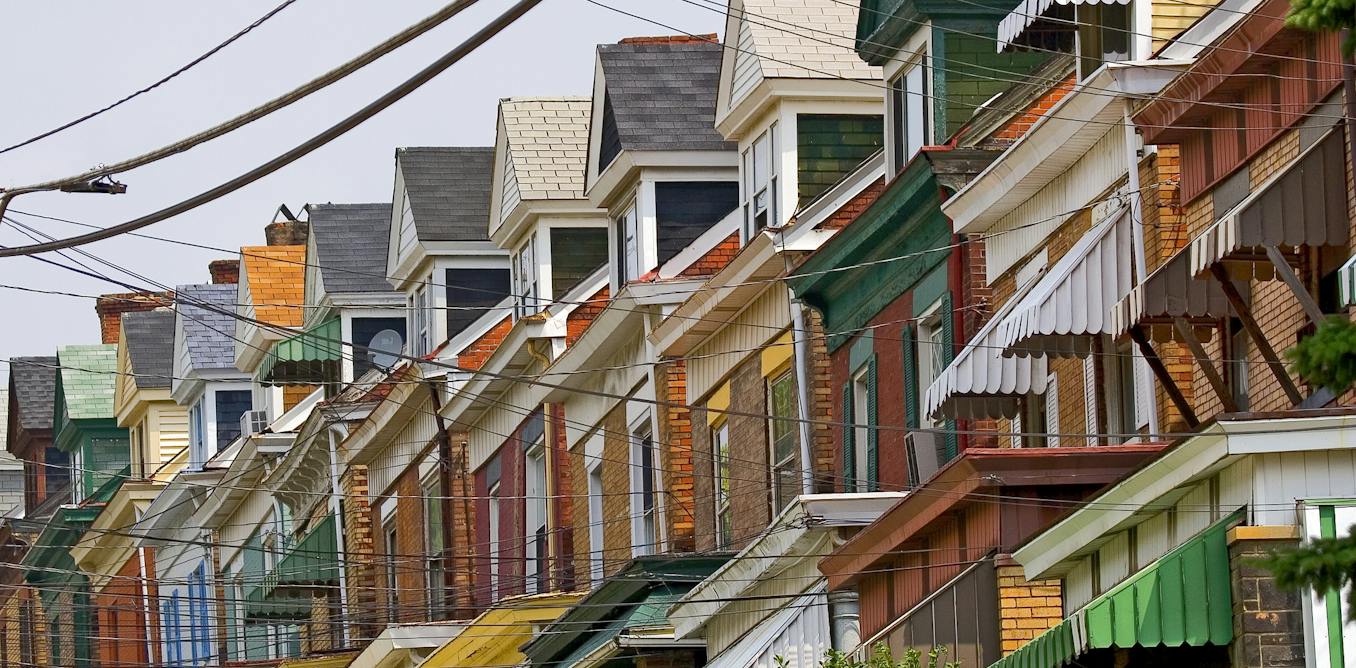
tupungato/iStock Collection via Getty Images Plus
While some places like Philadelphia assess properties at full market value, others, such as Cook County in Illinois, assess at a percentage of market value. Allegheny County assesses properties at full value but based on 2012 prices. This reassessment intends to update these values to reflect current market conditions.
Pennsylvania stands out as the only state without a mandated reassessment schedule, in contrast to other states that reassess every few years. However, Allegheny County is not the worst in the state; Butler County, for example, hasn’t reassessed since 1969.
Property assessments can be checked via the county’s real estate portal.
Decoding the Millage Rate
After assessment, local governments apply a millage rate to calculate the tax owed. One mill represents $1 of tax per $1,000 of assessed value. For example, a property assessed at $100,000 would have 100 units of $1,000.
Pittsburgh property owners contribute taxes to Allegheny County, the City of Pittsburgh, and Pittsburgh Public Schools, each with its own millage rate. In 2026, these rates total 27.307 mills, translating to approximately $2,731 annually for a $100,000 home, not accounting for exemptions or discounts.
Details on current rates can be found on the county’s property tax worksheet and the county treasurer’s millage rate page. Following reassessment, these rates will likely decrease as required by law.
School Taxes: A Major Component
School taxes often comprise the largest portion of a property tax bill in Pennsylvania, as they significantly fund public education. School tax rates vary across Allegheny County, with Pittsburgh Public Schools charging 10.457 mills, lower than many suburban districts.
The county treasurer provides a comprehensive list of school district rates.
Tax Relief Options
Homeowners may qualify for programs to reduce their tax burdens. The Allegheny County Homestead exemption (Act 50) can reduce the assessed value by $18,000 for owner-occupied primary residences, with no income limit.
Additionally, the senior citizen tax relief program (Act 77) offers a 30% reduction in county taxes for qualifying seniors. Eligibility details are available here.
Challenging Your Assessment
If a homeowner believes their assessment is inaccurate, they can appeal to the county’s Board of Property Assessment Appeals and Review. The appeal process is free and allows for presenting evidence such as comparable recent property sales.
Understanding the components of property taxes is crucial for homeowners to manage one of their significant ongoing expenses and prepare for the financial implications of the upcoming reassessment.
Read more of our stories about Pittsburgh and Pennsylvania.