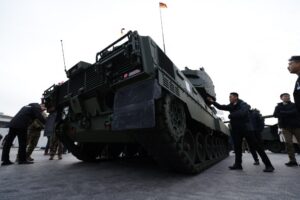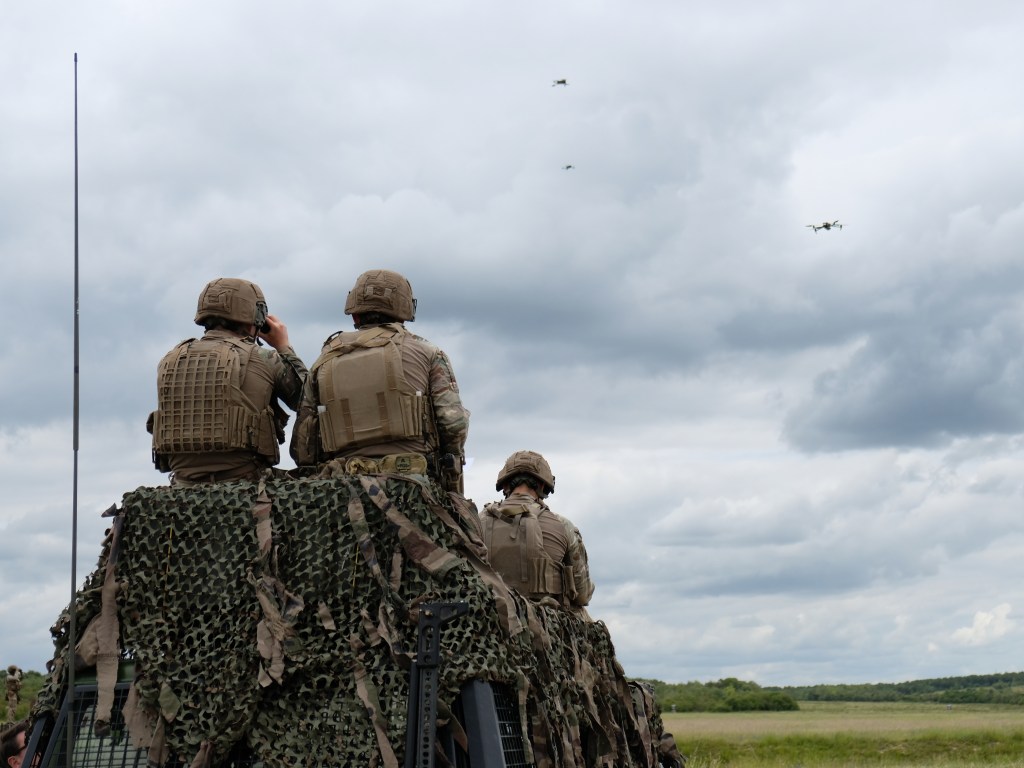
MAILLY-LE-CAMP, France — In a significant shift in military tactics, the French Army is embracing drone warfare, transforming its traditional units into advanced drone-combat formations. This evolution comes as response to modern warfare demands, with Corporal Igor being among the first to transition from operating a 105 mm gun on an armored vehicle to piloting drones.
The 21-year-old Corporal Igor has become a strike pilot in the 1st Marine Infantry Regiment’s (1er RIMa) pioneering drone-combat squadron. During a June exercise at Mailly-le-Camp, he maneuvered an FPV drone through the forest, showcasing a new era of military capability.
“We’re switching specialties, we’re keeping up with the times,” stated Igor, reflecting the regiment’s commitment to modernization. Inspired by the conflict in Ukraine, the regiment has integrated drones into its operations, leading to plans for 15 drone-combat units by mid-2027, as confirmed by Army Chief of Staff Gen. Jacques de Montgros.
The French Army has already deployed a drone-combat unit to Romania as part of Mission Aigle to reinforce NATO’s eastern defenses, with another unit slated for deployment to Poland in the coming month. “We’re really at a point of scaling up our efforts in these areas,” Gen. de Montgros reported to lawmakers.
The experimental squadron of the 1er RIMa has set a precedent for creating further tactical drone formations, providing crucial insights into NATO’s vulnerability to drone threats. During recent exercises, these drones have been instrumental in disrupting enemy movements by targeting armored vehicles and command posts.
The squadron, known as the 1st Hunter-Drone Squadron, has also collaborated with French companies to develop swarming technology and other advancements. The concept originated from a proposal by Capt. Guillaume, who emphasized the need to integrate drones beyond their traditional roles.
Cavalry Heritage
The squadron leverages its cavalry roots, designed as a mobile force using drones as its primary weapon, explained Lt. Col Remi. The regiment tested this concept during Exercise Hedgehog in Estonia in 2025, where French pilots demonstrated the impact of drones on unprepared opponents.
Maj. Sylvain noted that during a single day of combat, French drones accounted for 20% of the attrition against U.S. forces. The success of these operations prompted the French Army to officially establish the squadron, declaring it “fully operational” by April 2026.
The regiment’s collaboration with startups like Alta Ares and Icarus Swarms has enhanced drone capabilities in AI detection and autonomous piloting. During France’s Orion 2026 exercise, the squadron’s drones successfully targeted command posts and logistical convoys.
‘Quite a Bit of Damage’
FPV drones proved effective at disrupting enemy command structures. “Through the drone, we’ll seek to disrupt the enemy’s chain of command,” said Col. Aymeric Caussin. The squadron’s ability to detect and attack from a distance was evident during engagements at Orion 2026.
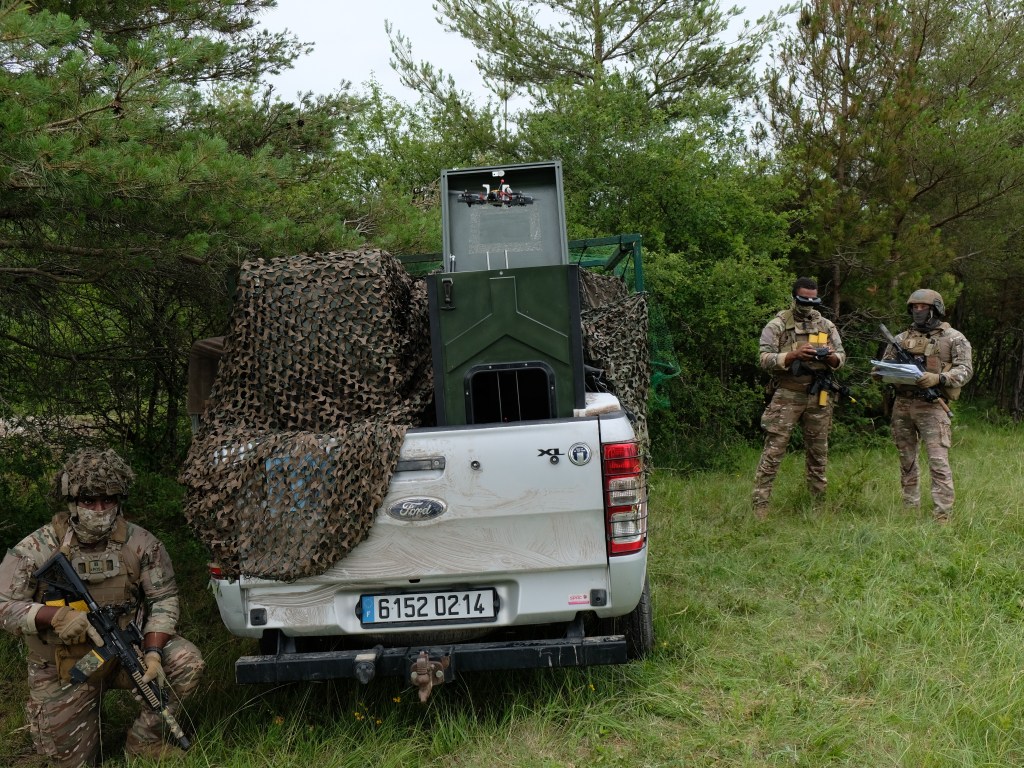
Staff Sgt. Tristan highlighted the regiment’s effectiveness but acknowledged that facing a similarly equipped adversary would present significant challenges. The 1er RIMa’s exercises have demonstrated the potential of all-drone regiments, leading to plans for five more such units by 2027, according to Gen. Bruno Baratz.
Gen. Maxime do Tran of the 6th Armored Brigade, tasked with establishing these units, noted the importance of maintaining a balance between drone pilots and traditional infantry to ensure operational success.
Drone Vulnerabilities
Despite their advantages, drones have vulnerabilities, including susceptibility to weather and electronic jamming. “We shouldn’t think that drones will make the old systems obsolete,” warned officers from the 1er RIMa, emphasizing the continued relevance of traditional military systems.
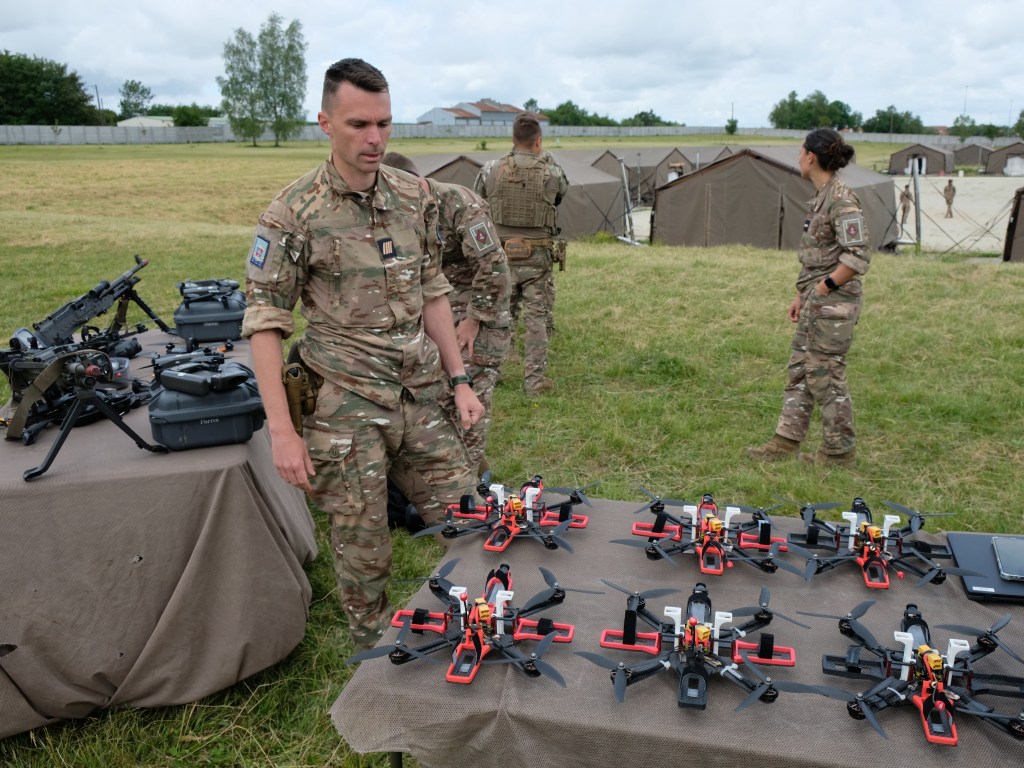
During exercises, creating a contested electronic warfare environment proved challenging, with opposing forces adapting their tactics to evade drone detection. The June exercise at Mailly-le-Camp underscored the need for further adaptation to counter drone threats.
While drones offer significant tactical advantages, the regiment recognizes the need for complementary strategies, combining traditional forces with advanced drone capabilities to achieve decisive battlefield outcomes.