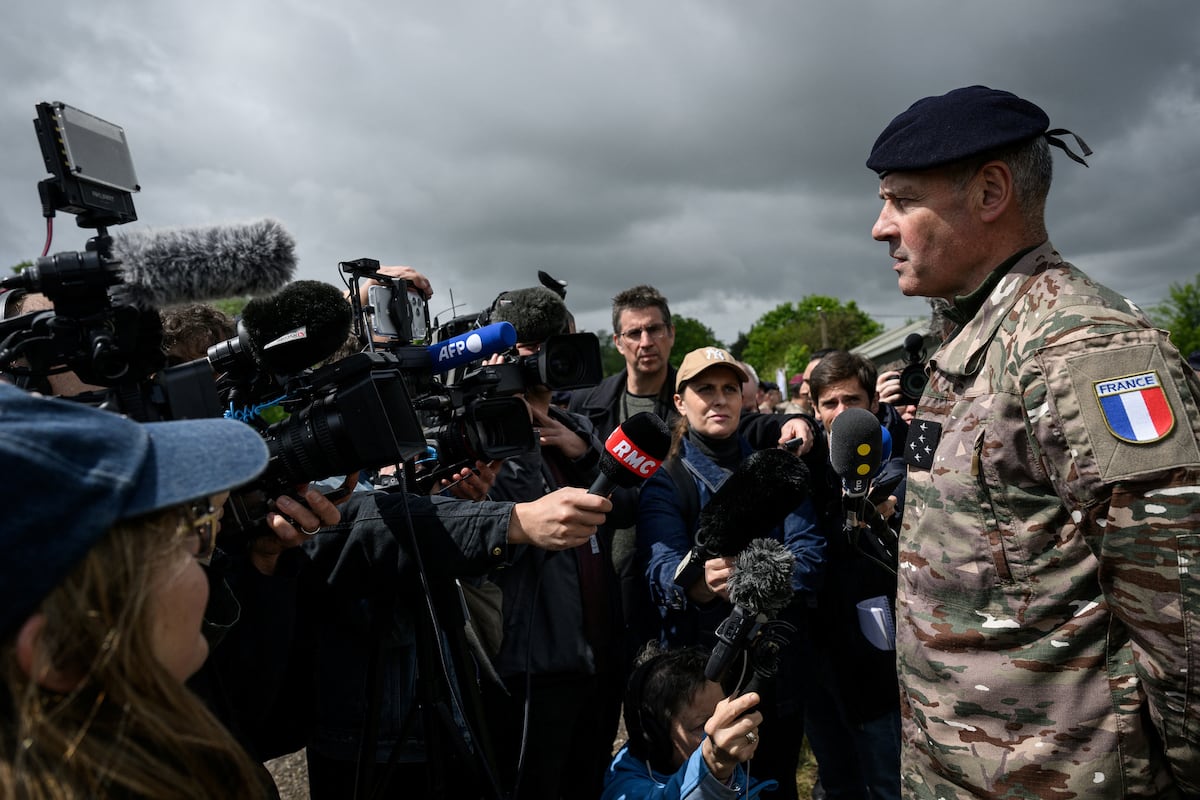
In an era where technological advancement is reshaping global military strategies, the French Army is at the forefront of this transformation. Under the leadership of Gen. Pierre Schill, appointed as Army Chief of Staff in July 2021, France is gearing up for modern high-intensity warfare, drawing vital insights from the ongoing conflict in Ukraine and integrating them into its military framework.
Innovation as a Continuous Process
As the Eurosatory defense show approaches, Gen. Schill highlights the dynamic nature of military innovation. “Innovation has become a permanent adaptation process,” he states, emphasizing the necessity for armies to continuously evolve rather than reach a static state of advancement. The French Army employs a dual strategy for innovation, combining ‘bottom-up’ agility with ‘top-down’ strategic direction.
The ‘bottom-up’ approach encourages units to adapt swiftly to operational realities, fostering tactical agility. Meanwhile, ‘top-down’ innovation involves a structured framework through the Future Combat Command, which aligns operational feedback with overarching strategic goals. Brigade exploratory hubs bridge these approaches, fast-tracking the transition from experimentation to operational capability.
Learning from Ukraine Without Over-Relaying
The conflict in Ukraine offers numerous lessons, yet Gen. Schill warns against using it as a sole blueprint for future warfare. The war underscores both the rapid acceleration of technologies like drones and AI and the persistence of traditional combat forms like trench warfare. France, as a NATO member and nuclear power, must maintain a versatile military capable of engaging in diverse strategic environments.
Adapting Training and Capabilities
France’s military training has shifted towards realism, dispersion, and dealing with modern threats such as drones and electronic warfare. The Orion 26 exercise confirmed the French Army’s strategic direction, emphasizing the importance of maintaining operational tempos and command. The focus is on enhancing lethality and battlefield transparency, with deep fires being a priority.
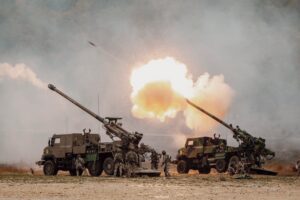
For its planned war-ready division by 2027, the French Army is concentrating on crucial capabilities such as deep fires, air defense, and electronic warfare. These capabilities, essential for maneuverability, are being prioritized in the updated Military Programming Law.
Maintaining Surprise and Operational Maneuver
Despite increased battlefield transparency, achieving surprise remains possible through speed, deception, and dispersion. Future strategies involve enhancing electronic warfare capabilities and utilizing autonomous systems to outpace adversaries. This approach aims to restore operational maneuverability, a key focus at the upcoming Eurosatory show.
Balancing Technology and Human Decision-Making
Incorporating technology, while crucial, presents challenges in decision-making. The Scorpion program, which modernizes vehicle connectivity, risks overloading systems and personnel. Gen. Schill insists on using technology to streamline rather than complicate decisions, emphasizing that the commander’s intent and initiative must remain central.
European Defense and Future Combat Systems
With the U.S. urging Europe to bolster its defense capabilities, France aims to lead as a framework nation in European land operations. The focus is on enhancing Europe’s operational coherence and mass production capabilities. Moreover, the Pendragon project highlights a shift towards integrated systems rather than isolated platforms in future combat scenarios, with robots and unmanned systems complementing traditional armored vehicles.