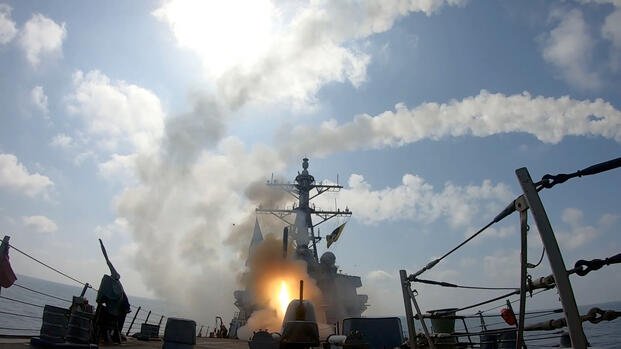
Escalating Tensions: U.S. and Israel Launch Strikes Against Iran
The Middle East witnessed a dramatic turn of events on Saturday as the U.S. and Israel jointly launched an attack on Iran aimed at significantly diminishing the country’s military strength and curbing its nuclear ambitions. According to U.S. President Donald Trump, the operation was designed to neutralize Iran’s nuclear threat. In the aftermath, reports emerged from Israeli officials indicating the death of Iran’s Supreme Leader Ayatollah Ali Khamenei, although official confirmation from Iran or the U.S. remains pending.
Intense Military Exchanges
Following the initial strikes, Iran retaliated by targeting Israeli territory and U.S. military bases located in Bahrain, Kuwait, and Qatar with drones and missiles. These hostilities extended well into the night, resulting in significant casualties. Iranian state media reported over 201 fatalities and upwards of 700 injuries, citing information from the Red Crescent.
Strategic Targets and Planning
The attacks on Iran came shortly after failed U.S.-Iran negotiations, which had seen an increased U.S. military presence in the region in hopes of securing a deal to limit Iran’s nuclear activities. The U.S. military stated that the strikes focused on Revolutionary Guard facilities, air defense systems, and other strategic military sites. Notably, one of the primary targets was a compound near Ayatollah Khamenei’s offices.
Iran’s Armed Response
Iran’s counteroffensive included missile and drone attacks aimed at Israel and U.S. installations across the Gulf region. The U.S. military reported minimal damage and no casualties at its bases, despite the barrage described as “hundreds of Iranian missile and drone attacks.” Meanwhile, Israel intercepted many of the missiles launched at it, leading to a relatively low number of injuries.
Regional Impact and International Reactions
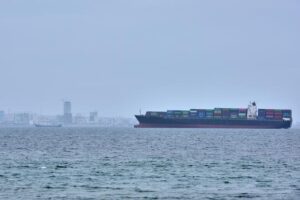
The conflict has disrupted commercial flights across the Middle East, with countries like Israel, Iran, and Bahrain closing their airspace. The situation has stranded travelers globally and may affect international markets, particularly if the Strait of Hormuz becomes unsafe for shipping. The strait is crucial for global oil transport, with a third of maritime oil exports passing through it in 2025.
Calls for Change
President Trump addressed the Iranian populace via social media, urging them to seize the opportunity to overthrow the current regime once the military operations conclude. He emphasized the strategic nature of the strikes, which went beyond nuclear concerns, referencing grievances dating back to the Iranian Revolution of 1979.
Military Build-Up and Strategic Presence
The U.S. had preemptively bolstered its military presence in the region, deploying additional fighter jets and warships, including the aircraft carriers USS Abraham Lincoln and USS Gerald R. Ford. This military build-up was part of the broader strategy to pressure Iran into nuclear compliance.
As the situation continues to evolve, the international community watches closely, anticipating further developments and potential diplomatic interventions.