In a strategic shift that underscores the evolving dynamics in the Asia-Pacific region, U.S. Army troops have intensified their engagements with long-range weaponry across the first island chain, from Balabac in the southern Philippines to Hokkaido in northern Japan. This expanded training regime, in collaboration with regional allies, reflects a concerted effort to counterbalance the growing missile capabilities of China.
With constraints from the Cold War era now lifted, the U.S. Army is advancing its missile and rocket artillery systems and pioneering new long-range platforms. This modernization effort is largely driven by concerns over China’s expanding missile arsenal, which could potentially limit U.S. military access to the Western Pacific in a conflict scenario. Exercises with Japan and the Philippines have increased in complexity and scale, highlighting mutual apprehensions about China’s military advancements.
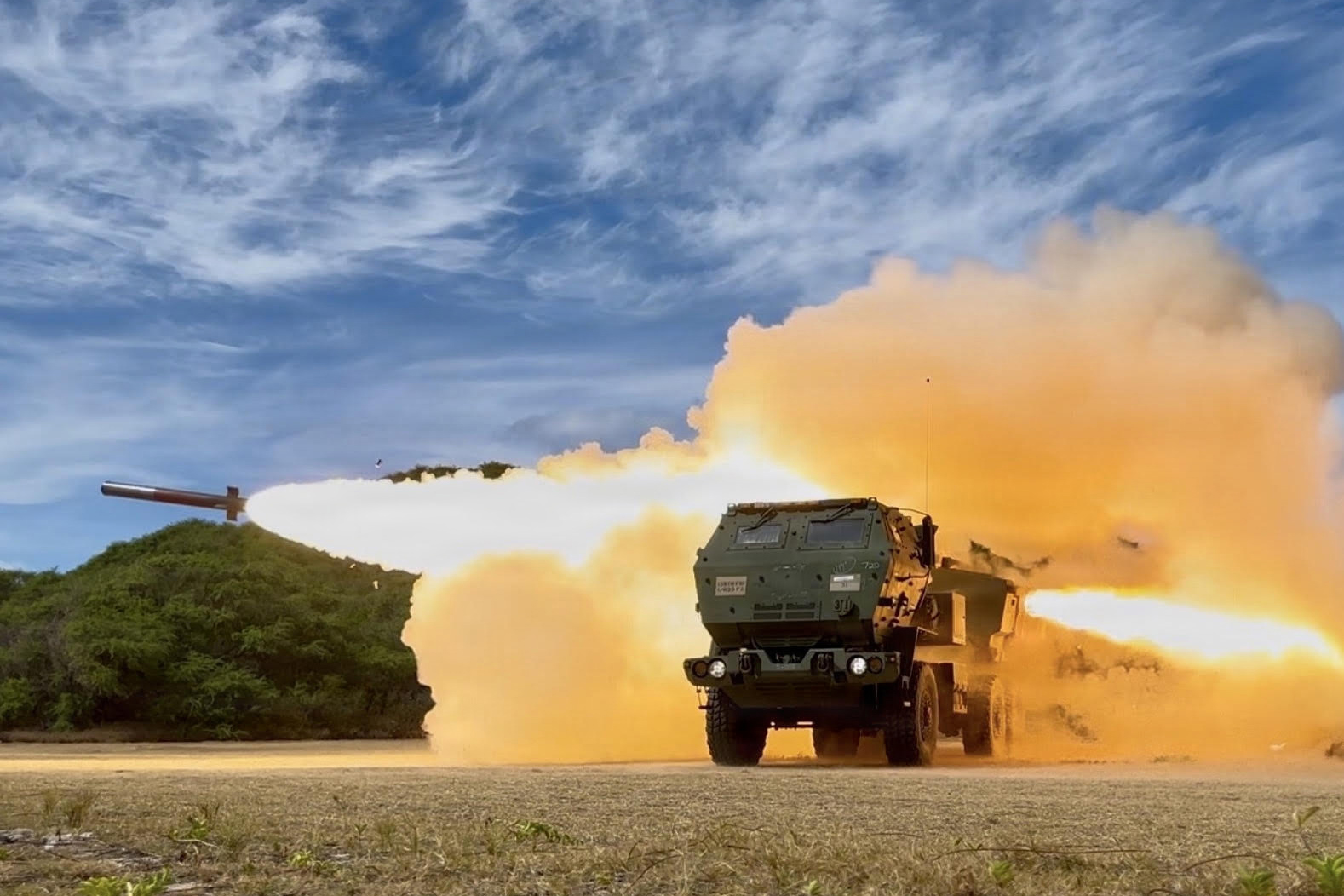
Long-range firepower has become a focal point in these collaborations, particularly through the deployment of the High Mobility Artillery Rocket System (HIMARS). Capable of executing both land-attack and maritime-strike missions, HIMARS employs guided rockets with ranges extending dozens of miles and ballistic missiles reaching several hundred miles. More information on the system’s capabilities can be found here.
Since its inaugural use in Japan in 2021, HIMARS has become a staple in U.S.-Japan exercises, notably in the recent Keen Sword exercise, where it was deployed near Taiwan. The system has a longer history in the Philippines, where it has been adapted for missions like anti-ship strikes. Recent drills have seen HIMARS positioned strategically in Palawan and Luzon, demonstrating its versatility and strategic value.
This year’s Balikatan exercise showcased the ability to maneuver HIMARS across the Philippines by various means of transport. U.S. forces successfully relocated a HIMARS to Itbayat, a mere 100 miles from Taiwan, for a dry-fire exercise, and later to Balabac Island for a live-fire drill, emphasizing the system’s operational flexibility and strategic significance in securing maritime routes.
General Ronald Clark, commander of U.S. Army Pacific, emphasized the strategic integration of forces within the first island chain as a deterrence measure. “It’s really a joint success story,” Clark remarked at a recent conference, highlighting exercises that involved rapid deployment of HIMARS from the U.S. to the Philippines, visible to adversaries, to demonstrate capability and partnership with allies.
The U.S. has also introduced the Mid-Range Capability system, known as Typhon, into the region. Typhon extends the reach of U.S. forces with its capacity to launch SM-6 and Tomahawk missiles, covering vast areas including parts of China and Russia. Its deployment in the Philippines and Japan since 2024 has allowed for extensive in-theater training, enhancing preparedness and strategic presence.
Major General Bernard Harrington underscored the importance of Typhon’s presence in the Philippines, which has facilitated ongoing training and strategic collaboration. “To be able to do that persistently forward and persistently with our ally in the Philippines and our partners is incredibly important for us,” Harrington noted, emphasizing the system’s role in bolstering regional security.
While these developments enhance tactical capabilities, they also present logistical challenges, particularly in resupplying remote island deployments. U.S. war games have highlighted these difficulties, underscoring the need for diversified and adaptable military assets to ensure sustained regional operations.
China has expressed strong disapproval of these military enhancements and exercises, viewing them as provocative. However, experts suggest that geographical and logistical constraints may limit the effectiveness of systems like HIMARS in island environments, thus impacting their strategic deterrence value.
Major General Harrington highlighted the strategic benefit of employing a mix of advanced and cost-effective weaponry to maximize operational options and safeguard personnel. “This maximizes options for the Joint Force while also enhancing the protection and survivability of our soldiers,” Harrington stated, advocating for a balanced approach to military readiness in the region.