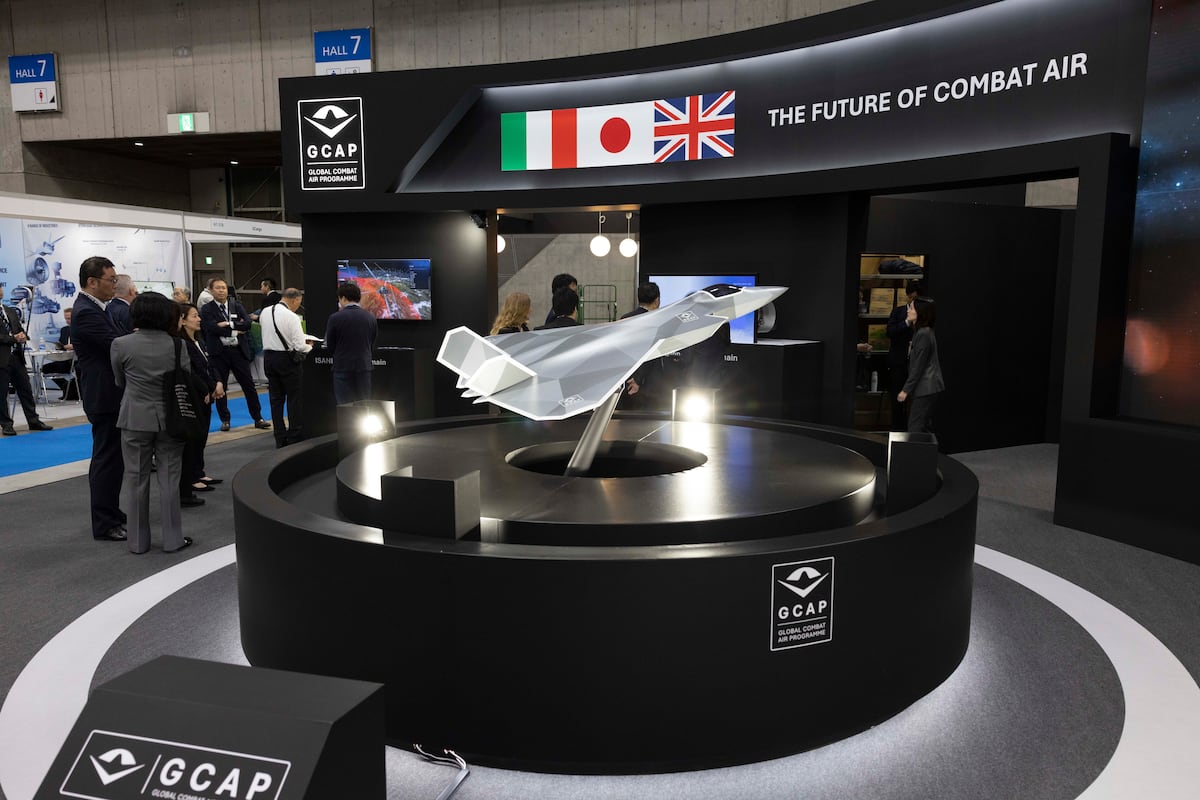
UK’s Financial Boost Revives GCAP Fighter Program
In an unexpected turn of events, the tri-nation GCAP fighter program receives a financial lifeline, ensuring its continuation just as funds were about to run dry. The UK has committed a substantial sum to the project, securing its future ahead of the Farnborough Airshow.
The UK has pledged £8.6 billion ($11.4 billion) over four years to the UK-Italy-Japan GCAP jet program. This funding was outlined in the recently published Defence Investment Plan (DIP), which came just in time as the program’s budget was nearing exhaustion.
This financial commitment allows the three nations to proceed with awarding a contract to Edgewing, an industrial consortium representing companies from the involved countries. Speaking anonymously, a source revealed the contract is expected before the upcoming UK airshow near London.
The Defense Investment Plan’s release was delayed due to internal disputes over defense funding, causing anxiety among GCAP’s partners. The program aims to have a working aircraft by 2035, but delays have been a source of concern. Earlier this year, a temporary contract was signed to keep the program afloat while the UK secured long-term financing.
A joint program office representing the three countries has since announced a £686 million development contract with Edgewing, which includes BAE Systems, Leonardo, and Japan Aircraft Industrial Enhancement Co. Ltd. (JAIEC).
On the day the DIP was unveiled, UK Prime Minister Keir Starmer, who is outgoing, managed to avert a potential crisis. “The money for the GCAP in the DIP is slightly more than the £6bn we expected,” said Francis Tusa, editor of Defence Analysis. He noted the uncertainty surrounding the funding and the frustration from the UK’s partners.
“The Italians were irritated by the U.K. delay and the Japanese even more so. I was told that the Japanese prime minister threatened to pull out of a planned visit to the U.K. before the G7 in June and go and see the French instead,” added Tusa. During a visit, Starmer had committed to securing the necessary funds.
Andy Burnham, anticipated to be the UK’s next prime minister, is expected to uphold the GCAP commitments. Following the contract with Edgewing, further contracts are anticipated to be awarded to consortia handling the jet’s electronics and propulsion.
While the funding provides temporary relief, Tusa cautioned about the ongoing risks. “The British defense ministry wanted £28 billion for the DIP and has received £15 billion, of which £4.7 billion still needs to be found in this year’s budget. Additionally, the ministry has to come up with £10.7 billion in savings. The GCAP money announced now by the U.K. will get the Italians and the Japanese off its back for now, but there are still details to be worked out,” he said.