As the United States intensifies its military endeavors against Iran, top defense officials emphasize the scale and complexity of the operations while dismissing comparisons to previous prolonged conflicts. Defense Secretary Pete Hegseth and General Dan Caine provided insights into the vast military campaign initiated under President Donald Trump’s directive, dubbed Operation Epic Fury.
Launched with significant force, the operation has seen U.S. military striking over 1,000 targets within the first day. As of the latest briefing, approximately 57 hours into the mission, the Pentagon underscores the extensive nature of this campaign, asserting that its objectives will require time to achieve.
Massive Joint Operations Underway
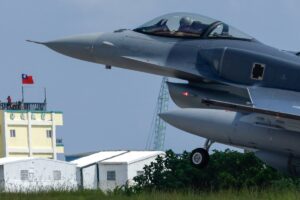
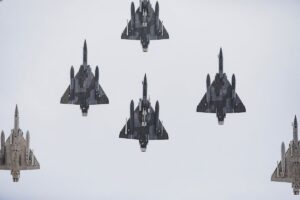
Described as one of the most complex joint operations in recent years, the initial strikes involved a coordinated deployment of more than 100 aircraft. These included fighters, bombers, and unmanned systems, all supported by refueling tankers and early warning aircraft. The U.S. Navy contributed by launching Tomahawk cruise missiles, while the U.S. Cyber Command and Space Command played crucial roles in disrupting Iranian communications and radar systems.
Objectives and Strategic Goals
The operation’s primary objectives include dismantling Iran’s offensive missile capabilities, targeting naval assets, and preventing the acquisition of nuclear weapons by Tehran. Defense leaders emphasize that this is not an endeavor for regime change or a long-term occupation, distancing it from past conflicts like Iraq and Afghanistan. “This is not endless war,” Hegseth stated, reinforcing that the operation’s scope is precise and strategic.
Operational Challenges and Developments
The campaign has witnessed the involvement of two carrier strike groups, USS Gerald R. Ford and USS Abraham Lincoln, highlighting the U.S. Navy’s readiness amid rising tensions. The loss of three U.S. Air Force F-15E aircraft underlines the operational challenges, although these were not attributed to hostile actions.
With four American fatalities confirmed, the operation has not been without cost. Hegseth acknowledged the potential for further casualties, reflecting on the inherent risks of such extensive military action. The Pentagon reported that U.S. and allied air defenses have intercepted numerous ballistic missiles and drones since the operation commenced.
Geopolitical Implications
Regional dynamics have been affected, with commercial air travel and military basing under pressure as the conflict intensifies across the Middle East. Iran’s capability to strike near the U.S. Navy’s Fifth Fleet headquarters in Bahrain has also been demonstrated, illustrating the broader implications of the ongoing hostilities.
No U.S. ground forces are currently within Iran, as confirmed by Hegseth, who refrained from discussing potential future limitations. The campaign, described by U.S. Central Command as a comprehensive air, maritime, and cyber operation, underscores the focus on regional defense integration and sustained offensive capabilities.
The War Powers Resolution necessitates presidential notification to Congress within 48 hours of initiating hostilities, with a 60-day deployment limit unless extended by Congress. As the situation develops, legislative scrutiny on the administration’s authority under this resolution is anticipated.