Addressing Water Affordability Challenges in Michigan
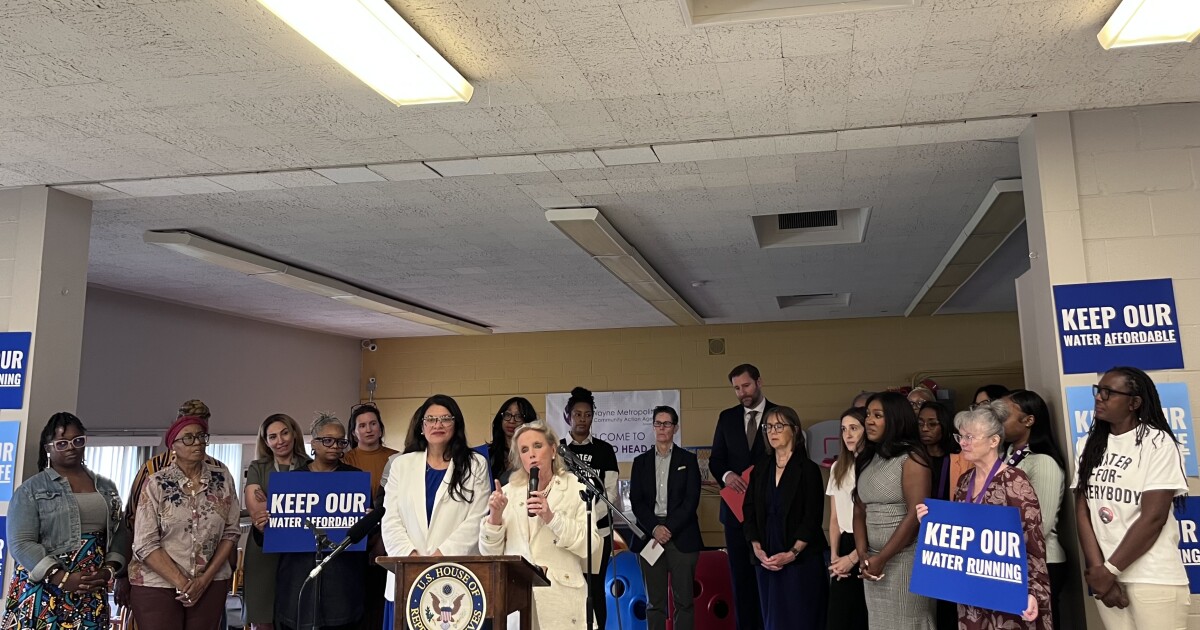
Michigan representatives Debbie Dingell and Rashida Tlaib, alongside water access advocates, have brought attention to a critical issue concerning water affordability in the state. The legislators reintroduced a bill in April aimed at establishing a permanent fund to assist with water bills for low-income individuals.
Tlaib highlighted the urgency of the situation by sharing a distressing story of a retired couple resorting to melting snow in a bucket to flush their toilet due to unaffordable water bills. This prompted her to take action to prevent such inhumane situations from occurring.
A recent study by researchers at the University of Michigan revealed a concerning trend of rising water costs across the state, coupled with a decline in federal investment in water systems. This has led to financial hardships for many residents, with the city of Highland Park facing potential bankruptcy in 2023 due to outstanding water bills.
With inflation rates on the rise, low-income and fixed-income individuals in Michigan may struggle to keep up with their water bills. While federal assistance programs exist for energy bills, there is currently no permanent solution in place for water bills.
Tlaib and Dingell advocated for a temporary water bill program during the pandemic, which helped over 30,000 households in Michigan maintain access to running water. However, the funds for this program have been depleted, underscoring the need for a sustainable long-term solution.
The representatives are working to secure support for their bill, aiming to address the issue through the EPA budget. While the timeline for passing the measure remains uncertain, bipartisan backing for water assistance funding is evident.
Ensuring access to clean and affordable water is essential for the well-being of all residents. Dingell emphasized the importance of preventing individuals from having to choose between paying water bills and meeting other basic needs, highlighting the critical nature of the proposed legislation.