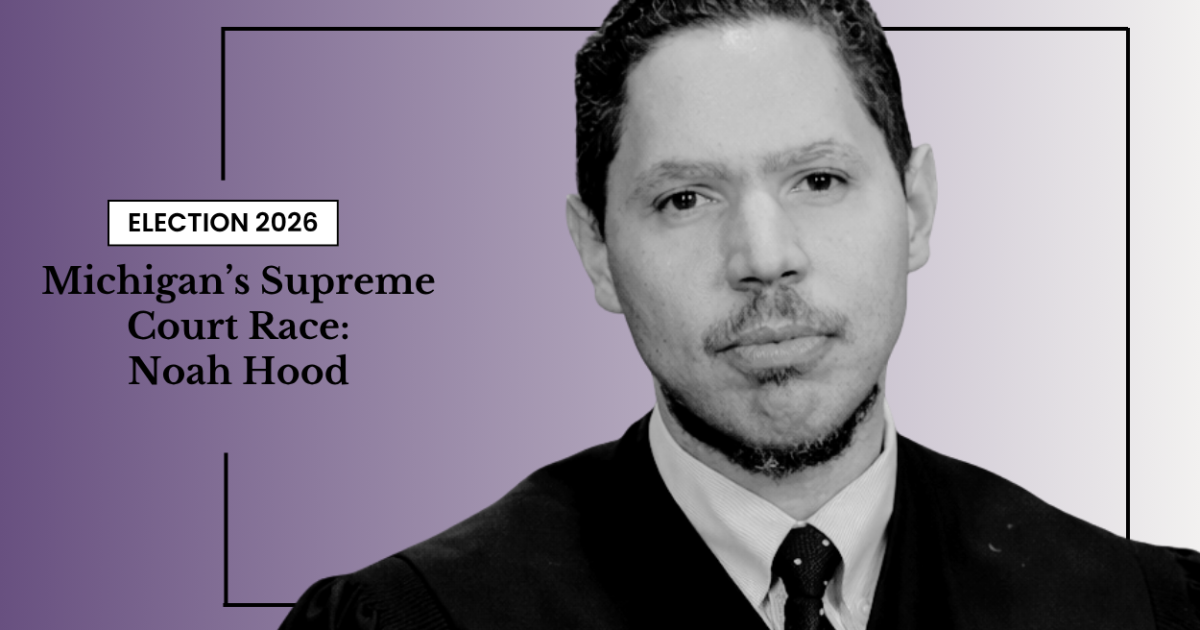
Michigan Supreme Court Justice Candidate, Noah Hood, Shares Judicial Philosophy and Experience
In the upcoming November elections in Michigan, voters will have the opportunity to choose two justices to serve on the state Supreme Court. Among the candidates is Justice Noah Hood, who was appointed to the court in May of 2025 to fill a vacancy. Now, Hood is running for a full eight-year term on the court.
Recently, Hood sat down with Michigan Public’s Morning Edition host Doug Tribou to discuss his background, judicial philosophy, and approach to cases.
Judicial Philosophy and Approach
When asked about his judicial philosophy, Hood emphasized his fact-based approach, stating, “I’m not super ideological… if pressed on my ideology, I would say I’m fact-based, a strict adherence to the facts.” He highlighted a case from his time on the Court of Appeals involving a disabled child and stressed the importance of making the right decisions, even when not under public scrutiny.
With a background as an assistant United States attorney focusing on fraud and white-collar crime cases, Hood emphasized the importance of treating everyone with dignity and respect, drawing from his experience of dealing with individuals on their worst days.
Addressing Concerns of Partisan Imbalance
Regarding concerns about the perceived imbalance on the court with a majority of justices supported by the Democratic Party, Hood encouraged individuals to read the opinions, emphasizing that decisions are more nuanced and not strictly based on partisan lines. He cited examples of split opinions, such as the Eli Lilly case, to illustrate the diversity of perspectives on the court.
When asked about the number of unanimous decisions and the perception of avoiding controversial cases, Hood dismissed the notion, stating, “We don’t have the luxury of that capacity to do work on a pitty pat case.”
As Michigan voters prepare to cast their ballots, candidates like Justice Noah Hood provide insight into their judicial approach and experiences, shaping the future of the state Supreme Court.
The Michigan Supreme Court Justice, Bridget Mary McCormack, recently shed light on the court’s selection process for cases brought before them. McCormack explained that the court receives between 1700 to 2000 applications for leave to appeal annually but only hears about 100 cases, ultimately writing opinions on around 50 of them. The cases that are chosen are those deemed to be jurisprudentially significant, meaning they have a substantial impact on legal principles or precedents.
McCormack emphasized the importance of selecting cases that serve as the best vehicle for addressing key legal issues. This involves considering factors such as representation, ensuring that cases are presented effectively to address core legal questions. The goal is not to manipulate outcomes but to facilitate a thorough examination of the relevant legal issues.
In discussing the court’s administrative role, McCormack highlighted the significance of specialty courts that focus on addressing underlying causes of criminal behavior, such as addiction or PTSD. She specifically mentioned the success of veteran’s treatment courts in aiding individuals and saving costs within the legal system. McCormack expressed a commitment to supporting and potentially expanding these programs in the future.
Overall, McCormack’s insights provide a glimpse into the Michigan Supreme Court’s meticulous case selection process and its dedication to improving the legal system through specialized court programs. By prioritizing cases of jurisprudential significance and advocating for effective treatment initiatives, the court aims to uphold justice while addressing societal challenges.