President Trump’s Push for the SAVE America Act
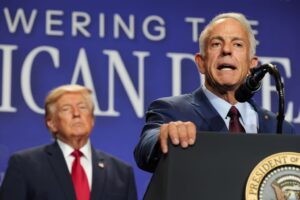
President Trump’s recent decision to cancel the signing of a bipartisan housing cost reduction bill in favor of the SAVE America Act has sparked controversy and debate. The SAVE America Act, a piece of legislation that requires proof of citizenship to register to vote and photo identification to cast a ballot, has been a focal point of Trump’s agenda in recent months.
What is the SAVE America Act?
The SAVE America Act is a bill that aims to tighten voter registration and identification requirements to ensure the integrity of elections. Here are some key points of the legislation:
1. Proof of Citizenship
The SAVE America Act mandates that individuals provide documentary proof of U.S. citizenship to register to vote in federal elections. This requirement includes presenting U.S. passports, birth certificates, or certain state and tribal IDs. Critics argue that this could disenfranchise eligible voters who may not have immediate access to these documents.
2. Photo ID Requirement
Under the bill, voters must show valid forms of identification, including a photo ID, to cast a ballot in person. Additionally, individuals voting by mail must include a copy of a valid photo ID with their ballot. Those unable to provide a photo ID can use the last four digits of their Social Security number.
3. Removal of Noncitizens from Voter Rolls
States are required to actively remove noncitizens from their voter rolls under the SAVE America Act. While states already conduct routine checks on voter registrations, this provision aims to address concerns about noncitizen participation in elections.
4. Submission of Voter Rolls
The bill mandates that states submit complete and unredacted voter registration lists to the Department of Homeland Security through the SAVE system. This requirement has raised privacy concerns, prompting some states to push back against providing sensitive voter data.
Despite Trump’s fervent support for the SAVE America Act, the bill faces challenges in the Senate, with the lack of necessary votes hindering its passage. Critics point to the bill’s potential impact on voter access and privacy rights, while supporters argue that it is essential for safeguarding the integrity of elections.
Original News Article:
Study Finds Link Between Social Media Use and Mental Health Issues
A recent study conducted by researchers at a leading university has found a concerning link between excessive social media use and mental health issues. The study, which involved over 1,000 participants, revealed that individuals who spent more than two hours a day on social media platforms were more likely to experience symptoms of depression, anxiety, and loneliness.
The researchers noted that the constant comparison with others, cyberbullying, and the fear of missing out (FOMO) were some of the factors contributing to the negative impact of social media on mental health. They urged individuals to be mindful of their social media use and consider taking breaks or setting limits to protect their well-being.
In light of these findings, mental health experts are calling for more awareness and education around the potential risks of excessive social media use. They emphasize the importance of promoting a healthy balance between online and offline activities to safeguard mental health.
New Article:
Understanding the Impact of Social Media on Mental Health
In a recent study conducted by researchers at a prominent university, a concerning link between social media use and mental health issues has been uncovered. The study, which surveyed over 1,000 participants, revealed that individuals who spent more than two hours per day on social media platforms were more likely to experience symptoms of depression, anxiety, and loneliness.
Factors such as constant comparison with others, cyberbullying, and the fear of missing out (FOMO) were identified as contributors to the negative impact of social media on mental well-being. Experts recommend individuals to be mindful of their social media usage and consider taking breaks or setting limits to protect their mental health.
Mental health professionals are now advocating for increased awareness and education on the potential risks associated with excessive social media use. They stress the importance of establishing a healthy balance between online and offline activities to safeguard mental well-being.