Navigating Uncharted Waters: The Colorado River Plan Standoff
As the deadline for a critical Colorado River water-sharing plan looms, seven western states are struggling to reach a consensus. Persistent disagreements have left the states repeating familiar arguments, with the possibility of a federal intervention hanging in the balance.
The federal government plans to announce a strategy for distributing the dwindling water supply by mid-summer, but Colorado, Utah, Wyoming, New Mexico, Arizona, California, and Nevada remain divided. The absence of a unified proposal threatens to trigger legal battles between the states and federal authorities.
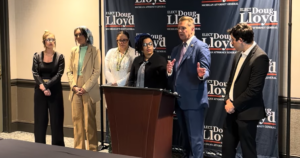
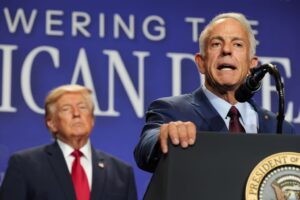
Typically reticent to present a united front, representatives from the seven states took the stage at a water policy conference in Boulder, Colorado. Colorado’s Becky Mitchell and Nevada’s John Entsminger addressed a gathering of policy experts, while Arizona’s top water official, Tom Buschatzke, attended but did not speak.
“I hope you know we’ve been called failures,” Mitchell shared candidly about the stalled negotiations. “Just last night, I think we were called failures, all seven of us. Not one of us, not one state, not just the feds, or just the states. We’re called failures.”
Colorado, Utah, Wyoming, and New Mexico have yet to propose voluntary water usage cuts. In contrast, their southern counterparts — Arizona, California, and Nevada — have offered some reductions.
Entsminger advocates for a pragmatic approach to river management, suggesting that a proposed plan to implement significant water cuts in central Arizona could be a workable temporary solution. “There’s a reasonable, rational operating plan for the next two-plus years right in front of our face, and we should take that,” he emphasized. “Ultimately, that’s probably the best way to operate the river, and to keep us out of court until 2029.”
However, Mitchell expressed reservations about the proposal, cautioning that frequent renegotiations could lead to future disputes. “As we move forward,” she noted, “I hope that we can answer the question, not are we building a series of band aids, but are we building some sort of certainty and resilience for the basin and for the future?”
The prospect of impending litigation looms large, as negotiators struggle to devise an agreement that would preclude court intervention. The idea of introducing a mediator to the proceedings has been considered. Entsminger suggested a tri-mediator system, with one mediator chosen by the upstream states, another by the downstream states, and a third selected by the initial two.
Meanwhile, the ongoing stalemate is complicating water management plans for Mexico, which relies on decisions made upstream. Carlos de la Parra, a former advisor in U.S.-Mexico water negotiations, lamented, “Have you ever wondered what it does to the presence of Mexico in the internal argument of the states? It might be like you get invited to someone’s home, and you sit down and dinner is not ready because there’s an argument going on in the family.”
In response, Mexico has been using this period of uncertainty to refine its strategies for managing a potentially drier future.