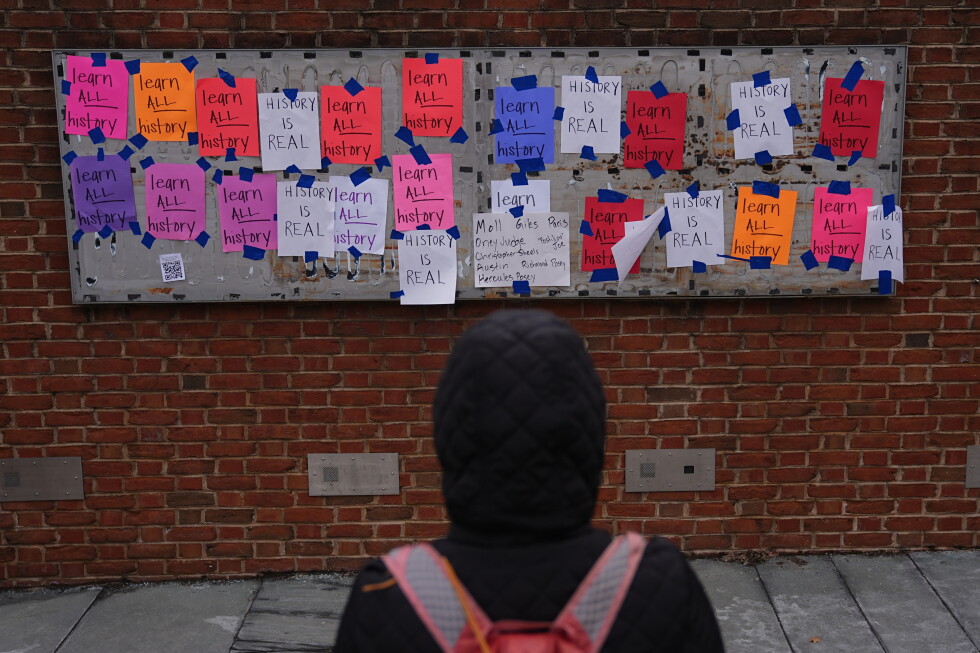
Federal Appeals Court Allows Replacement of Slavery Exhibit at Historic Philadelphia Site
In a significant decision impacting the President’s House Site in Philadelphia, a federal appeals court has given the green light for the Trump administration to substitute the current slavery exhibit. This ruling overturns a previous injunction that required the National Park Service to preserve the original interpretive panels.
The 3rd U.S. Circuit Court of Appeals, in a unanimous decision, found that the prior court misinterpreted the city’s contractual claims related to the Independence National Historical Park. The judges asserted that while Philadelphia had standing to sue, it did not validate the city’s arguments. The panel commended the proposed new exhibit, describing it as rich in historical context, despite criticisms suggesting it might present a sanitized version of history.
Notably, this decision follows a Massachusetts federal judge’s directive for the Trump administration to reinstate changes made to several sites under an executive order aimed at preventing content that “inappropriately disparages Americans past or living” from being displayed at the nation’s landmarks. The federal government is currently appealing that decision.
There is ambiguity surrounding how the Massachusetts ruling might influence the situation in Philadelphia, where restoration efforts on the existing exhibit had already partially commenced before being halted in February.
Efforts to obtain comments from the Department of Interior and the National Park Service have not been successful.
Philadelphia’s Mayor Cherelle Parker expressed determination to contest the ruling, stating on Instagram, “We cannot and WILL not rest until the full story of American history – including the existence of Slavery at the President’s House here in Philadelphia – is told, for our Nation and the World to see.”
Dawn Chavous, with the Avenging the Ancestors Coalition, a group integral to the exhibit’s development, voiced disappointment but indicated they are exploring legal recourse. The coalition maintains their steadfast commitment to ensuring the stories of enslaved African descendants are accurately represented.
“For decades, ATAC has worked to ensure that the stories of the enslaved African descendants who lived and labored at the President’s House are not erased, overlooked, or misrepresented,” the group emphasized in an emailed statement. “That commitment remains unwavering. We believe that historical truth matters, and we will continue to advocate for the protection, preservation, and accurate interpretation of this important chapter of American history.”
The conflict began when Philadelphia initiated legal action in January against the National Park Service’s choice to remove explanatory panels from the President’s House Site, a decision influenced by an executive order from President Donald Trump. This site, where George and Martha Washington resided with enslaved individuals, was collaboratively developed by the city, federal government, historians, and private partners, with Philadelphia contributing $1.5 million.
The city contended that any alterations to the site should involve consultation with local authorities. However, Justice Department attorneys argued that the administration holds exclusive rights over content decisions within National Park Service properties. The appeals court clarified that the maintenance clause in the contract does not imply a perpetual obligation to retain the current exhibit layout.
The opinion stated, “The duty to ‘maintain’ is better understood as a general management obligation that accompanies ownership, not a promise that the exhibits will forever remain in place regardless of the owner’s wishes.”