Haitian Entrepreneur Embraces New Life in Tijuana Amidst Birthright Citizenship Debate
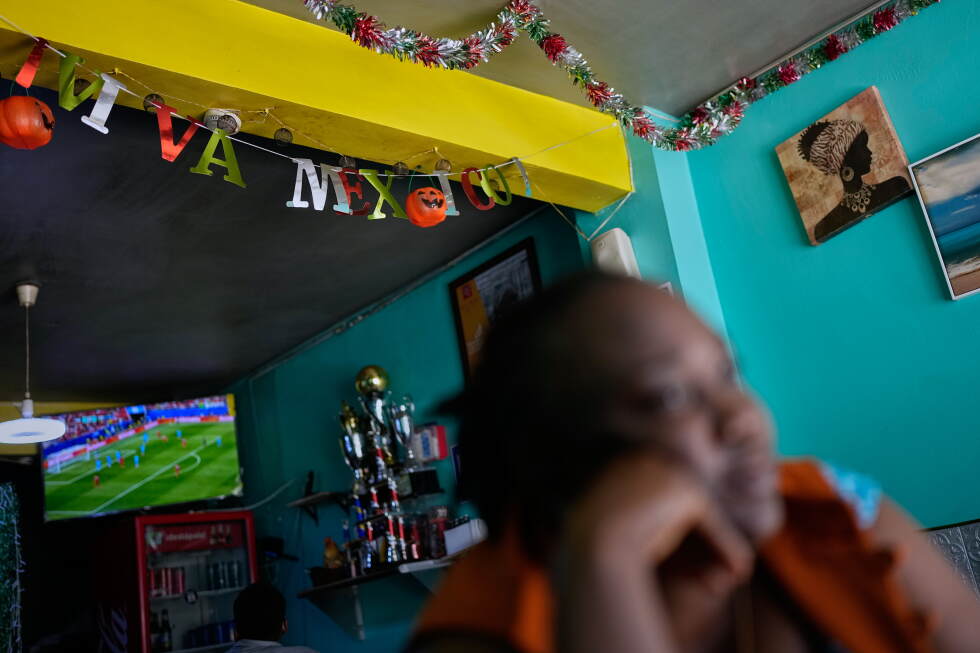
In the heart of Tijuana, just a short stroll from the towering U.S. border wall, Vivianne Petit Frere has found a new home. Her Haitian restaurant, Lakou Lakay, embodies her journey from Haiti, via Brazil, to Mexico. The name translates to “home” in Haitian Creole, symbolizing the roots she has planted in her adopted country. Her granddaughter, born two years ago, is a Mexican citizen, reflecting a deep connection to the land.
Similar to the United States, Mexico offers citizenship to children born on its soil, contradicting claims by former President Donald Trump that the U.S. is unique in this practice. Trump has attempted to end birthright citizenship for children of undocumented or temporarily legal immigrants. The U.S. Supreme Court is expected to evaluate the legality of his order soon.
Trump remarked on Truth Social, “We are the only Country in the World STUPID enough to allow ‘Birthright’ Citizenship!” However, approximately 36 countries, mainly in the Americas, including Canada, Brazil, and Mexico, offer automatic citizenship to those born within their borders.
Petit Frere’s journey from Haiti started in 2019, traversing the Panamanian jungle to reach Mexico. Her initial goal was to join relatives in Florida, but she found Mexico to be more welcoming. Lakou Lakay, her restaurant, is a cultural hub showcasing not just Haitian cuisine like fish with plantains but also promoting cultural exchange, as one sign in the restaurant reads: “Every dish tells a story, every detail connects cultures.”
Petit Frere’s efforts have borne fruit over the past five years. She runs a successful business, speaks fluent Spanish, and is pursuing a degree in social work. Her family has grown with her granddaughter Alexca, a symbol of her Mexican legacy.
Birthright Citizenship Across the Americas
The principle of birthright citizenship in the U.S. was solidified post-Civil War with the 14th Amendment, ensuring citizenship for former slaves and their descendants. This right was further extended to children of immigrants in the late 1800s. The concept has roots as far back as the colonial era, where European settlers wanted their American-born children to retain European citizenship, as explained by César Cuauhtémoc García Hernández, a law professor at Ohio State University.
Challenges to Birthright Citizenship
In contrast, the Dominican Republic rescinded birthright citizenship in 2007 for children of parents without legal status, applying the policy retroactively, leaving thousands stateless. Despite international backlash and legal adjustments in 2014, many remain without citizenship today, according to the Center for Migration Studies of New York.
Petit Frere, who was born in French Saint Martin where automatic citizenship isn’t granted, was deported to Haiti with her mother at a young age. She has since established a life in Mexico, where her permanent residency was secured before her granddaughter’s birth. Her community involvement as an organizer with the Haitian Bridge Alliance highlights her advocacy for fellow immigrants.
Petit Frere notes the benefit of her granddaughter’s Mexican citizenship, which provides more opportunities and ease of travel compared to a Haitian passport. Her sentiment is echoed in her community, where many Haitian parents have gained residency through their Mexican-born children.
She is working towards Mexican citizenship to further her business and educational aspirations, highlighting the potential of immigrant communities. As she puts it, “The children of immigrants are proving to be the most outstanding in the world.”