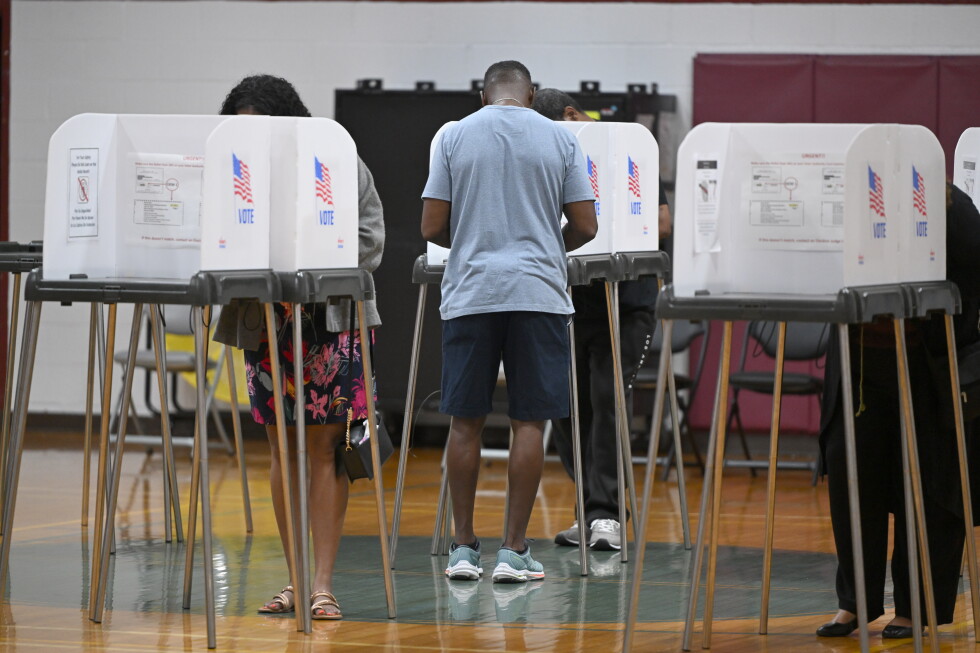
In a significant legal ruling, a federal judge has halted the implementation of a major election-related executive order put forth by President Donald Trump. This order, which aimed to enforce stricter voter registration requirements, has been at the center of a contentious legal battle.
On Wednesday, U.S. District Court Judge Denise Casper in Boston ruled against President Trump’s administration, permanently barring the enforcement of most elements within his executive order on elections. Among the contested provisions was a requirement for registrants to provide documentary proof of citizenship when signing up to vote. This decision follows a preliminary injunction issued by Judge Casper a year prior, which had temporarily suspended many of Trump’s proposed election reforms.
Judge Casper dismissed the administration’s assertion that the legal challenge was premature since the rules had not yet been enacted. She emphasized that the U.S. Constitution grants the power to regulate elections to states and Congress, not the President. “The Constitution does not grant the President any specific powers over elections,” Judge Casper wrote, highlighting the separation of powers issue at the heart of the case. This ruling is a significant setback for Trump’s efforts to overhaul voting regulations.
Democratic Response to the Ruling
The ruling has been met with approval from Democratic state attorneys general who filed the lawsuit. New York Attorney General Letitia James expressed gratitude for the court’s intervention, stating that the decision prevents an “unconstitutional attempt to seize control of our elections.” She further emphasized the importance of safeguarding voting rights, especially during the midterm elections.
California Attorney General Rob Bonta, representing the lead plaintiff state, echoed these sentiments, acknowledging the ruling as a reaffirmation of states’ rights to set election rules. “We are clear-eyed that President Trump’s attacks on voting rights and our elections show no signs of slowing down,” Bonta stated, vowing to continue the fight for voting rights.
Conversely, a spokesperson for the White House defended the executive order, arguing that it lawfully protects election integrity. While the administration can appeal the ruling, the spokesperson expressed confidence that they would ultimately prevail.
Trump’s Continued Legislative Efforts
Despite this setback, President Trump has continued to pursue changes to voting laws through legislative means. Following the initial executive order, Trump signed another directive to establish a national voter list and impose restrictions on mail balloting, which is also facing legal challenges.
Moreover, the President is advocating for the passage of the SAVE America Act in Congress, which mandates proof of citizenship for voter registration. While the Act has passed the House, it remains stalled in the Senate, prompting Trump to push for the removal of the filibuster that impedes the legislation.
Challenges of Implementing Proof-of-Citizenship Requirements
The demand for documentary proof of citizenship is not without complications. A study by the University of Maryland in 2025 estimated that over 21 million eligible voters may lack easy access to such documentation. This includes a significant portion of both major political parties and unaffiliated voters. The process of obtaining necessary documents such as passports or birth certificates can be time-consuming and costly, potentially disenfranchising eligible citizens.
Previous attempts to enforce similar requirements have led to substantial numbers of voter registrations being blocked, as seen in Kansas 15 years ago. While the narrative of widespread noncitizen voting persists among some Republican circles, evidence suggests that such occurrences are rare and already punishable by law.
“`