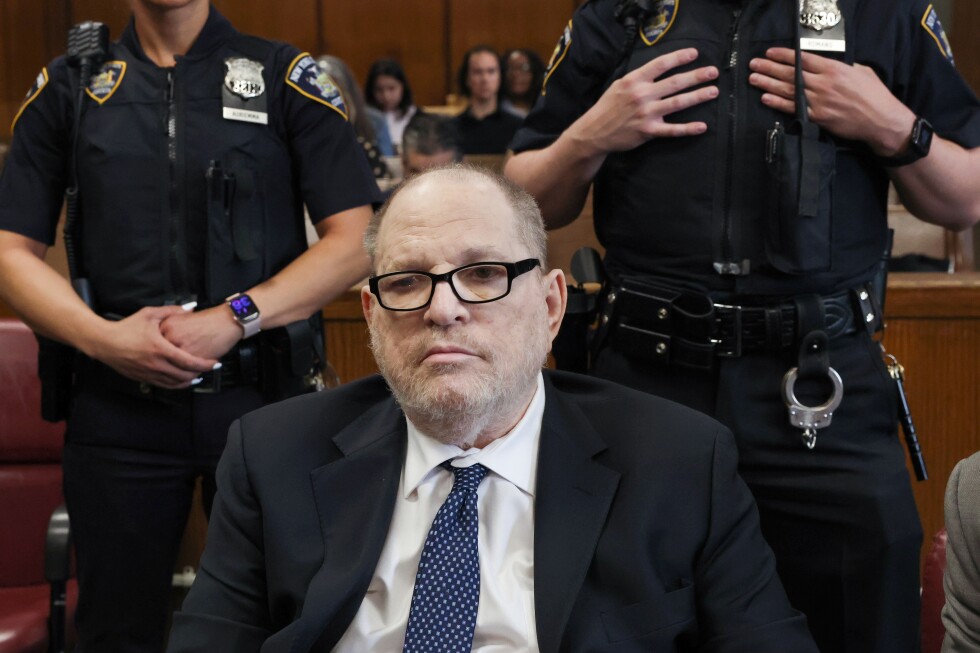
In a high-profile legal battle that has become emblematic of the #MeToo movement, Harvey Weinstein’s retrial on rape charges ended in another mistrial. The jury’s inability to reach a unanimous decision marks the third time this case has gone to trial.
The former Hollywood mogul, already behind bars for other sexual assault convictions, faces uncertainty regarding the New York rape charge. The prosecution is currently deciding whether to proceed with a fourth trial, following a jury split where nine members leaned towards acquittal.
Weinstein, 74, reportedly expressed satisfaction with the outcome via his legal team. Marc Agnifilo, his attorney, stated, “Maybe it’s not the win that he wanted, but it’s a win, and we’re going to keep fighting.” Agnifilo believes the defense has a strong chance if the case is retried.
The Manhattan jury, comprising a majority of men, deliberated on whether Weinstein raped Jessica Mann, an actor and hairstylist, an incident his lawyers argue was consensual. The alleged rape occurred in 2013 during a complicated relationship with Mann.
After the jury declared themselves deadlocked, Judge Curtis Farber called a mistrial. Some jurors cited inconsistencies in Mann’s testimony as a key factor in their decision-making process.
Jurors’ Perspectives
Juror Josh Hadar, 57, noted gaps in Mann’s memory during cross-examination. “The prevailing thought was that the witness had a lot of inconsistencies in her story,” he remarked, supporting acquittal due to reasonable doubt. Another juror, Sarae Perez, 25, who has studied feminism and #MeToo, echoed concerns about Mann’s credibility.
Mann’s Response and Future Steps
Mann maintains her stance, stating the mistrial doesn’t negate “the truth I told.” She emphasized her right to justice despite public scrutiny. Manhattan District Attorney Alvin Bragg commended her “perseverance and bravery,” and prosecutors will consult with her on whether to retry the case next month.
Background of the Case
Once a powerful force in Hollywood and a significant Democratic donor, Weinstein’s career and personal life unraveled following revelations of sexual misconduct in 2017. These revelations catalyzed the #MeToo movement, leading to his criminal charges in New York and Los Angeles. While he has been convicted of some charges, others, like Mann’s accusation, persist.
Weinstein was convicted on this charge in 2020, but the verdict was overturned on appeal. Efforts to retry the case have encountered multiple obstacles, including this recent mistrial.
Details of the Allegation
Mann, who met Weinstein at a party in Los Angeles in 2013, initially hoped he would help her acting career. She claimed that despite his advances making her uncomfortable, she tried to maintain a relationship with him. However, she testified that she clearly refused his sexual advances on March 18, 2013, at a Manhattan hotel. Despite saying “no” repeatedly, she alleged that Weinstein physically restrained and raped her.
Weinstein’s defense pointed to a note Mann wrote to herself two days post-incident, which did not mention rape but reflected her inner conflict about their relationship.
Defense’s Argument
Weinstein’s defense portrayed Mann as a willing participant in a mutually beneficial relationship. They presented emails showing Mann continued contact with Weinstein after the alleged incident. While she occasionally distanced herself, she also sought his support and guidance, even professing love in a 2017 email. She approached the police only after other allegations surfaced.
Following his 2020 conviction, Mann received about $500,000 from a sexual misconduct settlement fund during Weinstein’s company’s bankruptcy proceedings.