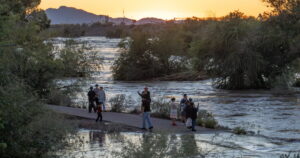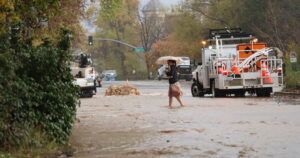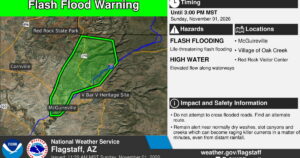
In recent weeks, Arizona and the Four Corners region have experienced an unusual weather phenomenon with heavy rains sweeping across the area, leaving noticeable impacts. Cities such as Flagstaff, Winslow, and Durango, Colorado, were among the locations affected, as rivers surged, streets flooded, and homes were inundated.
The persistent downpour resulted in a soggy Halloween in Phoenix, and in some areas of the Navajo Nation, reaching the polls became a challenge due to flood-damaged roads.
Despite these deluges reshaping life in the Southwest, their impact on resolving the long-standing water supply crisis remains minimal.
“Don’t want to dim the news too much,” commented Nolie Templeton, a Colorado River reservoir monitor for the Central Arizona Project, adding, “Very happy to have more water in the system, but it is quite literally a drop in the bucket, particularly when we’re looking at a 27-year — and counting — drought.”
The Central Arizona Project, tasked with transporting water from the Colorado River to the Phoenix and Tucson areas, remains vigilant about upstream conditions, which showed little change despite the heavy rains.
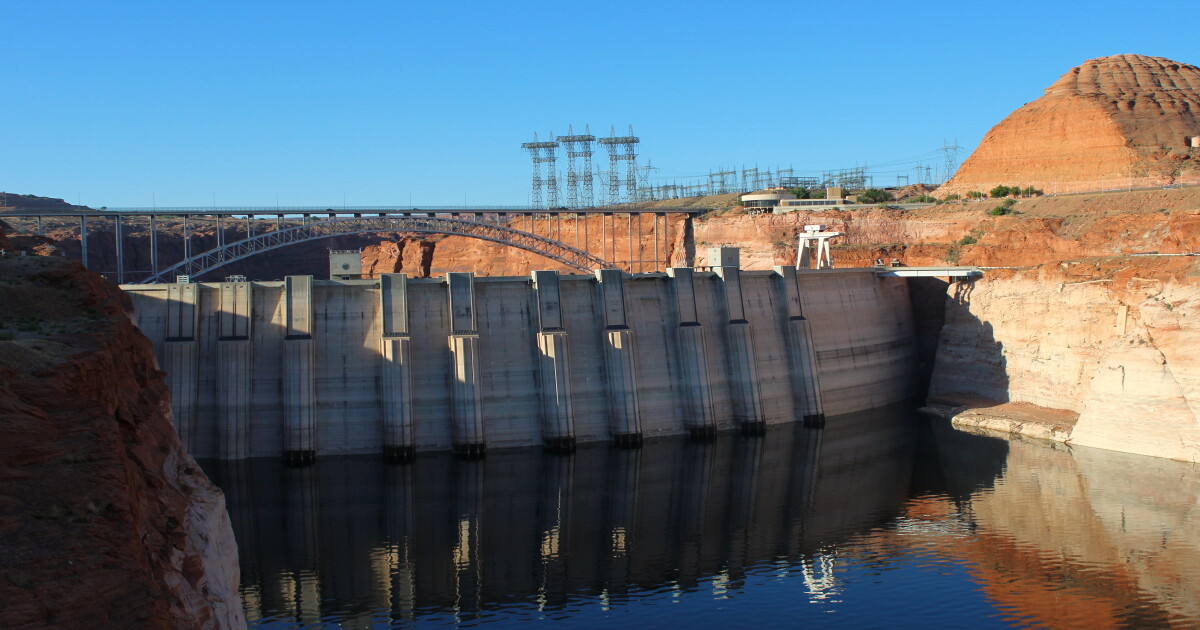
Lake Powell, the second-largest reservoir in the U.S., experienced a 14-foot rise after the storms, yet its surface remains 15 feet lower than the previous year’s level. Since October 20, its capacity increased marginally from about 23% to around 26% full.
This October, Lake Powell received 232,000 acre-feet of water, more than tripling the average October inflow of the past five years. Despite this, increasing its water level significantly remains challenging since most of its supply comes from Rocky Mountain snowmelt. The recent rains added approximately 850,000 acre-feet of water, but average spring inflows are around 5 million acre-feet.
An acre-foot is a measurement equivalent to covering a football field with one foot of water. According to the Arizona Department of Water Resources, one acre-foot can provide a year’s supply of water for three homes in the Phoenix area.
The heavy precipitation also benefited smaller reservoirs upstream. For instance, the Navajo Reservoir in New Mexico, which manages the San Juan River on its way to the Colorado River, increased from about 50% to around 80% full since the start of October. However, its capacity is only about 7% of Lake Powell’s.
Lake Powell and the Colorado River system continue to face challenges from a prolonged drought, exacerbated by climate change and steady demand from states unable to agree on demand reduction plans. Consequently, Lake Powell’s levels reached a new record low.

According to Templeton, multiple winters of above-average snowfall would be necessary to fill Lake Powell halfway, a scenario deemed improbable due to climate-induced warmer and drier winters. Last winter was the driest in decades.
On a positive note, the recent rains provided some benefits. They helped prevent Lake Powell’s levels from reaching critical lows that could impede hydropower generation at Glen Canyon Dam, while ensuring continued water flow to the Colorado River. Although the reservoir isn’t empty, its capacity to release water downstream is limited.
Reduced outflows from Lake Powell have affected the Grand Canyon’s ecosystem by limiting the release of cold water, crucial for native fish species. The reduced flows also contributed to declining water levels in Lake Mead, the largest reservoir in the nation.
Disputes have arisen between states reliant on Lake Powell’s water. Arizona, for instance, has threatened to take legal action against upstream states, citing violations of a century-old water-sharing agreement.
Kathryn Sorensen, a water policy researcher at Arizona State University, noted, “Given how critically low elevations were relative to the need to protect that critical infrastructure, I would argue, yes, these flood flows were really important and helpful. But in the overall picture, it does not boost overall storage, and it doesn’t buy us a lot of time. I would say it just gives us some breathing room.”
This temporary relief is unlikely to affect Arizona’s planned water supply reductions. Federal water management policies are expected to remain unchanged, with significant cutbacks to the state’s Colorado River allocation still scheduled to begin in the new year.
Templeton emphasized, “It’s not like a tap you can turn off and on. These are things that require a little bit more long-term planning on where that water is going.”

Templeton and Sorensen noted additional benefits from the heavy rains. The soil in the mountain ranges, crucial for the Colorado River’s snowmelt supply, may have absorbed enough moisture to prevent it from acting like a sponge when the snow melts in spring, potentially increasing runoff into rivers and reservoirs.
The rains also positively impacted the Salt and Verde River systems, important for Phoenix. Reservoirs in these systems are now 69% full, up from 48% on October 1. The Salt River Project released large volumes from Bartlett Lake, causing the Salt River to surge through Phoenix, aiding in groundwater aquifer recharge, a critical resource for local cities.