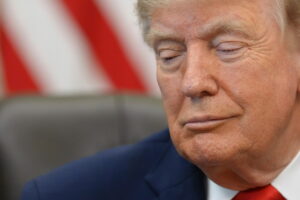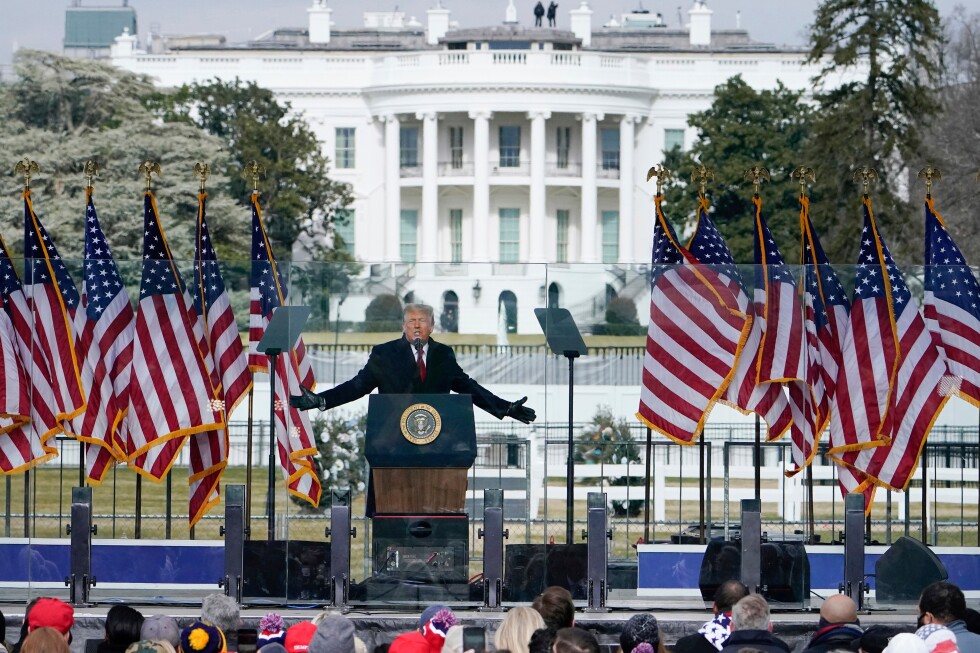
A recent legal development has left former President Donald Trump facing significant challenges as a federal judge determined that he cannot claim immunity from civil lawsuits linked to the January 6, 2021, Capitol riot. This ruling marks a pivotal moment in the ongoing legal battles concerning the events of that day.
U.S. District Judge Amit Mehta ruled that Trump’s statements during the “Stop the Steal” rally, held near the White House before the riot, could potentially be regarded as incitement, which is not safeguarded by the First Amendment. Consequently, Trump is not immune from liability for his actions on January 6, including his speech and several social media posts. However, the judge clarified that Trump could not be held accountable for his official duties, such as his Rose Garden remarks and dealings with Justice Department officials during the riot.
“President Trump has not shown that the Speech reasonably can be understood as falling within the outer perimeter of his Presidential duties,” Judge Mehta stated. He emphasized that the content of the Ellipse Speech does not fall under official-acts immunity.
Judicial Precedent and Future Implications
This decision adds to a series of legal findings asserting Trump’s potential liability for the Capitol violence. Although an appeal is likely, the ruling paves the way for a possible civil trial. Trump’s legal team maintains that he was acting within his presidential duties and that presidents possess “absolute immunity from civil and criminal claims for acts in their singular role.”
In a February 2022 ruling, Judge Mehta had similarly denied Trump immunity from claims by Democratic lawmakers and Capitol police officers, concluding that his rally speech could plausibly be interpreted as incitement. The case returned to Mehta following an appellate court’s affirmation of his 2022 decision. The judge noted that the immunity ruling now adheres to a more “rigorous” legal standard as the litigation progresses.
Mehta, appointed by President Barack Obama, clarified that his ruling is not a “final pronouncement on immunity for any particular act.” He stated that Trump is “free to reassert official-acts immunity as a defense at trial,” albeit under a higher proof standard.
Distinguishing Official Duties from Political Ambitions
The case scrutinizes Trump’s role as both a sitting president and a political figure. During his rally speech, he urged his supporters to “fight like hell,” which plaintiffs argue was not an act within his official presidential capacity. The plaintiffs further assert that Trump’s actions on January 6 were aligned with personal political ambitions rather than official duties, a distinction upheld by the Supreme Court in previous rulings regarding presidential immunity.
Representative Bennie Thompson, a Democrat from Mississippi, filed a lawsuit against Trump, his attorney Rudolph Giuliani, and members of extremist groups over the Capitol attack. The litigation, joined by other Democratic lawmakers, merged with claims from law enforcement officers injured during the riot.
Reactions and Legal Perspectives
The ruling is seen as a critical affirmation of legal accountability. Damon Hewitt, president and executive director of the Lawyers’ Committee for Civil Rights Under Law, hailed the decision as a “monumental victory for the rule of law, affirming that no one, including the president of the United States, is above it.” He added, “The court rightly recognizes that President Trump’s actions leading to the January 6 insurrection fell outside the scope of presidential duties.”