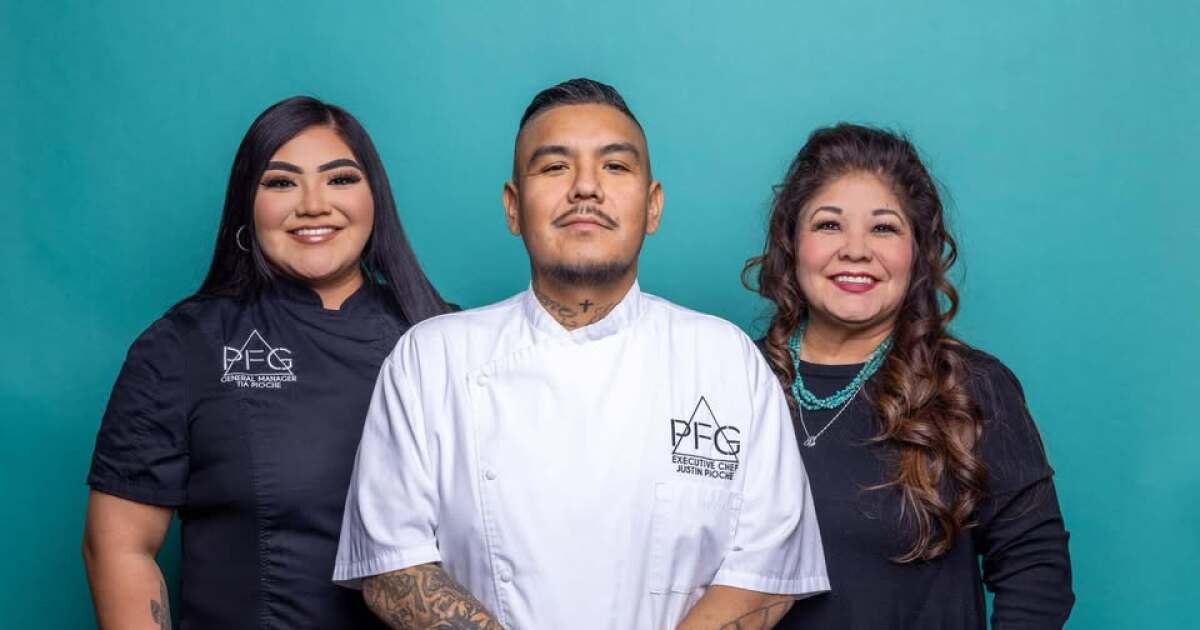
In recent years, Indigenous cuisine has been gaining recognition across the culinary world. This weekend, Phoenix’s S’edav Va’aki Museum will host an event celebrating this cultural revival, featuring a lineup of chefs dedicated to Indigenous food. Among them is Navajo chef Justin Pioche, who brings a unique blend of tradition and innovation to his culinary creations.
Click here for more details on the event.
From Humble Beginnings to Culinary Innovation
Justin Pioche, who co-runs Pioche Food Group in Fruitland, New Mexico, with his sister Tia and mother Janice, has made a name for himself in the world of high-end catering. Despite his current success, Pioche’s culinary journey began in the unlikeliest of places: a Fuddruckers in Glendale. His career took a transformative turn after a chance meeting with celebrity chef Robert Irvine, which led to an opportunity to work under Beau MacMillan at Sanctuary on Camelback.
Nurturing Navajo Heritage Through Food
Pioche’s culinary philosophy is deeply rooted in his Navajo heritage. Inspired by fellow Indigenous chef Sean Sherman, Pioche has sought to elevate Navajo cuisine by incorporating modern techniques. His work on the family farm has reinforced the importance of storytelling and cultural preservation through food. “I need to help protect these stories and keep them going because who else is going to?” Pioche stated.
Educating Through Flavor
One standout dish, “Textures of Squash,” exemplifies Pioche’s approach to Indigenous cuisine. By presenting squash in seven different ways, the dish serves as both an educational tool and a culinary delight. It demonstrates full utilization of ingredients while encouraging students to embrace vegetables. “This is what you can do with one squash,” Pioche tells his students, emphasizing the dish’s cultural significance as one of the three sisters—squash, beans, and corn.
Preserving Culture Through Culinary Art
For Pioche, Indigenous food represents more than sustenance; it is a vessel for cultural preservation and storytelling. He hopes to raise awareness about the historical challenges and triumphs of the Navajo people, such as the Long Walk and the creation of fry bread. Despite its controversial origins, fry bread remains a staple in Navajo culture, and Pioche’s commitment to making it fresh underscores his dedication to reclaiming this heritage.
A Broader Movement for Recognition
As Indigenous chefs like Pioche redefine Indigenous cuisine, they aim to highlight the resilience and enduring presence of their communities. “I hope they realize that our people were here first and we’re still here,” Pioche stated. Through his culinary endeavors, he seeks to ensure that the stories and traditions of the Navajo people continue to thrive.