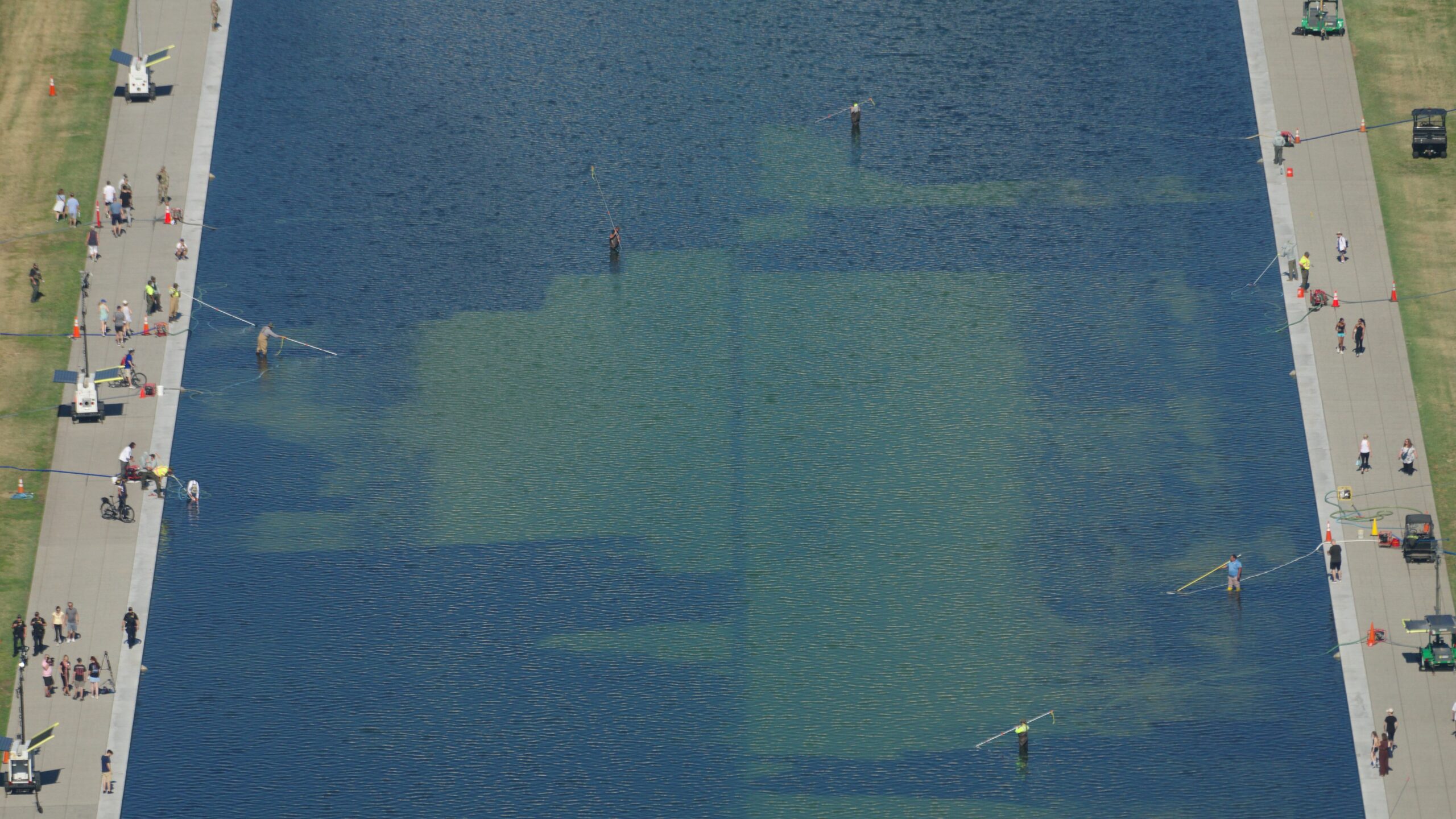
The Lincoln Memorial Reflecting Pool — one of Washington D.C.’s most photographed landmarks, stretching nearly 2,000 feet between the Washington Monument and the Lincoln Memorial — is not looking its best. Thick blooms of green algae coat the water’s surface, and long strips of waterproofing sealant have come loose and are floating visibly in the pool. Workers were spotted on-site over the weekend attempting to address the damage, but the problems remain highly visible to tourists and passersby.
The renovated pool was supposed to be the centerpiece of a patriotic Independence Day showcase. Now, the budget to complete restoration continues to rise over $14 million.
The Rushed Renovation
The Trump administration awarded two no-bid contracts for the Reflecting Pool renovation, bypassing the legally required competitive bidding process by citing an urgent need to complete the work before July 4th.
The first and larger contract — worth $14.7 million — went to Virginia-based Atlantic Industrial Coatings, which was tasked with applying a waterproofing sealant in what was described as an “American flag blue” shade. The second contract, worth $1.7 million, went to Ohio-based Greenwater Services to install a new water-treatment system. Together, the two contracts totaled $16.4 million.

Even before the algae blooms and peeling sealant emerged as problems, some experts had warned publicly that a rushed makeover could not address the pool’s deeper structural issues, and that cutting corners on process could lead to exactly the kind of failure now on display.
The Cost to Taxpayers
While the administration has been quick to point fingers at alleged vandals for the damage, critics argue the more pressing question is how $16.4 million in public money was spent on a no-bid contract that has produced such visible and rapid deterioration.
The decision to bypass competitive bidding — a process designed specifically to protect taxpayers from inflated costs and underqualified contractors — means there is no guarantee the public received fair value for the work.
With the pool now requiring additional repairs almost immediately after the renovation was completed, watchdog groups and lawmakers have begun asking if this cost can be justified.
Wildlife in the Crossfire
Lost amid the political finger-pointing is a quieter concern: the impact on the wildlife that calls the Reflecting Pool home. On June 21st, a duckling was found dead in the water, its cause of death remains undetermined, but the event was enough to draw visible distress from onlookers at the site.

The following day, significant cracking appeared in the newly applied “American Flag Blue” basin lining — raising further questions about whether the hastily applied chemicals and sealants are creating conditions hostile to the pool’s ecosystem.
Algae blooms of this scale can rapidly deplete oxygen levels in the water, creating conditions that are toxic to fish, waterfowl, and other aquatic life. The pool is a known habitat for ducks and migratory birds, and the introduction of chemical sealants and treatment compounds into an already ecologically stressed environment raises serious questions for the safety of the wildlife.
What’s Next for the Reflecting Pool
Atlantic Industrial Coatings pushed back on Sunday in a post on its website, saying the peeling areas represented only a small portion of the overall seven-acre project. The company confirmed that the pool would be drained for additional repairs in the near term.
Over the weekend, Trump himself acknowledged the situation was serious enough to require partial draining for “necessary repairs” — a significant walk-back from the administration’s earlier confidence that the pool would be ready in time for Fourth of July celebrations. Whether the pool can be salvaged in time for Independence Day remains to be seen.