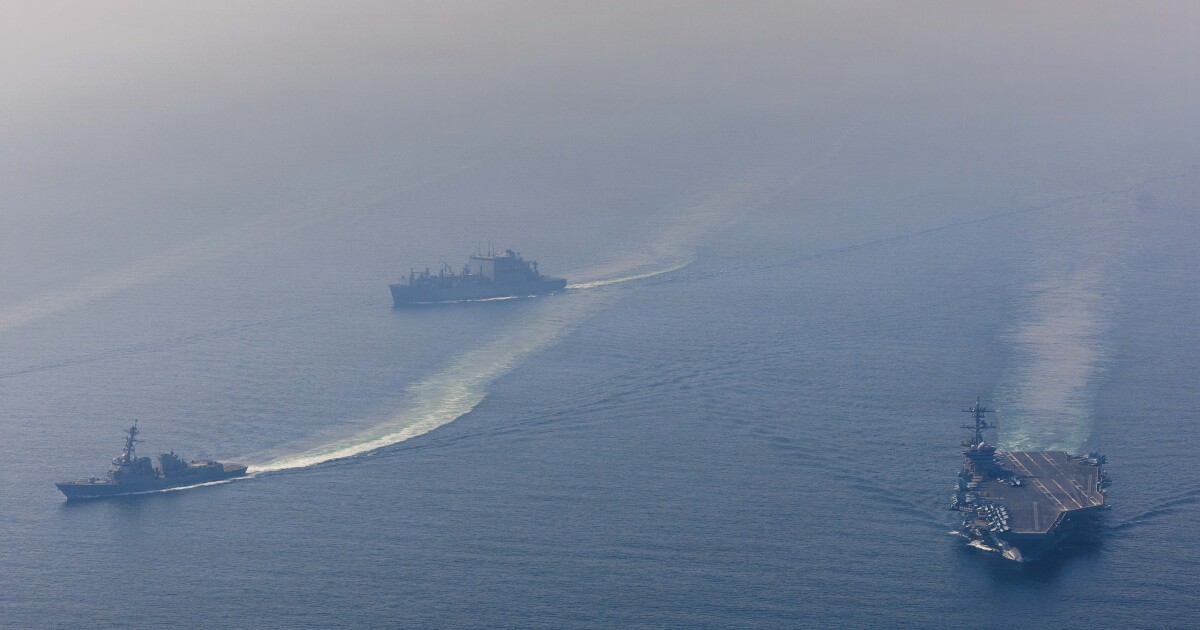
Understanding the U.S. Naval Blockade in the Strait of Hormuz
Amid escalating tensions between the U.S. and Iran, the U.S. Navy has initiated a blockade in the vital Strait of Hormuz. This move aims to cut off Iran’s main revenue source by halting its oil exports and intensifying economic pressure on the country. However, the effectiveness and sustainability of such a large-scale operation are under scrutiny, drawing on historical precedents of naval blockades.
Enforcement Challenges and Resources
Historically, naval blockades have been difficult to enforce and resource-intensive. The U.S. Navy’s current blockade strategy utilizes advanced technologies like satellites, drones, and helicopters for vessel detection in the strait. However, with an average of 138 ships passing through daily, maintaining control over the strategic chokepoint presents a significant challenge. Experts suggest that the Navy would require multiple destroyers in rotation to effectively enforce the blockade, highlighting the logistical complexities involved.
While the U.S. Navy has the capability to detect and intercept vessels, the sheer volume of maritime traffic poses a formidable obstacle. In past conflicts, such as the early months of the Ukraine war, enforcing blockades proved challenging due to the need for constant monitoring and intervention. The effectiveness of blockades hinges on the enforcing country’s ability to intercept and redirect ships, a task that demands substantial naval presence and resources.
Effectiveness of Blockades
Looking back at historical examples, the outcomes of naval blockades have varied. During World War II, the Allied and Axis submarine campaigns serve as contrasting illustrations. While the German U-boat campaign aimed to cripple the British war economy through unrestricted submarine warfare, Britain managed to safeguard crucial supply lines, demonstrating the limitations of blockades in certain contexts.
Conversely, the U.S. submarine campaign against Japan proved highly effective by targeting key resource flows. By disrupting Japan’s oil supplies, the U.S. exerted significant pressure on the Japanese fleet, compelling strategic shifts that weakened their defense capabilities. These contrasting outcomes underscore the nuanced nature of naval blockades and their impact on wartime economies.
As the U.S. Navy maintains its blockade in the Strait of Hormuz, the historical lessons of naval blockades offer valuable insights into the challenges and potential outcomes of such operations. The complex interplay between enforcement, resources, and strategic objectives will shape the trajectory of this maritime standoff and its implications for regional stability.
Naval Blockades: Unintended Consequences and Historical Lessons
Naval blockades have been a common strategy in warfare, aimed at restricting the flow of vital resources to the enemy. However, history has shown that these blockades often have unintended consequences, impacting civilian populations and economies in unexpected ways.
During World War I, the Allies imposed a naval blockade on Germany to cut off strategic materials needed for explosives. While the goal was to weaken the German defense industry, the blockade ended up crippling the agricultural sector. As a result, severe food shortages and malnutrition plagued the civilian population in the later years of the war.
Similarly, in the 19th century, the British blockade of French ports led to a collapse in French trade and economy, showcasing the ripple effects of such actions.
According to experts like Schuck, who has studied the economics of naval blockades, the current situation with Iran raises concerns about potential repercussions on its food supply. Iran heavily relies on oil revenue, and any blockade could jeopardize its ability to import essential goods, including food.
The effectiveness and duration of a blockade play a crucial role in determining its impact on the target country. If successful in shutting down commerce, a blockade could lead to significant challenges for the affected nation.
As history has demonstrated, naval blockades may not always hit their intended targets, highlighting the complex and interconnected nature of global trade and warfare strategies. The lessons from past experiences underscore the need for careful consideration and evaluation before implementing such measures.