In 2024, Taylor Swift’s Eras Tour shattered records to become the highest-grossing concert tour in history, raking in over US$2 billion. This milestone was celebrated as a major victory for women in the music industry.
However, a deeper examination of top-earning concert tours and album sales reveals a persistent gender imbalance. Among the top 27 highest-grossing tours ever, none feature all-women ensembles, while 14 are comprised entirely of men. Similarly, in the realm of album sales, none of the top 100 bestselling artists include all-women groups, whereas 41 all-men groups make the list.
Could Swift’s individual success be linked to her status as a solo artist? According to management scholars who have studied workplace dynamics and bias, it indeed appears so. Their research indicates that women in same-gender groups face a “collaboration penalty” that solo women avoid, a pattern observed across various sectors such as venture capital, sports, healthcare, and entertainment.
The reason behind this, their study suggests, is that all-women groups are perceived as more likely to challenge existing power structures through collective action. This perception was shared by both male and female participants in the research.

Stephen Mease on Unsplash, CC BY
The Venture Capital Landscape
One of the clearest examples of this bias is found in venture capital funding. Despite ongoing diversity efforts, all-women founding teams secure a mere 2.4% of venture capital dollars, a figure that has remained stagnant for decades.
To explore this disparity, researchers conducted an experiment where participants assessed venture capital pitches that were identical except for gender and team composition. Participants perceived all-women investor groups as more likely to engage in “social competition,” viewing them as challenging power structures, unlike their all-men counterparts.
This perception significantly impacted funding decisions. Groups deemed “socially competitive” were considered less deserving of resources, a judgment rooted not in their competence but in assumptions about their motivations. Whereas all-men teams were seen as simply conducting business, all-women teams were viewed as pushing an agenda.
Challenges for Women in Teams
This phenomenon extends to the music industry, where solo female artists like Taylor Swift, Beyoncé, Madonna, and Pink rank among the top earners. Yet, the absence of successful all-women groups highlights an underlying issue: why do groups of women encounter more obstacles than their male counterparts?
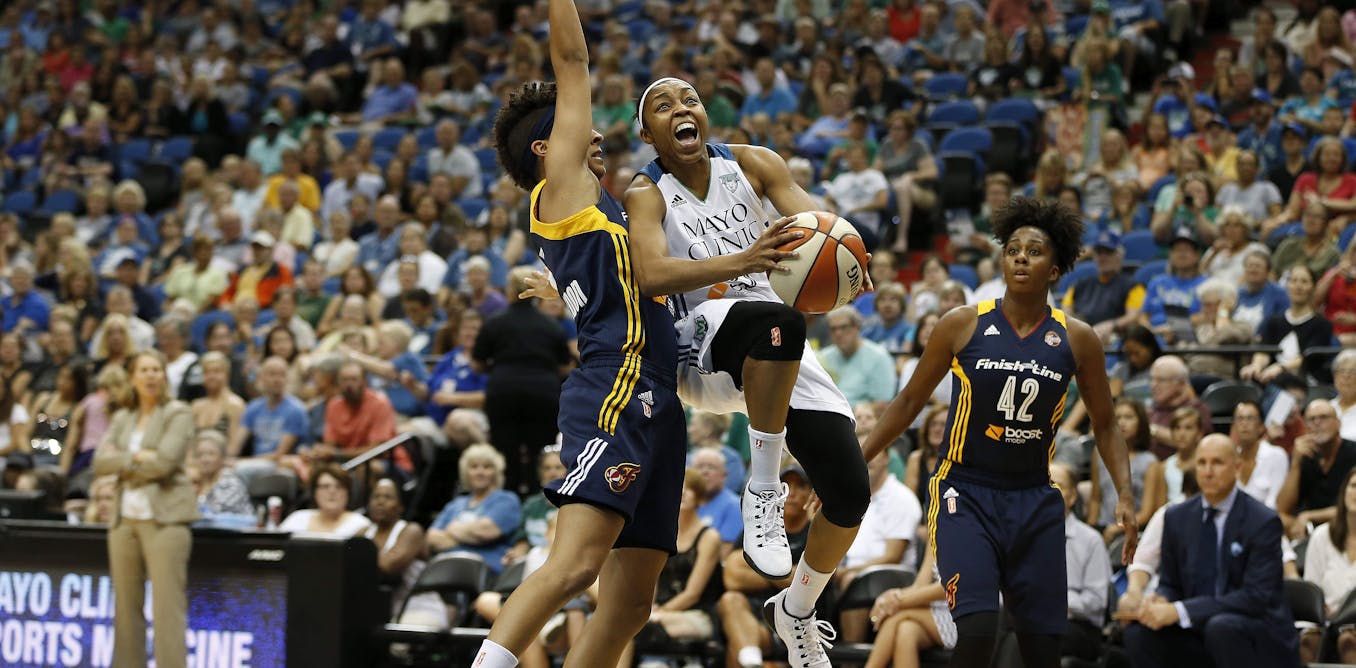
Insights from sports provide further clarity. An analysis of prize money from major international competitions from 2014-2021 revealed that solo male and female athletes earned comparable amounts. However, all-women teams earned significantly less than male teams, despite equal performance.
Another study demonstrated that all-women sports teams were perceived as more socially competitive, leading to lower expected compensation. This bias persists even when performance data is identical to that of male teams.
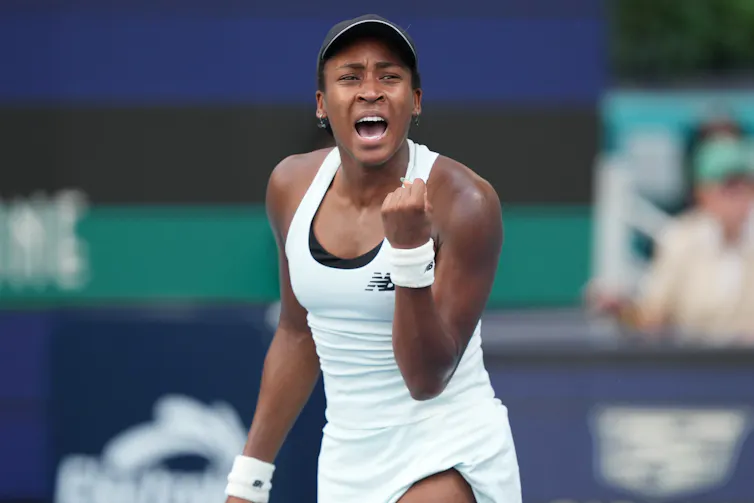
As a result, women in team sports face significant financial penalties. For instance, no women appear in the top 50 highest-paid athletes in 2025. Coco Gauff, the highest-paid female athlete, earned $33 million in 2025, ranking around 150th compared to men, while Caitlin Clark, the only female team athlete in the top 15, earned substantially less from her team sport than through endorsements.
AP Photo/Jim Rassol
Beyond the Spotlight
This trend is not limited to high-profile fields. In a study of a large health maintenance organization in the northwestern United States, researchers discovered similar disparities. Among 682 medical providers, men and women in solo practice earned comparable salaries. However, in same-gender groups, men earned significantly more than women, with women’s earnings being less than half that of men’s, even controlling for various factors.
This discrepancy was not an anomaly but a clear pattern among licensed professionals with measurable performance statistics. Gender composition heavily influenced compensation, with women in all-women groups facing a $58,000 annual salary gap despite superior patient satisfaction scores.
A striking example can be seen in professional sports cheerleading. While NFL players earn a minimum of $885,000, cheerleaders make only $150-$500 per game, despite similar injury risks and event participation. This vast pay difference underscores the impact of gender composition, as one group is all-men and the other all-women.
Addressing the Issue
Combating this entrenched bias requires organizations to scrutinize compensation data not only for individual gender gaps but also for disparities affecting all-women teams. Investors and funders should assess whether gender composition sways evaluations of proposals, independent of team qualifications. Training managers to recognize this bias as both unconscious and costly could help mitigate its effects.
Importantly, it’s essential to recognize that team gender composition is largely beyond employees’ control, shaped by organizational demographics and project requirements. As the success of solo women like Taylor Swift, Beyoncé, and Coco Gauff shows, women can thrive individually. Yet, until all-women groups receive the same opportunities and compensation as their male counterparts, substantial talent and economic potential remain untapped. As the research highlights, the collaboration penalty is not only unfair but also economically unwise.