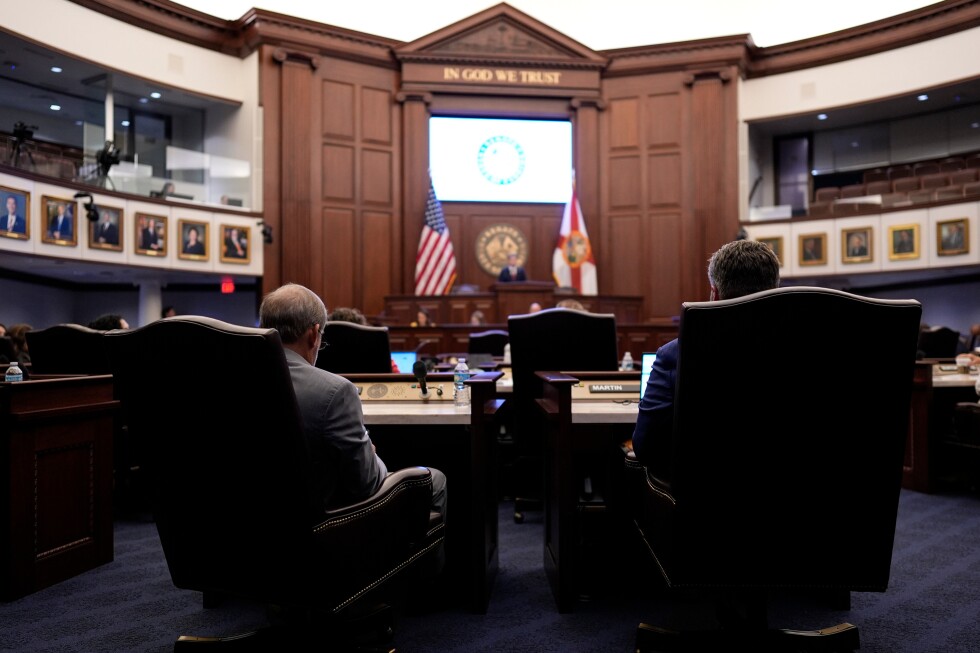
As new congressional maps in Florida come under judicial scrutiny, the implications for future elections loom large. These maps, which could potentially bolster Republican representation, are being challenged for allegedly breaching state regulations against partisan gerrymandering.
Voter-backed lawsuits are seeking a judicial block on the use of these districts in the upcoming midterms. This legal contention arises as former President Donald Trump strives to solidify a Republican majority in the U.S. House via strategic redistricting.
Currently, Republicans occupy 20 out of 28 of Florida’s House seats. However, the newly ratified voting districts, endorsed by Governor Ron DeSantis in a rapid legislative move, might allow the GOP to capture four more seats in the November elections. More details on the new voting districts can be found here.
On April 29, when the Florida Legislature sanctioned the House map, a concurrent U.S. Supreme Court decision weakened the federal Voting Rights Act protections, especially affecting minority districts like one in Louisiana. This has led to moves in several Southern states aiming to dismantle such minority districts that typically elect Democrats.
Redistricting is typically a decennial activity aligned with the census, intended to balance population disparities. However, prompted by Trump’s call for mid-decade redistricting, Republicans anticipate gaining up to 15 seats across states like Texas, Missouri, North Carolina, Ohio, Florida, Tennessee, and Alabama. Meanwhile, Democrats foresee potential gains in California and Utah.
In Virginia, Democrats’ hopes for additional seats were dashed when the state Supreme Court invalidated a Democratic redistricting plan, citing procedural lapses.
Florida’s Stance on Partisan Redistricting
While the 2019 U.S. Supreme Court ruling stated it couldn’t adjudicate on the limits of partisan gerrymandering, it allowed these issues to be resolved within state legal frameworks. In Florida, a 2010 amendment to the state constitution bars drawing U.S. House districts to favor or disadvantage any political party or incumbent, while also protecting minority representation and promoting compact district boundaries.
The current lawsuits argue that the new district map violates this amendment, particularly highlighting undue political bias. “The plan takes the state’s partisan skew to an unprecedented extreme,” one lawsuit claims.
In response, a Florida Senate legal brief maintains the absence of definitive partisan intent and suggests that blocking the districts pre-trial is unwarranted.
Governor DeSantis, who preempted the Supreme Court’s Louisiana decision, foresaw the potential weakening of minority district protections under the Voting Rights Act. Florida’s revised map notably transforms a southeastern Florida district initially designed to elect a Black representative, claiming compliance with federal laws.
Despite these changes, DeSantis’ administration stated that racial data was not a factor in crafting the new map. A memo from his General Counsel, David Axelman, challenges the constitutionality of Florida’s racial redistricting requirement, suggesting that if one part of the 2010 amendment is invalid, the entire provision, including the partisan gerrymandering ban, should be nullified.