Relations between Brazil and the United States are facing growing strain as Brazilian President Luiz Inácio Lula da Silva issues a stern warning against interference in Brazil’s upcoming presidential election. This development follows comments from former U.S. President Donald Trump criticizing Brazil’s judicial actions against Lula’s political adversaries.
The diplomatic discord comes at a time when the Trump administration has proposed additional tariffs on Brazilian imports and labeled two of the country’s major drug-trafficking organizations as foreign terrorist entities. These measures, which Lula opposes, have exacerbated tensions between the two nations. The Brazilian leader has been vocal in defending Brazil’s sovereignty, particularly since the imposition of tariffs last year, which Trump justified by criticizing a so-called ” witch-hunt trial ” against his ally, former President Jair Bolsonaro.
Further complicating matters, the Brazilian Supreme Court recently sentenced Bolsonaro’s son, Eduardo Bolsonaro, to over four years in prison for coercion linked to his father’s failed coup attempt. Trump’s comments that Brazil had become “dangerous politically” and his reference to a “Bolsonaro junior” doing well in polls, suggested he might also have been referring to Flávio Bolsonaro, another of Jair Bolsonaro’s sons, who is currently running against Lula in the election.
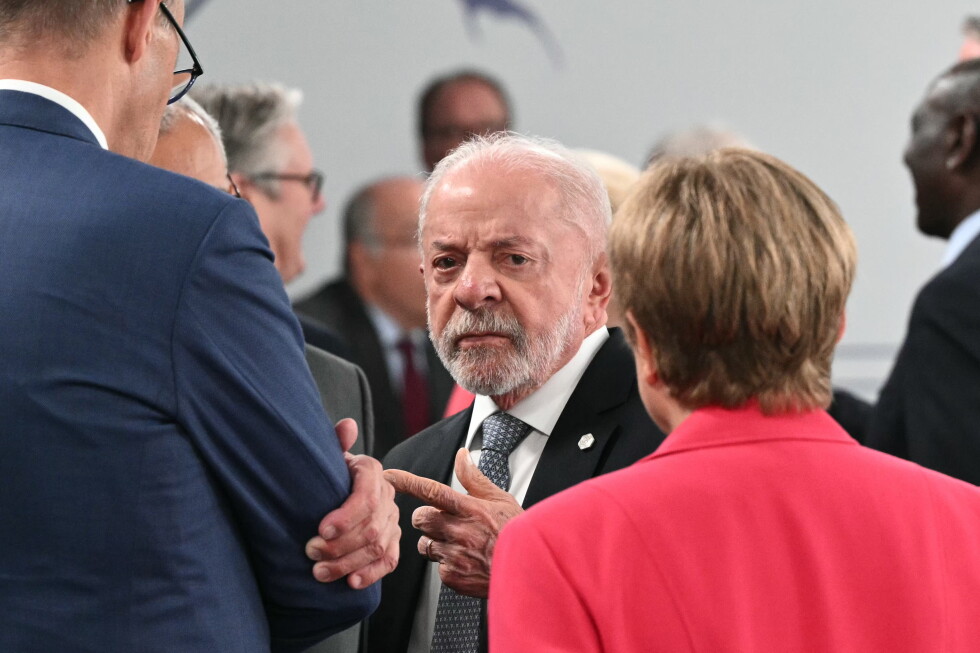
During a news conference at the G7 summit in France, Lula criticized Trump’s remarks, implying that the former U.S. president’s understanding of Brazil was limited to his interactions with the Bolsonaro family. “If he knows Brazil through his relations with the Bolsonaro family, he doesn’t know Brazil,” Lula said. “He can go on liking Bolsonaro — the father, the son, the grandson — that’s not my problem, it’s his. (…) But don’t interfere in Brazil’s elections, because Brazil’s elections are Brazil’s business.”
In a move that sparked further controversy, Eduardo and Flávio Bolsonaro had visited U.S. officials, including Trump, preceding the Trump administration’s decision to classify Brazil’s largest drug-trafficking groups as terrorist organizations. Lula has openly questioned this classification, arguing that these groups are driven by profit rather than political objectives.
Adding to the friction, the U.S. announced a proposed 25% tariff on Brazilian imports, citing unfair trade practices. This decision came despite Lula’s efforts to negotiate with Trump during a visit to Washington. Lula expressed his dissatisfaction, remarking, “I think what he did was disrespectful toward Brazil. He knows that. That’s why I said he still behaves like an emperor. We were negotiating an agreement.”
For further updates on this story and other news from Latin America, visit AP’s Latin America coverage.