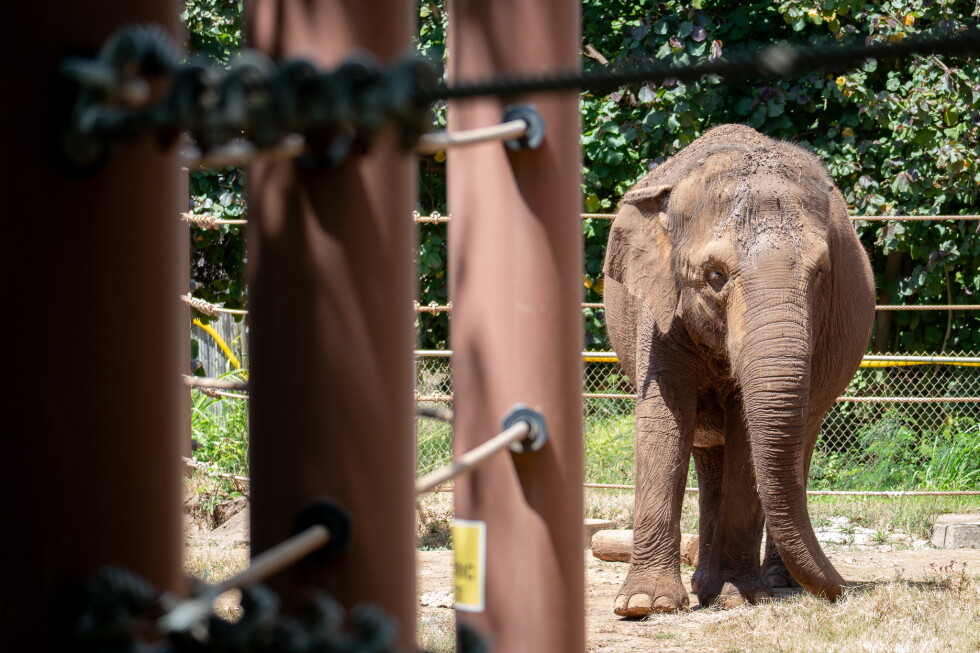
On a casual Monday visit to the Honolulu Zoo, Big Island residents Kelden and Kalehua Lee were taken aback to learn about an impending legal case involving the elephants Mari and Vaigai. The case, set to be heard by the Hawaiʻi Supreme Court, could determine whether the elephants remain at the zoo or are relocated to a sanctuary.
For over three decades, Mari and Vaigai have lived in their 1.5-acre enclosure, but the lawsuit argues that they should enjoy the same constitutional protections as humans, with a focus on their right to self-determination. This marks a unique legal challenge, as the case seeks to establish legal personhood for the elephants, a notion previously unsuccessful in other parts of the United States.
Potential Implications for Animal Rights
The outcome of this case could extend beyond just Mari and Vaigai, possibly affecting other captive animals across Hawaiʻi. Jake Davis, an attorney with the Nonhuman Rights Project, noted the case’s potential to influence public opinion and future legal proceedings regarding animal rights.
Although oral arguments are expected soon, the city, which owns the zoo, has not provided further comment on the matter. Meanwhile, Honolulu Zoo Director John Berry emphasized the zoo’s dedication to animal care and welfare, including efforts to enhance the elephants’ living conditions, although a statement about exhibit improvements was later retracted by the county.
Legal Efforts and Challenges
The Nonhuman Rights Project is spearheading the case, drawing on habeas corpus principles to argue against the elephants’ captivity. While Mari and Vaigai’s enclosure includes water pools, the space is considerably smaller than their natural roaming range. Concerns about the physical and psychological impacts of captivity have been echoed by various animal rights advocates.
Despite previous unsuccessful attempts in states like New York, California, and Colorado, the organization believes Hawaiʻi’s legal environment may be more receptive. Yet, the state’s lower courts have so far upheld the classification of legal personhood as exclusive to humans, suggesting legislative changes might be necessary for broader recognition of animal rights.
The Broader Debate on Captivity
Hawaiʻi’s zoos and animal facilities have long been at the center of debates regarding animal welfare. While some argue these institutions provide educational and conservation benefits, others advocate for the release of animals to more suitable environments. The discussion often centers on whether captivity can be justified if animals are well-treated and appear content.
Past successes by animal rights activists, such as stopping orca performances and closing elephant enclosures, highlight shifting attitudes towards captive wildlife. However, the allure of viewing exotic animals remains strong for many, with facilities often emphasizing their role in conservation and public engagement.
For visitors like Amy and Michael Ghelardi, the experience of interacting with dolphins at a resort was a major attraction, despite mixed feelings about captivity. Their sentiments reflect the broader public’s varied views on how animals should be housed and treated.
Honolulu Zoo’s Efforts to Improve
The Honolulu Zoo, which recently regained accreditation, continues to address past challenges, including funding and maintenance issues. New leadership under John Berry aims to enhance the zoo’s reputation and ensure high standards for animal welfare. However, the zoo remains a focal point for debates about the ethical considerations of keeping animals in captivity.
As the legal battle over Mari and Vaigai unfolds, the case will likely prompt further discussion on animal rights and the future of captive wildlife in Hawaiʻi. The outcome could influence not just the elephants’ fate but also set a precedent for how similar cases are approached in the future.