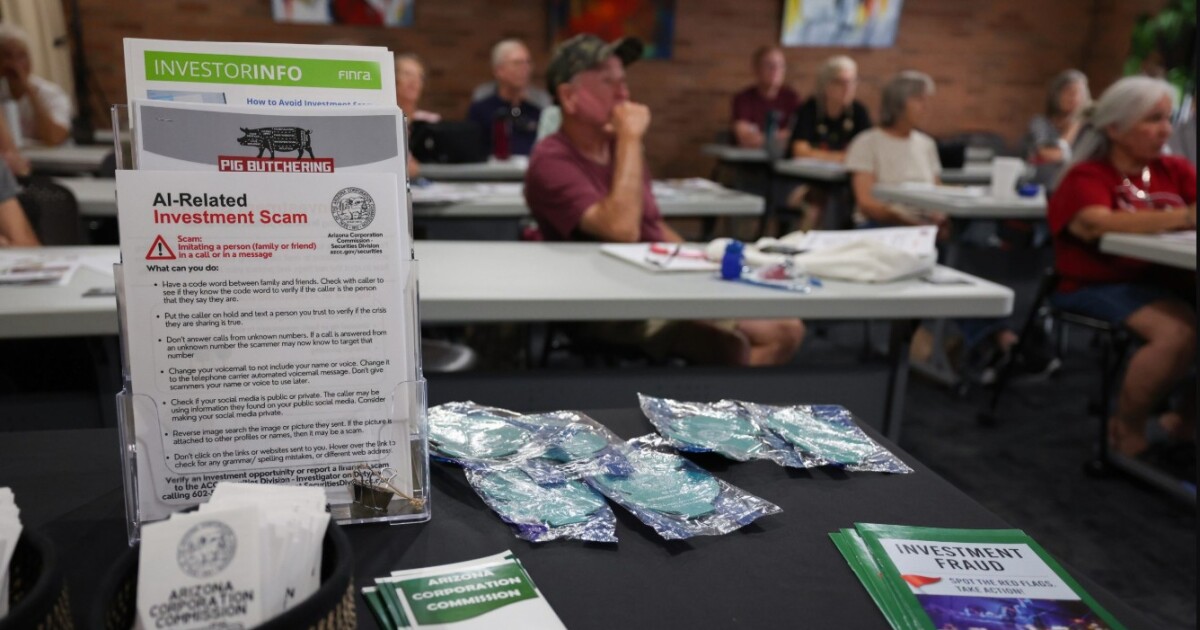
In a world where technology evolves at breakneck speed, staying informed is crucial, especially for those who are most vulnerable. A recent incident in Tempe highlights the increasing sophistication of scams, leaving many older adults eager to learn how to protect themselves.
A Tempe resident experienced firsthand the dangers of modern scams when she received a call from someone claiming to be a bail bondsman in Florida. Desperate to help her daughter, who had been arrested, she quickly verified the caller’s information, which included her daughter’s real case number and the name of an actual Florida bail bondsman. Trusting this information, she transferred several hundred dollars to a provided CashApp account. It was only later that she realized it was a scam.
This cautionary tale was discussed among approximately 20 attendees at a recent artificial intelligence (AI) information meeting in Tempe, hosted by Connect Tempe and the Arizona Corporation Commission. The event was specifically aimed at older adults seeking to understand the risks posed by AI-driven scams.
Raising Awareness Among Older Adults
“I need to be more informed with technology and what’s happening in the world, because it’s not going away,” said Dana Brazelton, 67, who attended the event. Her sentiment echoed the concerns of many participants.
Tempe, recognized as an age-friendly city by AARP, is committed to educating its older residents about the challenges posed by new technologies, according to Megan Wilson, Tempe Community Health Program manager. “Once we get that on our radar, we want to make sure we are proactive and really provide that education to the community of what to look out for,” she emphasized.
The AI information event is one of several initiatives aimed at raising awareness. Numerous classes are scheduled throughout Tempe, with many attendees joining after hearing about previous sessions. Lucero Gonzalez Alvarado, the Arizona Corporation Commission’s investor education and outreach coordinator, stressed the importance of community engagement in combating scams.
“This could happen to everyone,” she highlighted. “These are getting really good, especially with AI. So I feel like the first thing is listening to people.”
The Growing Threat of AI-Driven Scams
AI’s rapid development has equipped scammers with more advanced tools to exploit vulnerable populations, particularly seniors. Gonzalez Alvarado is spearheading efforts to educate older adults on these emerging threats. One alarming tactic involves using AI voice changers to mimic the voices of family members.
“AI imitating someone you know to get you to give them money for an emergency, or imitating a professional, a celebrity, to have you invest, that’s a common scam,” she explained. “Billy’s on the phone in California telling me they need $3,000, and they’ve cloned Billy’s voice to try to get the money.”
Such scams can instill significant fear among targets. One participant recounted receiving a fake party invitation from a friend whose email had been compromised. Despite these fears, the meeting left attendees feeling more informed and prepared.
“I increased my understanding of the various methods of scammers,” noted Jeanette Costa, 81. “Especially how fear is used.”
As technology continues to advance, Costa expressed her determination to keep attending Tempe’s informational classes. “AI is constantly evolving, so I have to stay caught up, for sure,” she said.
This article first appeared on Cronkite News and is republished here under a Creative Commons Attribution-NoDerivatives 4.0 International License.