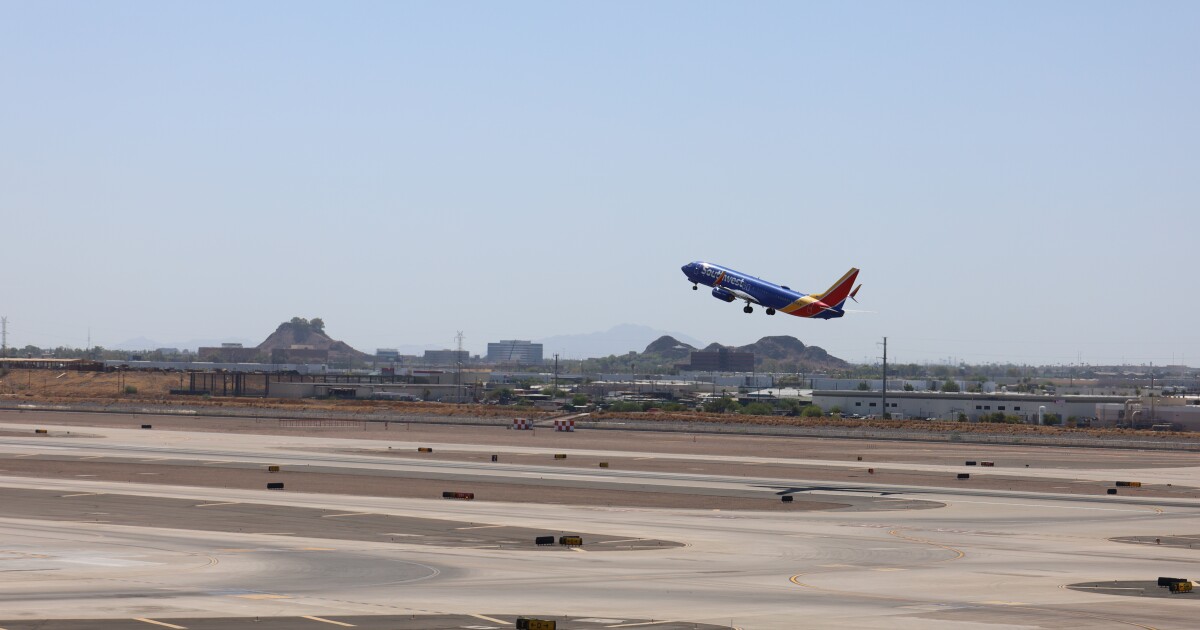
Extreme Heat: An Unseen Threat to Air Travel
While travelers might brace for delays caused by adverse weather conditions such as thunderstorms and blizzards, the impact of sweltering temperatures on flights often goes overlooked. When temperatures soar, the ability of aircraft to safely take off can be severely compromised due to the thinner air, necessitating weight adjustments that could include removing passengers or reducing cargo.
This phenomenon is prevalent in desert regions worldwide, extending from the U.S. Southwest to the Middle East. However, airports at higher elevations or with shorter runways may also encounter similar challenges, with human-induced climate change potentially exacerbating these disruptions.
Amidst a summer marked by intense heat waves, Las Vegas provided a stark illustration of how extreme temperatures can affect aviation. On July 24, with temperatures soaring to 114°F (47°C), American Airlines offered compensation to passengers who opted to disembark voluntarily to ensure a safe takeoff from Harry Reid International Airport.
Understanding the Impact of Hot Air
In hot weather, air becomes less dense, which poses a challenge for aircraft during takeoff. As Ross Aimer, a retired United Airlines captain, and CEO of Aero Consulting Experts, explains, “You can’t deny the science of flight and what it takes for an airplane to operate.” High temperatures affect airplane performance similarly to how athletes are impacted by high altitudes, as seen during events like the World Cup in Mexico City.
Pilots must calculate critical factors such as the aircraft’s weight, the airport’s elevation, and the outside temperature before every departure, according to Alan Price, a retired Delta Air Lines captain. Airports like Denver, which sits at over 5,000 feet (1,524 meters) above sea level, already face thin air, making them more susceptible to the impact of high temperatures.
Shorter runways, such as those at New York’s LaGuardia and Washington’s Reagan National, provide less distance for aircraft to gain the necessary speed for takeoff, increasing the likelihood of restrictions during extreme heat. When calculations indicate that a safe takeoff is not feasible, airlines might reduce cargo, carry less fuel, wait for cooler conditions, or ask passengers to volunteer for later flights.
Rising Temperatures and Increasing Delays
The Federal Aviation Administration (FAA) does not set a fixed maximum temperature for takeoff; instead, limits depend on various factors such as the aircraft’s specifications and the airport’s altitude. A 2017 study from Columbia University and NASA’s Goddard Institute suggests that if greenhouse gas emissions persist, weight restrictions may affect 10% to 30% of flights during the hottest parts of the day by midcentury.
Phoenix Sky Harbor International Airport has experienced a significant rise in days with temperatures of at least 110°F (43°C), averaging 43 such days yearly since 2020. Similarly, Las Vegas and Palm Springs have recorded increases in extreme temperature days, highlighting a growing trend.
Safety and Weight Adjustments
Airlines have long adapted to extreme temperatures by adjusting flight operations. During a June 2016 heatwave, American Airlines canceled flights between Palm Springs and Phoenix due to the heat. In 2018, airlines at Denver International Airport reduced passenger loads when temperatures hit 98°F (37°C).
Jennifer Brady, a data scientist with Climate Central, notes that airports are particularly susceptible to the urban heat island effect, where built-up areas become hotter than their surroundings. The lack of shade, heat-absorbing surfaces, and activity from aircraft and vehicles contribute to making airports some of the hottest locations in urban areas.