The wildfires blazing through Northern Arizona have left a significant impact, not only on the landscape but also on the livelihoods of those dependent on the region’s tourism. More than 100 structures have been ravaged in the Grand Canyon National Park, causing a ripple effect on local businesses.
Canyon Trail Rides, a company known for its iconic mule rides through the Grand Canyon, faces financial losses as it refunds nearly $100,000 for prepaid bookings. The company’s reservation desk was housed in the historic Grand Canyon Lodge, which fell victim to the flames on July 12 due to the Dragon Bravo Fire.
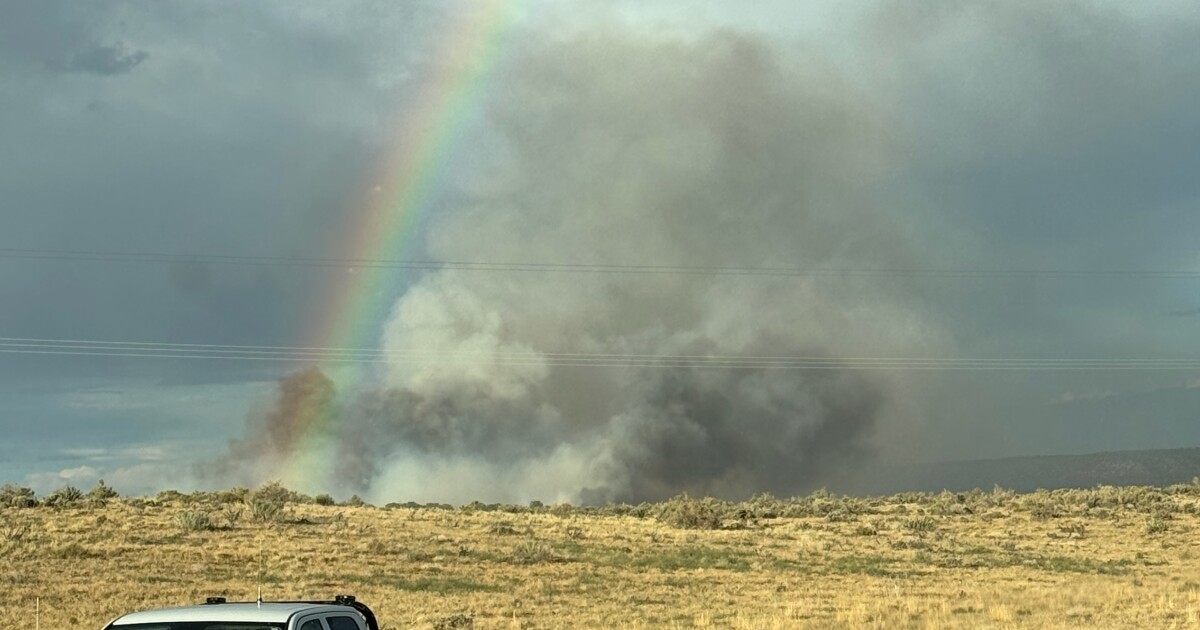
Typically, the North Rim’s tourist season spans from May 15 to October 15. However, this year, the season was abruptly cut short after the lodge, along with several tourist cabins and park housing, were damaged or obliterated. The National Interagency Fire Center reports over 11,000 acres have been scorched by the Dragon Bravo Fire, which ignited on July 4 following a lightning strike.
“That’s almost 90 days of reservations from July 12 through Oct. 15,” explained Crystal Mortensen, whose family owns Canyon Trail Rides. In response to the closure, the company has attempted to relocate its 12 to 14 employees to other parks, including Bryce Canyon National Park and Zion National Park in Utah, though not all could be retained.
The North Rim has been shut down as the White Sage Fire looms near Fredonia, while just 35 miles south, the Dragon Bravo Fire continues to wreak havoc. Fortunately, all 53 mules from the North Rim have been accounted for and are safe. Staff released the animals on July 11, returning to gather them two days later, with most staying near the barn where food and water were accessible.
“They are our biggest asset. We are very attached to them,” Mortensen stated about the mules, which were left to navigate the area independently for a brief period.
Senator Ruben Gallego emphasized the significance of tourism, labeling it as the “economic bloodline” of the area. He is advocating for grants or low-interest loans to aid affected homeowners and businesses. The North Rim closure will persist throughout the remainder of the 2025 season, while trails and campgrounds within the canyon are shut until further updates. Meanwhile, the South Rim remains accessible to visitors.
Gallego noted, “For these small businesses, and when they no longer have the tourism that goes there or the infrastructure around it, they’re going to lose business.”
Firefighting teams have made progress, aided by favorable weather, in protecting park structures as they tackle both the Dragon Bravo Fire and another blaze on the Kaibab Plateau. The White Sage Fire, which began on July 9 from a lightning strike, has consumed over 58,600 acres and remains only 9% contained, as per the Bureau of Land Management. The Dragon Bravo Fire, according to the National Park Service, is still uncontained.
Xanterra, a company managing park and resort operations, is assisting in relocating those affected by the North Rim’s closure. Although it offers mule rides from the South Rim, these have been paused temporarily.
“The main thing that we’re hearing is just how sad and unfortunate of a loss it is of these legacy buildings,” noted Andrew Heltzel, Xanterra’s chief commercial officer. The Grand Canyon Lodge, a storied structure from the late 1920s, has long been a cherished destination, fostering countless memories for its visitors. Now, the experience it offered may not be available to future generations.
For decades, the Grand Canyon Lodge stood as the sole accommodation option within the North Rim, offering breathtaking views from its 8,000-foot elevation. Rebuilt after a 1932 fire, it comprised a main building and 114 cabins.
“We will definitely help however we can but I think that step number one — really what everyone is focused on — is getting the fire out right now,” Heltzel said.
For more stories from Cronkite News, visit cronkitenews.azpbs.org.