The upcoming election for the secretary of state in Arizona could play a crucial role in shaping voter rights, particularly concerning mail-in voting, a method used by a majority of Arizonans.
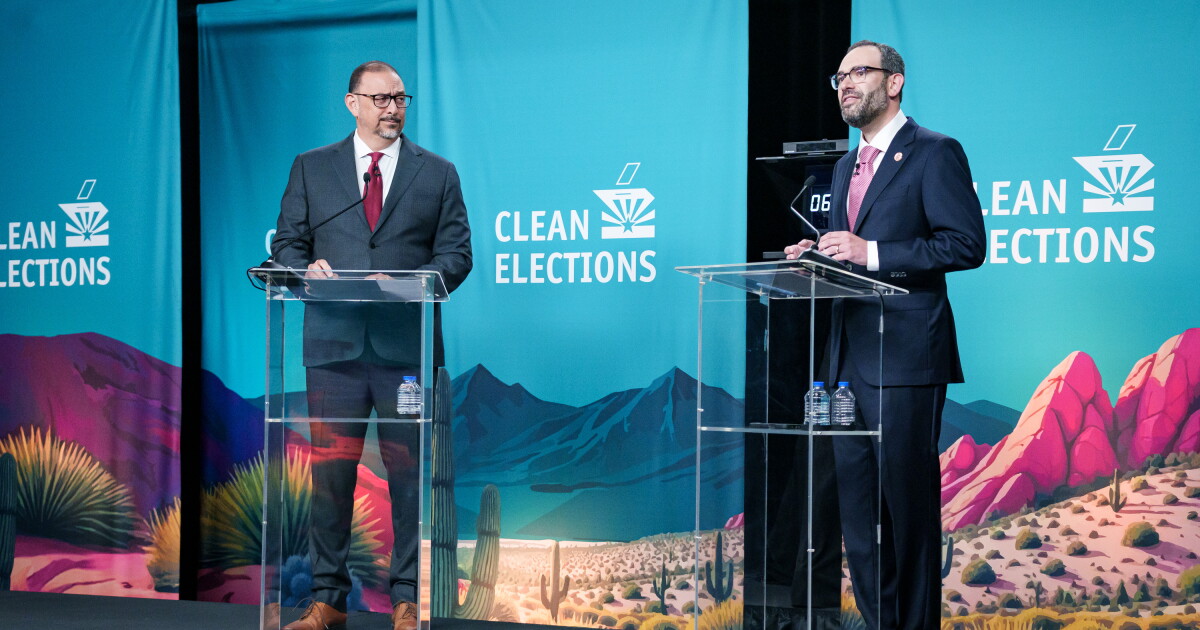
In a recent debate, Republican Alexander Kolodin highlighted his legislative efforts aimed at facilitating early ballot verification at polling stations, a move designed to expedite the voting process. However, Kolodin also backs Proposition 144, which mandates proof of identification for all voters before their ballots are counted, potentially impacting mail-in voting procedures.
Democratic incumbent Adrian Fontes argued that such measures could severely limit early voting, describing it as a setback for voter convenience, especially for individuals with limited mobility or tight schedules. Fontes questioned the feasibility of Kolodin’s proposal, pointing out the lack of clarity in how it would operate for mail-in ballots.
During the debate, Fontes accused Kolodin of aiming to undermine mail-in voting, referencing claims made by Kolodin’s primary opponent, Gina Swoboda. Swoboda alleged that Kolodin privately expressed intentions to target mail-in voting, a claim reported by KTAR.
Kolodin’s Criticism of Fontes’ Tenure
Kolodin criticized Fontes for attempting to implement policies in the Elections Procedures Manual that could disenfranchise voters. He cited a court ruling that rejected Fontes’ proposal to exclude certain county votes from statewide totals if certification deadlines were missed. Fontes defended his intentions, claiming they were designed to ensure compliance with election laws.
Fontes’ attempts to regulate speech at polling places were also overturned by the courts, with judges finding the proposals overly broad. Fontes maintained that his policy analysis, although contested in court, should not disqualify him from office.
Election Integrity and Legal Challenges
The debate also touched on Kolodin’s role in challenging the 2020 election results. Kolodin had been placed on probation by the Arizona Supreme Court for participating in unsuccessful lawsuits alleging voter fraud. One notable case sought to discard mail-in ballots or direct electors to vote for Trump, claims dismissed by the court as lacking credible evidence.
When asked if they would accept the election results, Fontes affirmed he would, while Kolodin provided a less definitive response, stating, “We will win with grace.”
Allegations and Personal Histories
Kolodin accused Fontes of legal missteps, highlighting an incident from Fontes’ past involving a police chase. Fontes acknowledged the misdemeanor but contrasted it with Kolodin’s professional conduct as a lawyer. The exchange grew heated, with Kolodin labeling Fontes as a “Sinaloa Cartel lawyer,” a claim Fontes countered by emphasizing his duty to uphold clients’ constitutional rights.
Election Processes and Voter Rolls
The candidates debated the integrity of voter rolls, referencing a recent investigation by Maricopa County Recorder Justin Heap. Although Heap identified non-citizens on voter rolls, County Attorney Rachel Mitchell found minimal illegal voting, with no charges filed.
Fontes criticized Kolodin’s narrative of widespread illegal voting as unfounded, while Kolodin argued for stricter voter verification to prevent any unlawful voting, asserting that even one illegal vote is “unacceptable.”
Speed of Election Results
Kolodin has campaigned on the promise of delivering election results on the night of the election, a goal he claims is achievable. However, Fontes dismissed this pledge as unrealistic, citing the complexity and competitiveness of Arizona elections. He also noted that rapid results in other states are often due to less competitive races or media projections rather than official counts.