The U.S. Army has taken a major step toward the future of warfare, officially creating a brand-new job category dedicated entirely to robots and drones. This move signals just how central autonomous technology has become to modern military strategy.
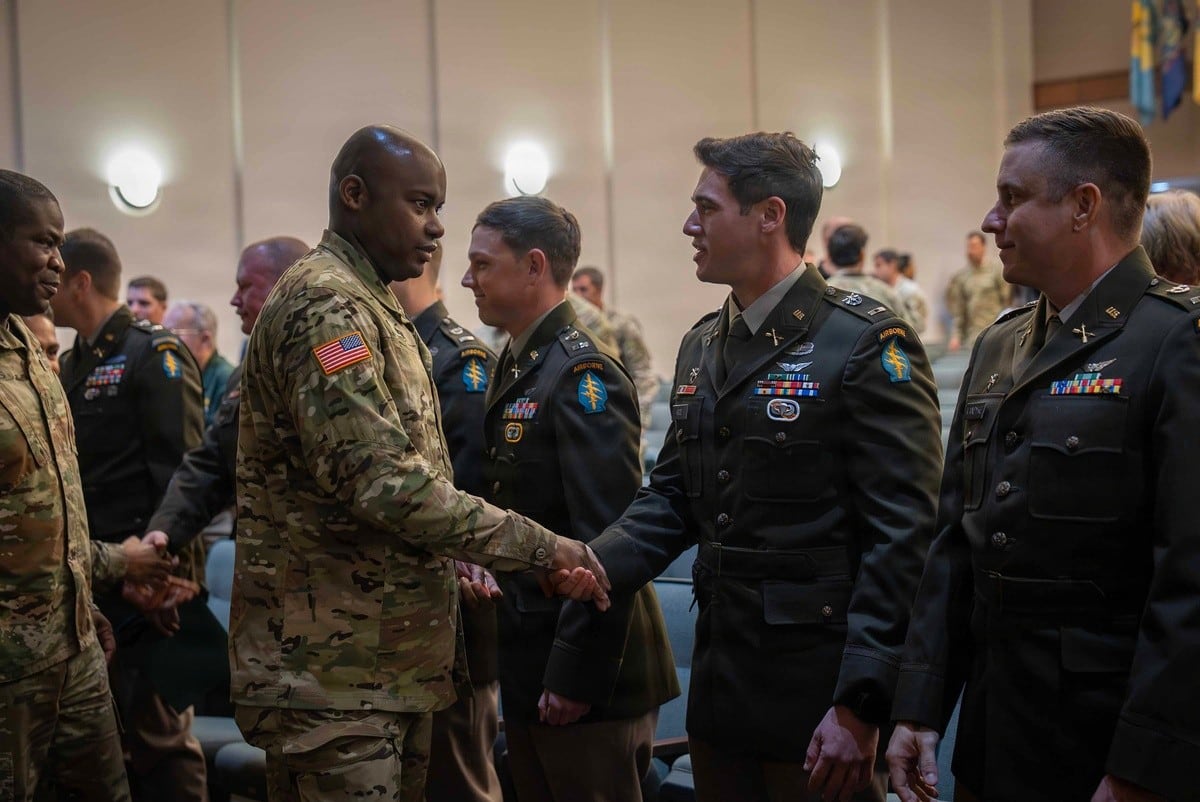
This October, ten warrant officers were inducted as the Army’s first-ever 390A robotics technicians during a ceremony at the U.S. Army John F. Kennedy Special Warfare Center and School. The event marked the official launch of a new military occupational specialty — a formal job classification — dedicated exclusively to robotic and autonomous systems.
These ten soldiers are now recognized subject-matter experts responsible for programming, building, repairing, and integrating robotic systems directly into combat operations. They represent the beginning of what Army leadership says will be a force-wide expansion.
Why the Army Created This Role
The decision to establish a standalone robotics specialty wasn’t made overnight. Planning began in 2024, when U.S. Army Special Operations Command set its sights on developing dedicated experts in autonomous systems. Military officials determined that asking existing special warfare operators to absorb robotics as an additional responsibility was simply not realistic.
As Chief Warrant Officer 5 Jerry Brown, command chief warrant officer for 1st Special Forces Command (Airborne), explained in an official release:
“What we’ve determined is it cannot be an additional task or an additional hat for someone on the ODA.”
Brown added that the new specialists would be able to leverage their specific field of knowledge within robotics to help the force as a whole. The concern was straightforward: robotics is a highly complex discipline, and piling it onto already-demanding special operations roles risks spreading soldiers too thin.
What These Technicians Will Actually Do
The 390A robotics technicians will be assigned to tactical formations at the brigade and group level. Their primary function is advisory — helping commanders understand how and when to deploy autonomous systems during live operations. But their role goes beyond planning. In the field, these specialists must be able to think on their feet, rapidly diagnosing problems with robotic systems and devising creative solutions to keep missions on track.
They will also be expected to find innovative ways to use drones to accomplish objectives — a forward-looking responsibility that reflects how quickly drone technology is evolving on the modern battlefield.
A Grueling 19-Week Training Pipeline
Before earning the 390A designation, candidates must complete a 19-week course that tests both their technical skill and their ingenuity. One of the program’s most demanding requirements: building functional drones entirely from scratch — drones that operate without GPS or traditional radio frequencies.
According to the Army, robotic systems assembled during the course rely primarily on artificial intelligence and machine learning to navigate to targets. This design philosophy addresses a critical vulnerability in modern drone warfare — the risk of signal jamming or GPS disruption by adversaries.
Fiber optic cables offer another solution to that problem. So-called “tethered drones” use a direct physical cable connection to their operators, making them immune to external signal interference while still using AI for targeting and navigation. Whether 390A candidates are specifically trained to build and field these tethered systems remains an open question — the Army had not responded to inquiries on that point at the time of publication.
A Broader Army-Wide Push
The 390A program is part of a larger transformation underway across the entire U.S. Army. Gen. Christopher LaNeve, Vice Chief of Staff of the Army, said in a statement:
“The Army is implementing changes in force structures, adding a multi-domain task force equipped with autonomous long-range fires. These technical experts will help command teams understand integration across the force. We are scaling this across the Army.”
That phrase — “we are scaling this across the Army” — underscores the ambition behind the 390A launch. What began with ten warrant officers at a ceremony in October is intended to grow into a permanent, expanding corps of robotics specialists embedded throughout Army formations nationwide.
For more on related military developments, visit Army Times, including coverage of how Oshkosh is advancing tactical mobility for the modern battlefield, Rheinmetall’s XM30 development as the Army’s next fighting vehicle, and the latest on better weapons, new berets, and soldier comfort. You can also read about efforts to address tactical dehydration with new urine collection systems for troops, century-old houses getting new life at Fort Bragg, a planned DEERS outage that could affect Tricare beneficiaries, two veterans battling over defamation and for-profit claims processing, nearly 500,000 veterans receiving a three-month break from life insurance premiums, and the legacy left by the departing AAFES director. Load more stories at Army Times.