Air Force Academy Faces Faculty Adjustments Amid Budget Shortfall
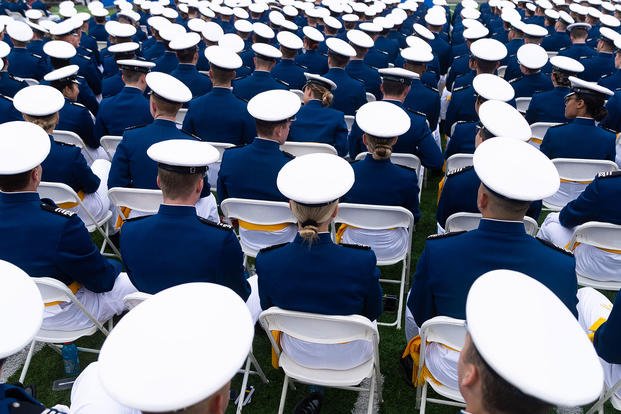
As the Air Force Academy kicks off its fall semester, the institution is grappling with significant staffing changes. U.S. Rep. Jeff Crank has urged the academy’s leadership for a comprehensive staffing strategy following the resignation of numerous civilian faculty members earlier this year.
The academy experienced the departure of over 104 civilian employees, a result of the Department of Government Efficiency’s deferred resignation and early retirement initiatives. These vacated positions, along with an additional 36 roles that remain filled, are scheduled for elimination, according to a memo shared earlier this year. Efforts are underway to reassign the remaining personnel to different roles within the academy.
Of the positions marked for elimination, 52 are faculty roles, with 19 presently occupied. This reduction is necessary to address a $10 million deficit in civilian employee salaries. In line with broader Air Force objectives to cut 5,000 positions by October, the academy is set to reduce its workforce by 140 jobs.
Acting Dean Col. Steven Hasstedt communicated these cuts and the associated budgetary challenges in an email distributed to The Gazette and later shared on social media. The email highlighted that most positions have already been vacated through voluntary resignations earlier this year, leaving only 36 positions currently filled.
At a recent Board of Visitors meeting, Superintendent Gen. Tony Bauernfeind addressed concerns raised by Rep. Crank, emphasizing that the academy is collaborating with the Department of the Air Force and the Air Force Personnel Center. The goal is to recruit active duty and reserve members possessing the necessary academic qualifications to maintain the academy’s educational standards.
While the exact number of faculty positions transitioned from civilian to uniformed personnel remains unspecified, Bauernfeind assured that no academic programs have been discontinued. The academy has introduced two new minors in aerospace materials and “quantum,” with plans to develop a minor in future conflict studies.
Despite the staffing challenges, the academy has reaffirmed its commitment to providing a quality education through a letter to incoming cadets. A clear strategy for faculty and staff layoffs is still under development.
Additionally, the academy is negotiating an arrangement that would allow cadets to earn master’s degrees via the Air Force Institute of Technology at Wright-Patterson Air Force Base in Ohio. This initiative aims to offer cadets, many of whom arrive with substantial college credit, opportunities for advanced degrees.
This summer, the academy welcomed 60 new faculty members who participated in a standard five-day training program to prepare for their teaching roles, Bauernfeind noted. The academy’s unique structure means approximately 25% of its faculty are new annually, as uniformed staff transition into teaching roles. New instructors undergo a five-day orientation and are paired with experienced colleagues to enhance their teaching skills.
Highlighting the importance of civilian faculty, retired Air Force Colonel Kent Murphy advocated during the meeting for the retention of high-quality civilian staff, known for their expertise in cutting-edge fields. He urged lawmakers to request a temporary budget adjustment from Air Force Secretary Troy Meink to safeguard civilian faculty positions.
“Many of them are retired military, and all of them take the responsibility to graduate leaders of character here quite seriously,” said Murphy.
© 2025 The Gazette (Colorado Springs, Colo.). Visit www.gazette.com. Distributed by Tribune Content Agency, LLC.