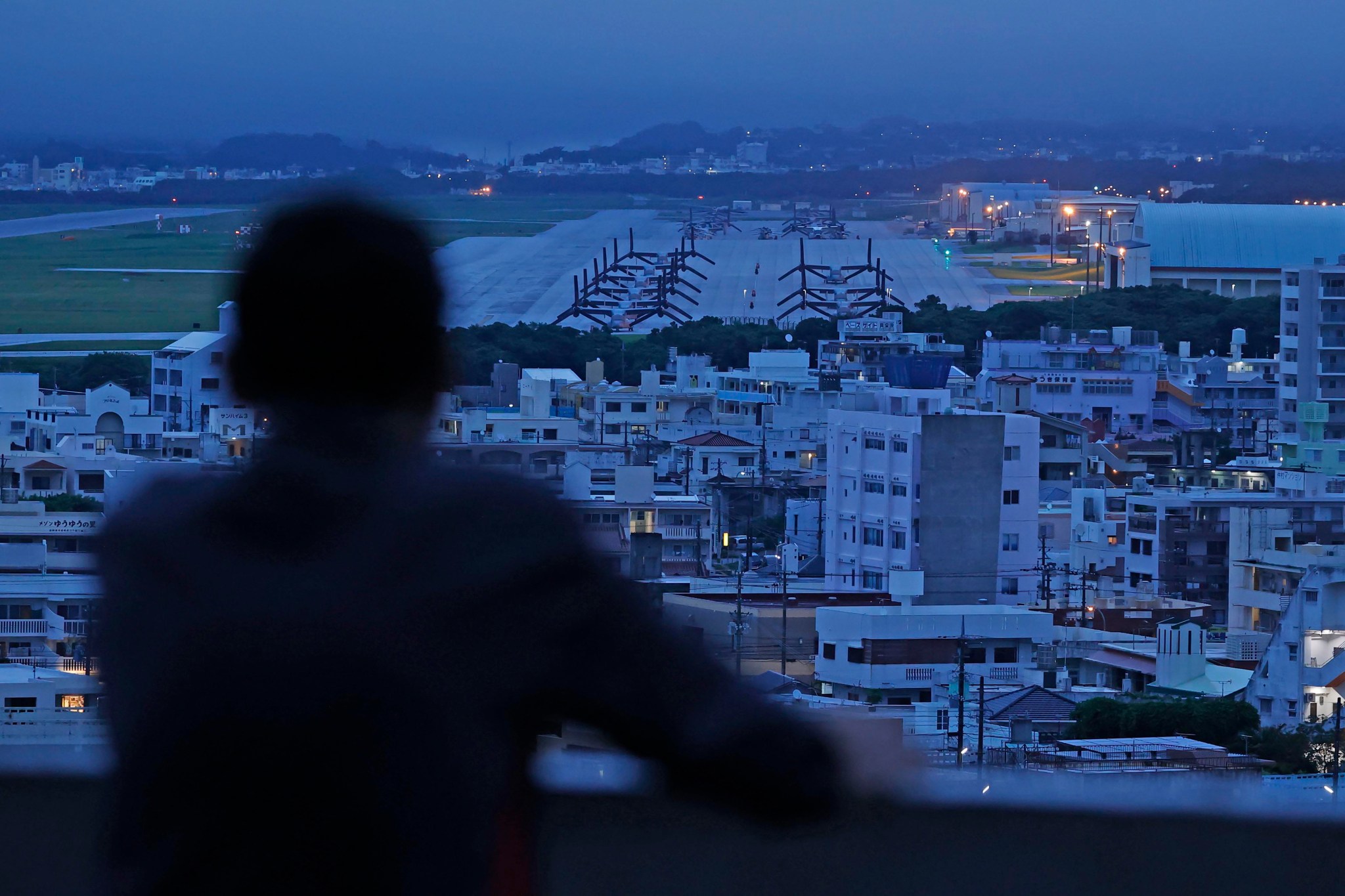
A murder case involving a U.S. Marine stationed in Japan has prompted American military leaders to reshape the rules governing how tens of thousands of service members live and move across Okinawa. The updated restrictions signal how seriously commanders are taking both the safety of local residents and the future of a critical American alliance in the Pacific.
III Marine Expeditionary Force Commander Lt. Gen. Benjamin T. Watson issued a formal update to liberty guidelines on Thursday following a meeting with representatives from the Okinawa Area Coordinating Committee. The changes take effect when the current Period of Reflection concludes Sunday and remain in place through December 7.
The updated order maintains the midnight to 5 a.m. curfew for lower-ranking service members in pay grades E-1 through E-4, while lifting curfew requirements for those ranked E-5 and above. However, one alcohol restriction applies across all ranks: no service member may purchase or consume alcohol outside their primary residence after midnight.
What Triggered the Crackdown
The policy shifts follow the indictment of Marine Lance Cpl. Devin Jacob Ballard, who is accused of the robbery and murder of Anna Yagi, a 39-year-old resident of Naha. Japanese prosecutors allege that Ballard strangled Yagi with a phone cord inside a hotel room before stealing her backpack containing her wallet and other belongings. An autopsy confirmed Yagi died from suffocation. Hotel security footage captured a person whose hair and tattoos matched Ballard’s description entering the room with a woman and later leaving with her belongings.
Ballard is assigned to the III Marine Expeditionary Force headquartered at Camp Courtney in Okinawa.
The case set off a chain of responses within the military. U.S. Forces Japan first ordered a two-day operational pause — essentially a stand-down — to refocus all personnel on standards, discipline, and their responsibilities as members of the Okinawa community. That pause transitioned into the Period of Reflection, which introduced new curfews and tightened supervision at base gates.
Even before Thursday’s updated order, Kadena Air Base had already moved to restrict junior enlisted personnel, imposing an alcohol ban and a 10 p.m. to 5 a.m. curfew of its own. Additionally, investigators found that some off-base establishments were allowing military personnel to drink and remain on the premises past curfew hours in violation of the Period of Reflection — leading to a temporary Emergency Off-Limits Order for at least one bar on the island.
What the New Rules Say
Thursday’s directive makes clear that unit leaders still have room to tighten things further if they see fit.
“Commanders retain the ability to establish more restrictive liberty policies within their respective commands when conditions warrant and are encouraged to clearly communicate those decisions to the force,”
the guidance reads.
The order was developed through analysis, feedback from joint and interagency leaders, and coordination with U.S. Forces Japan. In the coming weeks, the Okinawa Area Coordinator is expected to share findings and recommendations from the Period of Reflection with U.S. Forces Japan for further consideration.
U.S. Ambassador to Japan George Glass amplified the announcement on social media, framing the alliance between the two nations in terms of shared principles.
“The measures announced today by III Marine Expeditionary Force in Japan reaffirm our unwavering commitment to these fundamental principles,”
Glass wrote, referencing
“shared values of trust, responsible behavior and mutual respect”
as the foundation of the U.S.-Japan alliance.
The diplomatic stakes are real. Yagi’s death sparked deep concern among Okinawa residents about the scale of the American military presence on the island. Japanese Prime Minister Sanae Takaichi described the government’s response as a “strong protest” directed at the United States, with demands for full cooperation from U.S. authorities in the ongoing investigation.