A World War II-era intelligence and commando organization that helped lay the groundwork for both the CIA and the Green Berets is making a comeback — at least in name. Defense Secretary Pete Hegseth has signed a directive to revive the Office of Strategic Services, the storied wartime agency that once counted Julia Child, John Ford, and four future CIA directors among its ranks.
In a memo issued Nov. 2, Hegseth directed the renaming of the assistant secretary of defense for special operations and low-intensity conflict to the assistant secretary of war for the Office of Strategic Services. Beyond the name change, the directive would elevate the position to “Code 2” status — a designation reserved for the most senior levels of civilian and military leadership, according to the Defense Department. If approved by Congress, that move would place civilian oversight of special operations forces at the same level as the service secretaries.
The memo also calls for adding 75 civilian staffers and 25 service members to the assistant secretary’s office, along with a $45 million funding increase for special operations forces (SOF).
A Growing Mission, a Strained Budget
The push to elevate and better fund special operations comes as the Pentagon leans more heavily on elite units for high-profile missions — including a January raid aimed at capturing Venezuelan President Nicolás Maduro. But advocates inside and outside the military say resources have not kept up with demand.
While the Pentagon is pursuing a 44% overall budget increase to $1.5 trillion in fiscal year 2027, the budget for U.S. Special Operations Command operations and maintenance would grow far more modestly — from $9.7 billion this fiscal year to $10.9 billion in 2027, according to a Washington Times report.
Sen. Roger F. Wicker, Mississippi Republican and chairman of the Senate Armed Services Committee, laid out the case for greater investment at an April hearing.
“Special operations forces conduct direct action against high-value targets. … They train and advise partner forces, building capacity and strengthening alliances across Latin America, Europe and the First Island Chain. They gather intelligence against our adversaries in hostile environments. They respond to crises worldwide at a moment’s notice. And they operate in the gray zone between peace and war, the context in which much of today’s strategic competition unfolds.”
Wicker continued:
“However, the funding provided to Special Operations Command has not kept pace with the seemingly insatiable demand for its capabilities. The command faces a troubling gap between its mission requirements and available resources.”
Hegseth’s memo frames the moment in similar terms.
“Special operations forces (SOF) remain the Joint Force’s pathfinder and our Nation’s vanguard in an era of global uncertainty and strategic competition,”
the memo reads.
“Despite this contribution to the Joint Force and our Nation, resourcing for SOF remains behind current operational and force posture. It is time for a bold, foundational change.”
What Was the Original OSS?
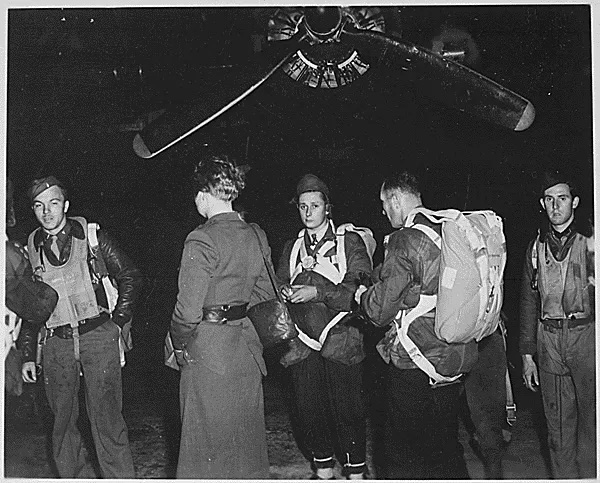
The original Office of Strategic Services was born out of World War II necessity. President Franklin D. Roosevelt, recognizing that American intelligence efforts were fragmented and underpowered, turned to Gen. William “Wild Bill” Donovan — a trusted advisor and World War I veteran — to build something new. Donovan first established the Coordinator of Information (COI) on July 11, 1941. Within a year, he had expanded the concept, drawing inspiration from Britain’s Special Operations Executive to create an organization built around sabotage, espionage, guerrilla warfare, and psychological operations.
The OSS operated under the Joint Chiefs of Staff with Donovan at the helm. As Maj. Nicolas Dockery writes, the organization
“bridged the realms of diplomacy, intelligence and the military. [Donovan] recruited technology, economics, psychology, and finance experts to provide specialized knowledge to military operations. Donovan firmly believed in a two-pronged strategy: physically attacking the enemy’s military forces and targeting their morale and spirit.”
At its peak, the National WWII Museum reports, the OSS numbered roughly 13,000 people — 35% of them women — with about 7,500 serving overseas. Its roster included film director John Ford, chef and writer Julia Child, actor Sterling Hayden, baseball player Moe Berg, historian Arthur Schlesinger Jr., and members of the Ringling Circus family. Four people who would go on to lead the CIA also served in its ranks.
At the structural core of the OSS were the Strategic Services Operations, which Dockery describes as
“consisting of six units, each with its specialized areas of expertise and responsibilities. Notably, units like the Special Operations (SO) and the Operational Group (OG) eventually led to the formation of the twelve-person Operational Detachment-Alpha, commonly known today as the Green Berets.”
Despite its wartime contributions, the OSS was dissolved just 10 days after President Truman ordered it shut down in September 1945, the victim of turf battles with the FBI under J. Edgar Hoover, as well as opposition from the Army, Navy, and State Department. Its functions were eventually folded into the newly created Central Intelligence Agency and the State Department’s Bureau of Intelligence and Research in 1947. Special operations forces wouldn’t have their own dedicated command structure until 1987, when Congress established U.S. Special Operations Command and the office Hegseth is now looking to rename and elevate.