The Iconic Reunion of a Vietnam POW and His Family
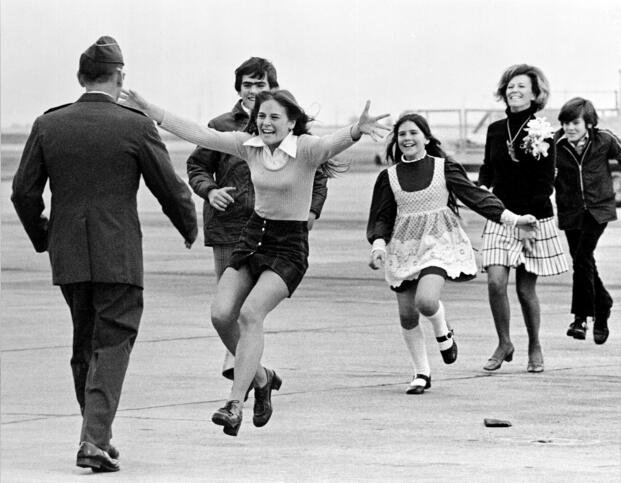
One photograph from 1973 encapsulates the emotional reunion of a U.S. Air Force officer with his family after years as a prisoner of war in North Vietnam. The image, titled “Burst of Joy,” shows the Stirm family eagerly approaching Colonel Robert Stirm at Travis Air Force Base, California. Captured by Associated Press photographer Sal Veder, this moment has become a lasting symbol of the Vietnam War’s end, earning a Pulitzer Prize for its poignant depiction of relief and happiness.
On Veterans Day, retired Col. Robert Stirm passed away at age 92 in Fairfield, California. His daughter, Lorrie Stirm Kitching, confirmed the news, recalling the unforgettable emotions of reuniting with her father. “Just the feelings of that and the intensity of the feeling will never leave me,” she shared. For Kitching, who was 15 at the time, the photograph remains a cherished reminder of their family reunion.
From Combat to Captivity
Stirm’s journey to that moment of joy was fraught with peril. Serving with the 333rd Tactical Fighter Squadron in Thailand, he was shot down during a bombing mission over North Vietnam on October 27, 1967. His aircraft, an F-105 Thunderchief, was struck, and he was shot multiple times while descending by parachute. Captured immediately upon landing, Stirm endured 1,966 days in captivity across five North Vietnamese POW camps, including the infamous “Hanoi Hilton.”
During his imprisonment, Stirm connected with fellow POW John McCain, communicating through a tapping code. Kitching recalled, “John McCain tapped in this joke. First time Dad laughed in jail. I just wish I knew what that joke was. I’m sure it was something very ribald.”
The Photo’s Hidden Sorrows
Despite the joyful image, the personal aftermath for Stirm was complex. A chaplain handed him a “Dear John” letter from his wife, Loretta, upon his release, signaling the end of their marriage. Stirm later expressed that the photograph, while widely recognized, also brought unwanted attention to his personal struggles. “I have changed drastically — forced into a situation where I finally had to grow up,” the letter read in part, reflecting the challenges he faced upon returning home.
Stirm and his wife divorced a year after his return, both remarrying soon after. Despite their separation, they maintained a relationship for family events until Loretta’s death in 2010.
After retiring from the Air Force in 1977 with 25 years of service, Stirm transitioned to a civilian career at Ferry Steel Products, a business founded by his grandfather, and also worked as a corporate pilot.
—-
This story has been corrected; Stirm was flying in an F-105 Thunderchief, not Thunderbird, when shot down.