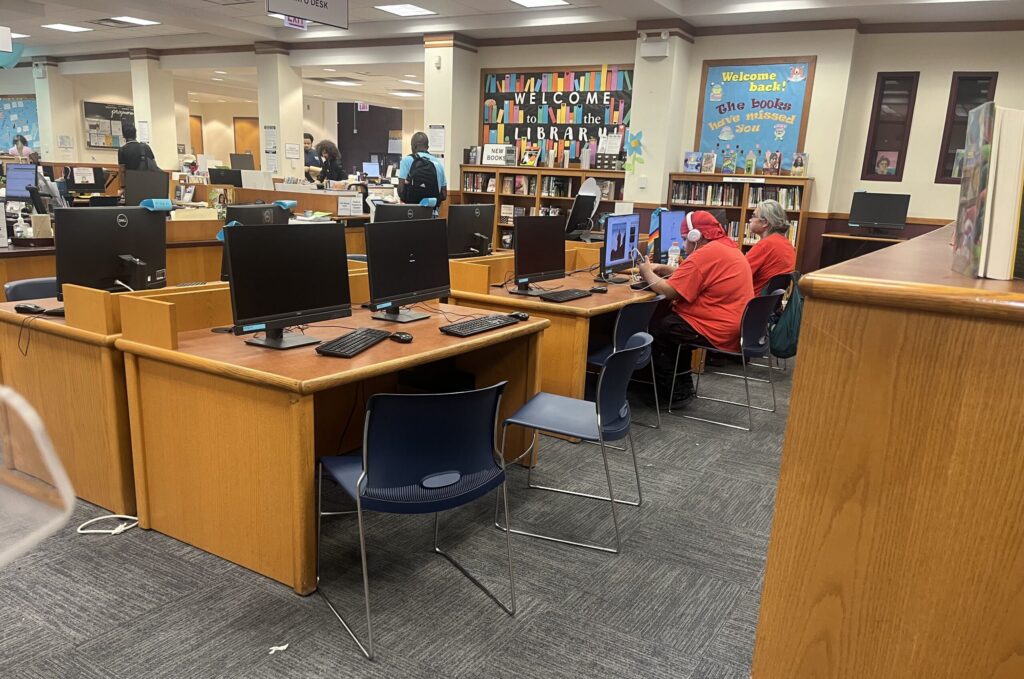
Concerns are mounting as the Trump administration scrutinizes a key federal initiative that provides vital internet access to educational institutions across the United States. This review could lead to significant financial reductions for schools and libraries, potentially affecting thousands of communities.
Annually, the E-Rate program allocates approximately $3 billion to over 100,000 schools and 11,000 libraries to ensure they have affordable internet access and telecommunications services. This initiative ranks as the fifth-largest federal funding source for schools nationwide, as reported by the Schools Superintendents Association (AASA).
The Federal Communications Commission (FCC) has announced its intention to assess whether the program’s goals have been sufficiently met and if its focus should be adjusted. Public comments are being solicited until October 13, which will help shape the FCC’s proposal.
In a climate of reduced federal education funding and tight state budgets, there is growing apprehension among educators and advocates about the potential impact of changes to the E-Rate program on school and library operations.
FCC Chairman Brendan Carr stated in June that the proposed changes aim to “empower parents and ensure that our E-Rate program produces the great educational outcomes stakeholders have intended.” The FCC is exploring whether to adjust the discount rates, which currently range from 20% to 90% based on need, and whether to limit support to specific areas or services.
During a virtual town hall, hosted by the Schools Superintendents Association, discussions included concerns over the FCC’s jurisdiction to alter the program and the financial strain schools would face in maintaining internet services without reallocating funds from other areas.
Without consistent funding, schools and libraries might encounter higher internet costs and less support for rural and high-cost communities, potentially complicating infrastructure upgrades, according to the AASA. The program’s impact is widespread, with nearly 102,000 schools and about 12,000 libraries receiving funding commitments for the 2024 fiscal year, as per recent data. Notably, California, Texas, and New York have thousands of institutions benefiting from E-Rate.
LaTonya M. Goffney, superintendent of Texas’s Aldine Independent School District, highlighted the importance of E-Rate, noting her district’s receipt of $11 million over five years. She emphasized, “Internet connectivity is not a one-time purchase,” and warned that reductions in E-Rate support would necessitate budget cuts elsewhere, significantly affecting district operations.
Shawnda Hines from the American Library Association stated that 73% of U.S. public libraries depend on E-Rate funds for their internet services. Originally established by Congress in 1996, the program has dramatically increased internet access from just 14% of classrooms back then. While the FCC has some regulatory authority, the legal standing of eliminating the program entirely remains unresolved.
Stacy Hawthorne of the EdTech Leaders Alliance explained that internet access is crucial for various school functions beyond teaching, including transportation, security, and administrative tasks. “It’s not just email and Google Docs. Imagine it’s 5:30 a.m., the buses start coming to life. They use GPS routing, and they have parent-facing tracking apps,” she illustrated, underscoring the comprehensive reliance on internet connectivity in schools.