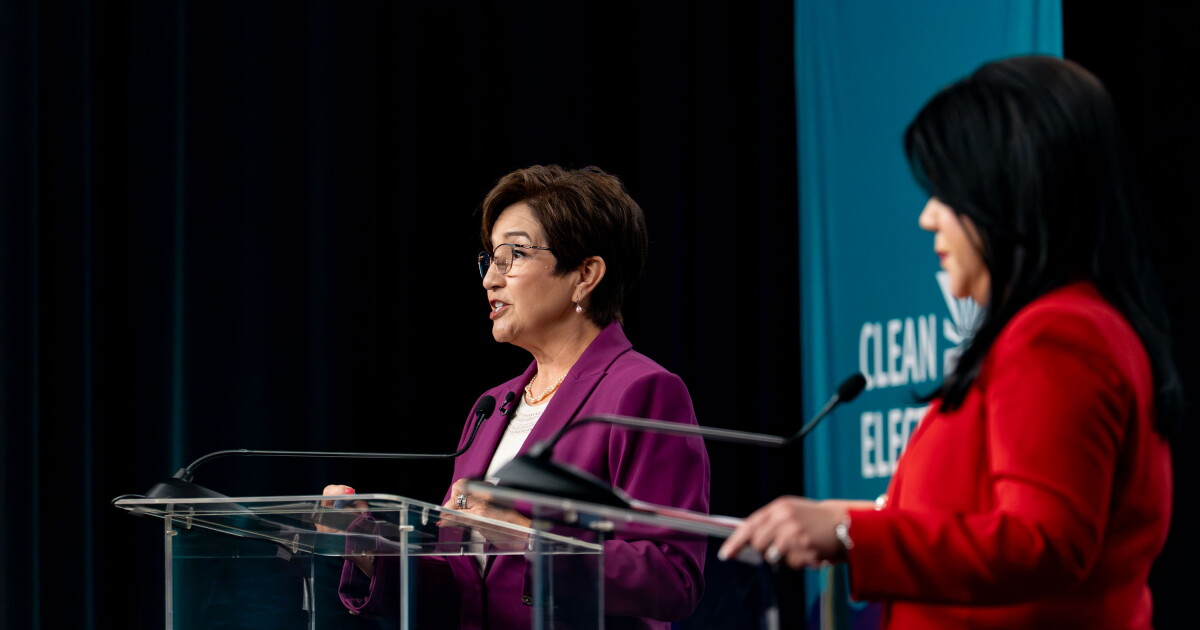
The debate for Arizona’s next superintendent of public instruction reveals a stark divide in approaches to handling private school vouchers. Democrat Teresa Leyba Ruiz and Republican Treasurer Kimberly Yee clash over the best strategies to administer these programs.
While Ruiz contends that the Empowerment Scholarship Accounts (ESAs) require more stringent oversight, Yee advocates for simplifying the voucher process without imposing severe restrictions.
Accountability and Private School Vouchers
Ruiz argues that private institutions benefiting from taxpayer money should be held to the same reporting standards as public schools. Yee, however, counters that enforcing such requirements may infringe upon legal protections. “Many of these children are students with disabilities,” Yee explains, adding that probing their educational needs could violate HIPAA and the Family Educational Rights and Privacy Act.
Despite both candidates agreeing on ending the automatic approval of ESA expenditures under $2,000, Yee proposes a new financial system to monitor purchases in real-time.
Yee champions Arizona’s ESA program as a blueprint for school choice, whereas Ruiz cautions that it serves as a warning against unchecked expansion.
Experience in Education: Teaching vs. Politics
Ruiz highlights her extensive background in education, contrasting it with Yee’s political experience. Ruiz, a former math teacher and community college president, defends her credentials against Yee’s critique of her time in administration. “I am proud of becoming a college president… I am a proud product of our public schools,” Ruiz asserts.
Yee’s career includes roles in the Arizona House and Senate and her current position as state treasurer. She is nearing the end of her tenure in that role.
Educational Challenges: Test Scores and Teacher Shortages
Yee points to low proficiency rates in core subjects as a critical issue, advocating for better phonics instruction and less reliance on calculators. She also calls for the revival of home economics and shop classes, which Ruiz notes have simply been rebranded under different names.
Ruiz identifies the teacher shortage as the top concern, linking it to student performance in reading and math. She stresses the need for higher teacher salaries and a supportive environment to retain educators.
Funding and Resource Allocation
Both candidates agree on the necessity for more school funding but differ on its allocation. Yee proposes reducing administrative costs and supports extending Prop. 123 to channel funds to classrooms. Democratic Gov. Katie Hobbs and GOP lawmakers remain divided on the specifics of this funding initiative.
Ruiz challenges the notion of administrative bloat, emphasizing that more comprehensive funding is essential for schools.
Ensuring School Safety
Yee advocates for increased investment in school resource officers and suggests involving retired law enforcement. Ruiz agrees with the need for SROs where desired but supports allocating resources for counselors and social workers based on each school’s preference.
Incorporating Artificial Intelligence in Education
Both candidates cautiously endorse the use of AI in schools, stressing the importance of ethical guidelines. Yee suggests involving parents in discussions about data privacy, while Ruiz sees value in preparing students for technological advancements.