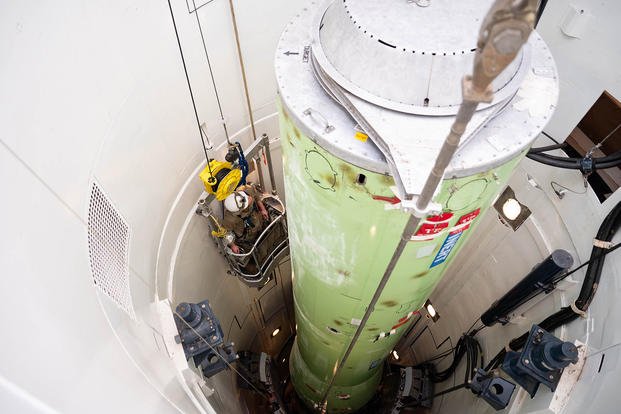
The hidden dangers within the walls of America’s nuclear missile silos have long been suspected by those who served there. These suspicions gained a troubling new dimension when various former missileers reported cancer diagnoses. Among them is veteran Air Force Capt. Monte Watts, who discovered he had chronic lymphocytic leukemia after learning that a fellow operator was battling non-Hodgkin lymphoma.
In early 2022, a pivotal moment unfolded when Lt. Col. Danny Sebeck, a former missileer turned U.S. Space Force officer, highlighted a potential cancer cluster among personnel from the Minuteman III launch control centers at Malmstrom Air Force Base, Montana. Sebeck’s research identified 36 individuals diagnosed with cancer, including himself, with 11 cases being non-Hodgkin lymphoma. This revelation prompted an extensive Air Force investigation into the health risks associated with working at ICBM bases and their environments.
The Air Force launched a comprehensive investigation to examine cancer incidences and environmental conditions across three intercontinental ballistic missile bases and a launch site in California. The investigation aims to conclude by 2025, with interim findings shared through online briefings and town halls. However, many former missileers express concerns that the vast scope of the research might obscure the direct connections they seek between military service and their illnesses, which could expedite benefits from the Department of Veterans Affairs.
The Department of Defense has historically been slow in acknowledging potential environmental diseases, as seen in past efforts by veterans exposed to Agent Orange, contaminated water at Camp Lejeune, and burn pits in Iraq and Afghanistan. In 2001 and 2005, prior Air Force studies at Malmstrom concluded that the launch control centers were safe. However, Sebeck’s findings suggest these studies may have been inadequate due to limited medical record sampling.
PCBs — and the Missileers Exposed to Them
Polychlorinated biphenyls (PCBs), once used in missile control electrical components, have been banned since 1979 due to their toxicity. The Air Force’s Missile Community Cancer Study is comparing cancer rates between the general U.S. population and missile community while investigating environmental factors at bases like Malmstrom, F.E. Warren, Minot, and Vandenberg.
While initial Air Force findings indicate no elevated cancer-related deaths among missileers compared to the general population, the investigation has found non-Hodgkin lymphoma accounted for 5.8% of cancer deaths among those working in launch control centers. Preliminary results showed elevated rates of breast and prostate cancers, though subsequent analysis found no support for these findings.
The final report will incorporate comprehensive data, including civilian cancer registries, to explore potential links between service in the missile community and cancer risk. Gen. Thomas Bussiere emphasized that only the final results will determine if there is an increased cancer risk for missileers.
Concerns among lawmakers have prompted legislative actions, such as Rep. Don Bacon’s amendment for the National Academies of Sciences to review health conditions in missile facilities. “Let’s make sure that we have some outside experts working with the Air Force studying cancer rates with our ICBM missions,” Bacon urged through a social media post.
Benzene, a known carcinogen found in cigarette smoke and vehicle exhaust, is noted as the largest contributor to cancer risk at these bases. Air Force Col. Richard Speakman stated that while health risks are low, monitoring missileers’ health remains appropriate.
Next Steps
Watts, whose experience has been highlighted by the Torchlight Initiative, has requested the Defense Department’s inspector general to investigate the matter. He recalls instances of contamination testing that seemed at odds with the safety protocols for missileers at the time. Now, many practices, such as burning code tapes indoors, have been discontinued, and air circulation improvements have been made.
Sebeck advocates for legislative changes to include missileers affected by contamination in the PACT Act, which supports veterans exposed to pollutants. Meanwhile, Air Force Global Strike Command remains committed to understanding potential health risks for its personnel, as emphasized by spokesperson Maj. Lauren Linscott.
Pending legislation in Congress addresses ongoing concerns, with proposals for regular deep cleanings of launch control centers until they are decommissioned. The Air Force is set to release its final epidemiological report by year’s end.
© 2025 KFF Health News. Distributed by Tribune Content Agency, LLC.