Remote Alaskan Villages Face Dire Consequences as Storm Forces Mass Evacuations
In a dramatic response to a devastating storm, hundreds of residents from remote Alaska Native villages are being transported to safety after their communities were ravaged. Over the weekend, a powerful storm caused significant destruction, resulting in the destruction of homes and the tragic loss of at least one life, with two individuals still unaccounted for.
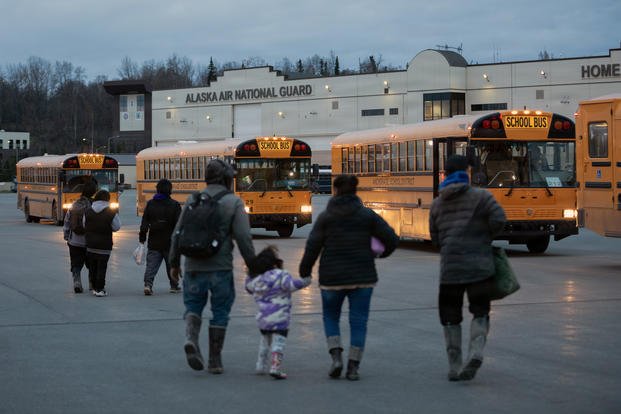
In what is being called one of the largest airlift operations in Alaska’s history, evacuees are being flown approximately 500 miles (800 kilometers) to Anchorage. This follows the rapid filling of a shelter in Bethel, a regional hub city, with numerous displaced individuals.
Storm Impact and Devastation
The remnants of Typhoon Halong delivered a record-breaking storm surge to western Alaska, hitting the coastal villages of Kipnuk and Kwigillingok particularly hard, with water levels surpassing 6 feet (1.8 meters) above the usual high tide mark. The U.S. Coast Guard rescued around two dozen residents from Kwigillingok after their homes were carried away by the floodwaters. Tragically, the body of 67-year-old Ella Mae Kashatok was discovered, and the search for Chester Kashatok, 41, and Vernon Pavil, 71, was halted after their residence was swept away.
In Kipnuk, officials reported that 121 homes were destroyed, though all residents have been accounted for.
Community Profile
The villages of Kipnuk and Kwigillingok, located near the Bering Sea, have a combined population of approximately 1,000, predominantly Alaska Native or American Indian, as indicated by Census Bureau data. These communities are isolated, accessible only by air or water during this time of year.
A video from Kwigillingok captures a house being swept away while onlookers converse in Central Alaskan Yup’ik, the most widely spoken Alaska Native language, with about 10,000 speakers across 68 villages in southwest Alaska.
Progress of the Evacuation Effort
The evacuation operation has seen about 1,600 individuals accommodated in 13 shelters within the Yukon-Kuskokwim Delta. Authorities aim to relocate evacuees to hotel rooms or dormitories. As of Wednesday, roughly 300 evacuees were transported to Anchorage, 500 miles (800 kilometers) east of the affected villages, to the Alaska Airlines Center, which can house around 400 people.
Challenges persist, as the Bethel shelter, situated in a National Guard armory, is experiencing a food shortage, according to FEMA reports. The Yukon Kuskokwim Health Corp. warned the armory shelter might need to shut down without additional resources.
Rebuilding Challenges
With damage assessments ongoing, experts highlight the severe challenges faced by the hardest-hit communities. Rebuilding efforts will require the transportation of most construction materials by air or sea, and the approaching winter adds urgency to the situation.
Emergency officials have declared some homes beyond repair, deeming them unsafe for return, even with temporary fixes.
___
This article has been updated to correct the storm’s impact as a record storm surge rather than rainfall and to clarify the location of the house video as Kwigillingok, not Kipnuk.