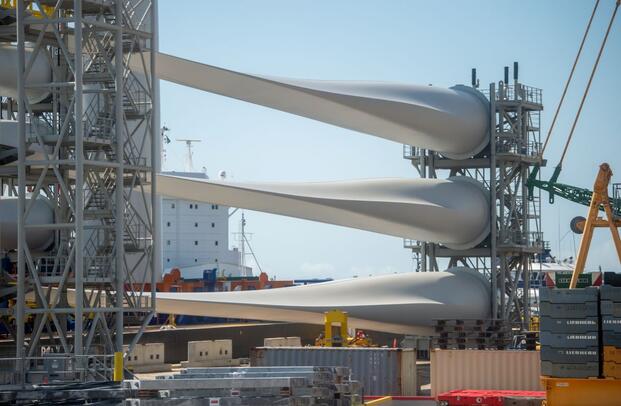
Amid ongoing challenges, the offshore wind industry on the East Coast has won key legal battles, securing a temporary reprieve from efforts to halt its progress. Recent court decisions favored the developers of several critical projects, including New London’s Revolution Wind, countering actions from the Trump administration aimed at stopping these developments.
Legal Victories Amid National Security Concerns
Developers of northeastern offshore wind projects, such as Revolution Wind and Empire Wind, recently saw favorable rulings in federal court. These judgments came in response to the Trump administration’s claims that offshore wind turbines pose national security threats, as purportedly outlined in a classified Pentagon report. The administration has paused offshore wind leases, citing concerns that turbines might interfere with military radar.
However, skepticism abounds regarding these security claims. Critics argue that any potential radar interference from wind turbines was addressed years ago. The U.S. Department of Interior, overseeing offshore energy leases, reports ongoing consultations with military agencies, ensuring concerns about radar and other operational issues have been mitigated.
Impact on the Offshore Wind Industry
Revolution Wind’s developers invested significantly to address military concerns, including funding a software patch for U.S. Air Force radar. A 2024 letter from the Department of Defense assured that the project would not adversely affect military missions. Despite this, the Pentagon remains tight-lipped, offering no further details even under congressional pressure.
U.S. Rep Joe Courtney, a key figure in overseeing defense priorities, expressed frustration at the lack of transparency. “The Department of Defense said this has to be handled by the Department of the Interior, which is crazy if it is a national security issue,” Courtney remarked, highlighting the ongoing communication challenges.
Economic Stakes and Future Prospects
The stakes are high for the northeast offshore wind sector, particularly for regions like New London, now becoming a crucial hub due to substantial investments in offshore wind infrastructure. Norwegian company Orsted, responsible for Revolution Wind, has transformed New London’s State Pier into a modern supply hub, investing millions in its development.
Orsted has committed over $5 billion to offshore wind projects, employing thousands and planning to create more jobs contingent upon continued operations. The project’s completion is crucial for Connecticut’s renewable energy goals, which include generating 2,000 megawatts from offshore wind by 2030.
Despite previous attempts to halt the Revolution and similar projects, the courts have ruled in favor of continued construction, citing lack of evidence for the claimed national security threats. Judge Royce Lamberth stated, “I’m not persuaded that any such emergency exists in this case,” allowing the projects to proceed.
Throughout the planning and construction phases, the Revolution Wind project has navigated extensive federal permitting processes, with active involvement from numerous federal agencies. These include consultations with the Department of Defense and branches such as the Air Force and Navy, ensuring national security considerations were thoroughly assessed.
As the offshore wind industry advances, Orsted remains poised to address any emerging issues in collaboration with government agencies, emphasizing the importance of maintaining open communication channels and avoiding unnecessary project disruptions.