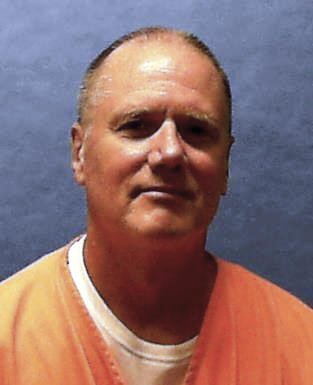
Florida Sets Execution Record with Ninth Execution of 2025
On Thursday, in a year marked by a significant increase in executions, Florida executed Edward Zakrzewski for the brutal 1994 murders of his wife and their two children. This execution, carried out by lethal injection at Florida State Prison near Starke, marks the ninth execution in the state this year, breaking the previous record of eight set in 2014.
Zakrzewski was pronounced dead at 6:12 p.m., according to state officials. The increase in executions this year puts Florida ahead of all other states, with Texas and South Carolina each having conducted four executions. Florida is scheduled to carry out two more executions in August, which will further extend the record.
The tragic events that led to Zakrzewski’s conviction occurred on June 9, 1994, in Okaloosa County. Testimonies revealed that after his wife, Sylvia, pursued a divorce, Zakrzewski attacked her with a crowbar and strangled her. He then turned on their children, Edward, 7, and Anna, 5, using a machete. Sylvia was further assaulted with the machete when Zakrzewski believed she might have survived the initial attack.
Despite numerous appeals over the years, Zakrzewski’s death sentence remained upheld. His final appeal was rejected by the Supreme Court just a day before his execution. On his final day, Zakrzewski awoke early, had a meal of fried pork chops, root beer, and ice cream, and received a visitor. He reportedly remained compliant as he awaited execution, according to Paul Walker, a spokesperson for the Florida Department of Corrections.
Before this execution, the U.S. had seen 26 court-ordered executions in 2025, with Florida’s last execution occurring on July 15 involving Michael Bernard Bell. Upcoming executions under the warrants signed by Governor Ron DeSantis include Kayle Bates on August 19 and Curtis Windom on August 28.
Florida’s execution protocol involves a three-drug mixture, including a sedative, a paralytic, and a drug that stops the heart, as noted by the Department of Corrections. Critics of the execution highlighted Zakrzewski’s past military service as an Air Force veteran and the narrow 7-5 jury decision recommending his execution, which would not have sufficed for a death penalty under current Florida law.