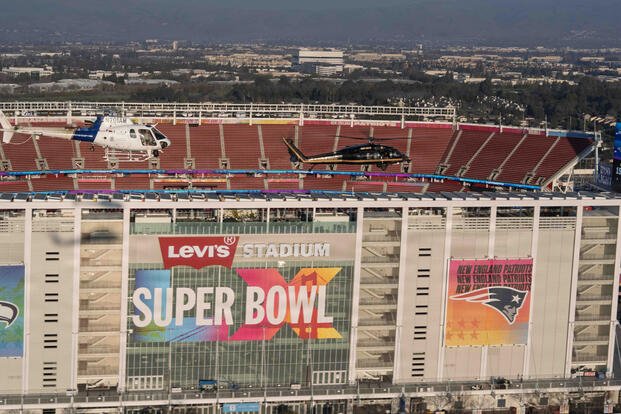
Super Bowl LX: A Showcase of Security and Coordination
The much-anticipated Super Bowl LX, featuring the New England Patriots and Seattle Seahawks, isn’t just a focal point for sports fans. Behind the spectacle, an intricate web of security measures ensures the event’s safety, with the U.S. Armed Forces playing a pivotal role.
On February 8th, a collaborative flyover involving the Air Force and Navy will mark the U.S.’s 250th birthday at Levi’s Stadium in Santa Clara, California. This grand event relies on the expertise of numerous individuals, including those from the North American Aerospace Defense Command (NORAD), who vigilantly protect the skies and seas from potential threats.
NORAD, a joint U.S.-Canadian defense initiative established in the 1950s, is tasked with detecting and defending against airborne threats to North America. Their involvement in securing the Super Bowl has been pivotal for decades, intensifying post-9/11.
“Overall, we know what our objective is,” Lt. Col. Jeffrey Brandon explained to Military.com. “We build a gameplan to achieve that objective, and then we ensure we do that via redundancy and communication.”
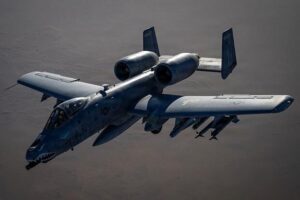
This year’s flyover will include two Air Force B-1 Lancers from South Dakota, two F-15C Eagles from California, and Navy F/A-18E Super Hornets and F-35C Lightning IIs from Naval Air Station Lemoore.
Training and Readiness
Lt. Col. Brandon, who also commands a maintenance squadron with the California Air National Guard’s 144th Fighter Wing, emphasizes constant vigilance. His team collaborates with the FAA to develop event-specific strategies that surpass ordinary protocols, ensuring the Super Bowl’s safety.
“We’re always training for stuff like this,” Brandon said. “The Super Bowl is a new one personally for me. But overall, our job is to be ready for any of these events or engagements that do come up around the year.”
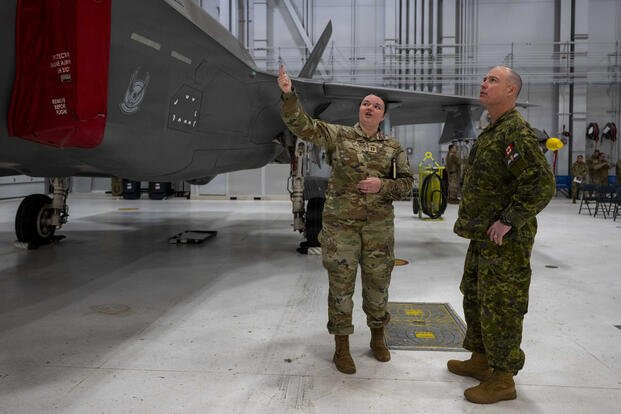
NORAD’s wide-reaching operations involve a variety of aircraft ready for civil air patrol, including F-15C Eagles and F-16s. While specific units aren’t disclosed for operational security, they are integral to maintaining airspace safety.
Temporary Flight Restrictions and Safety Measures
As teams prepare for the game, NORAD and its partners ensure airspace security. Temporary Flight Restrictions (TFRs) span about 30 miles around the stadium, with the FAA coordinating these efforts. Special procedures are in place for various Bay Area airports to handle increased air traffic effectively.
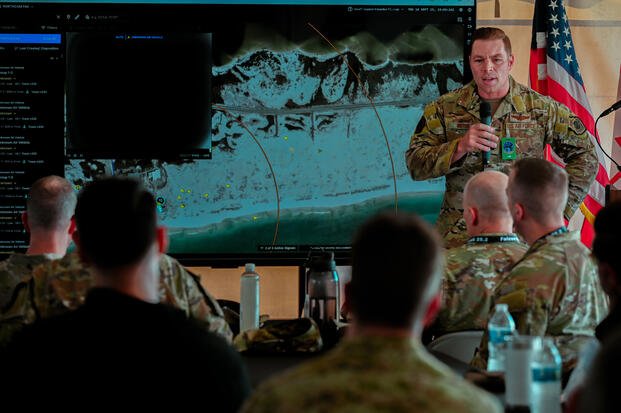
To enforce these measures, the FAA has designated a “No Drone Zone” around Levi’s Stadium. Violators face steep penalties, including fines and potential criminal charges, underscoring the emphasis on safety and compliance.
Responding to Airspace Intrusions
If unauthorized aircraft enter restricted zones, NORAD pilots are ready to respond swiftly. Lt. Col. Brandon outlined the procedures, which include intercepting and guiding rogue crafts out of restricted areas. Most intrusions result from oversight, with pilots generally complying once errors are realized.
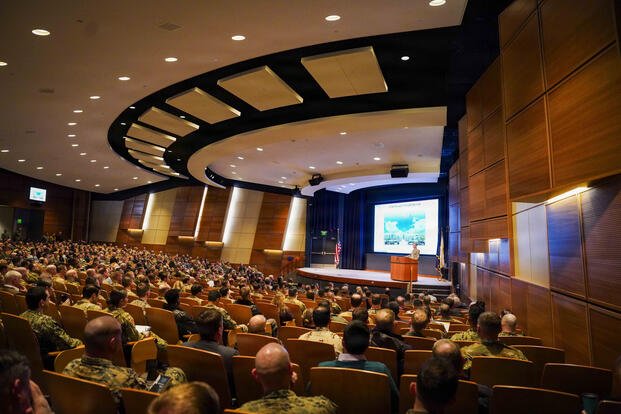
Brandon stressed the importance of readiness and adaptability when handling unexpected situations, ensuring NORAD’s mission success through rigorous training and coordination.