SpaceX Takes the Lead as ULA Faces Setbacks with Vulcan Rocket
In a significant shift within the space industry, SpaceX has emerged as the dependable choice for national security launches, a role previously dominated by United Launch Alliance (ULA). This change comes as ULA contends with persistent delays in the development and certification of its Vulcan rocket.
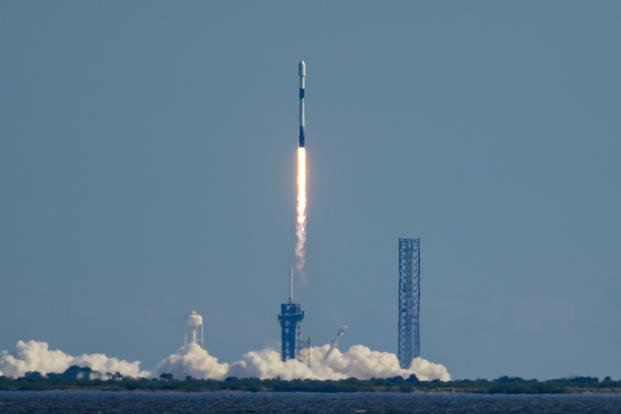
This Friday, SpaceX is scheduled to launch the GPS III-7 mission from Cape Canaveral Space Force Station’s Space Launch Complex 40 using a Falcon 9 rocket. The launch window is from 1:23-1:38 p.m., with a fallback date on Saturday from 1:18-1:34 p.m. However, the weather outlook from Space Launch Delta 45’s weather squadron predicts only a 45% chance of favorable conditions for the launch on Friday, improving slightly to 50% on Saturday.
Originally awarded to ULA under the National Security Space Launch Phase 2 contract, the GPS satellite mission was reassigned to SpaceX due to ULA’s prolonged delay in Vulcan’s certification. This mission marks the second such transfer from ULA to SpaceX, as the Space Force accelerates its mission timelines for national security purposes.
“It highlights another instance of the Space Force’s ability to complete high priority launches on a rapid timescale, which demonstrates the capability to respond to emergent constellation needs as rapidly as space vehicle readiness allows,” stated Space Force Col. Jim Horne, senior materiel leader of launch execution with the Assured Access to Space program.
The latest GPS satellites, built by Lockheed Martin, promise threefold accuracy improvements and are eight times more resistant to jamming compared to the existing 38 satellites in the U.S. GPS constellation.
The NSSL Phase 2 contract, covering task orders from 2020 to 2024, initially allocated 60% of the launches to ULA. ULA’s Vulcan was slated to handle these missions, with the first launches planned by summer 2022. However, as Vulcan encountered various setbacks, including delays due to COVID-19, engine procurement issues from Blue Origin, and technical challenges, the timeline extended significantly.
ULA has managed to complete only one of the 26 assigned missions under the contract, relying on its remaining Atlas V rockets. Meanwhile, SpaceX has been awarded additional missions due to Vulcan’s delays. Despite the setbacks, ULA is expected to regain two missions previously transferred to SpaceX.
ULA’s Vulcan finally achieved its first flight in January 2024, but certification issues, including a booster motor detachment during a subsequent flight, have delayed its national security certification until March 2025. Major Gen. Stephen G. Purdy, acting assistant secretary of the Air Force for Space Acquisition and Integration, noted that the first national security launch on Vulcan is anticipated no sooner than July.
Purdy expressed concerns over ULA’s delays in a written testimony to the U.S. House Armed Services Committee’s Subcommittee on Strategic Forces, emphasizing the impact on Space Force mission objectives and the need for ULA to address its challenges.
As ULA works to overcome its backlog, SpaceX has secured a larger share of the Phase 3 contracts, receiving 52% of the planned missions over the next five years. ULA’s share has decreased to 35%, while Blue Origin has been awarded 13% of the contracts.
ULA is slated to conduct a commercial launch for Amazon using its Atlas V rocket, aiming for a liftoff no earlier than June 13. This follows the initial launch for Amazon’s Project Kuiper, which seeks to rival SpaceX’s Starlink internet constellation.
In contrast, SpaceX has already completed 64 Falcon 9 missions this year, 43 of which originated from the Space Coast.
————-
©2025 Orlando Sentinel. Visit at orlandosentinel.com. Distributed by Tribune Content Agency, LLC.
© Copyright 2025 Orlando Sentinel. All rights reserved. This material may not be published, broadcast, rewritten or redistributed.