Tensions continue to escalate in the Middle East as Iran’s Revolutionary Guard, a key player in the suppression of recent protests, declared its readiness against rising U.S. military presence in the region. The situation remains volatile following a crackdown that reportedly resulted in thousands of deaths.
Nournews, closely linked to Iran’s Supreme National Security Council, quoted Gen. Mohammad Pakpour, commander of the Revolutionary Guard, cautioning the U.S. and Israel against missteps. “The Islamic Revolutionary Guards and dear Iran stand more ready than ever, finger on the trigger, to execute the orders and directives of the Commander-in-Chief,” Pakpour stated.
U.S. Military Posturing
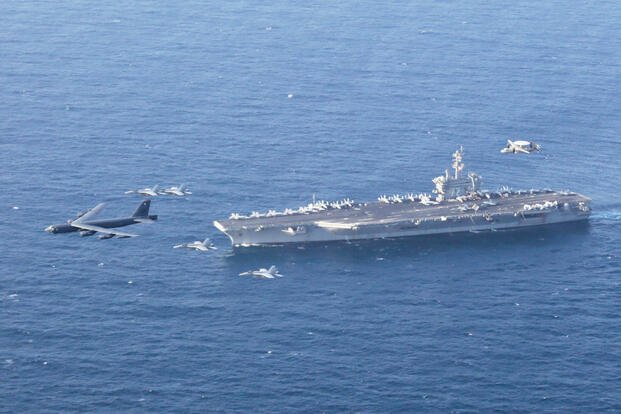
The U.S. has responded with strategic military maneuvers, moving warships closer to Iran. President Donald Trump, aboard Air Force One, revealed that a substantial fleet, including the USS Abraham Lincoln, was approaching the Indian Ocean as a precautionary measure.
President Trump has established firm boundaries regarding military action: the killing of peaceful demonstrators and mass executions of detained protesters. Despite his claims that Iran stopped the execution of 800 detainees, Iran’s top prosecutor, Mohammad Movahedi, denied such allegations.
Trump further referenced past negotiations with Iran over its nuclear program, recalling the U.S. and Israel’s military actions during a 12-day conflict in June, and warned of potential future strikes that would dwarf previous ones.
Impact on Air Travel
The sensitive climate has prompted airlines to reassess their routes. Air France announced temporary cancellations of flights to Dubai, citing the “current situation in the Middle East.” The airline assured that flight safety and security remain their top priority. Other airlines like KLM, Transavia, and Luxair also canceled flights to Dubai and Tel Aviv.
Escalating Fatalities
Despite a lull in protests, the aftermath of the crackdown continues to be felt, with rising death tolls reported by activists amid a comprehensive internet blackout in Iran. The Human Rights Activists News Agency, based in the U.S., estimates the death toll to be over 5,000, with more than 27,700 people arrested. The Iranian government, however, reported a lower death toll of 3,117, amidst past tendencies to underreport fatalities. This unrest draws parallels to the upheaval during Iran’s 1979 Islamic Revolution.