The United States has taken decisive military action in Syria, targeting the Islamic State group following a deadly ambush that claimed the lives of two U.S. troops and an American interpreter. In response to this attack, the Trump administration authorized a comprehensive strike aimed at dismantling IS infrastructure across central Syria.
According to a U.S. official, the operation was “large-scale,” impacting 70 sites associated with IS. The official, who spoke anonymously about the sensitive nature of the operation, indicated that additional strikes could be anticipated.
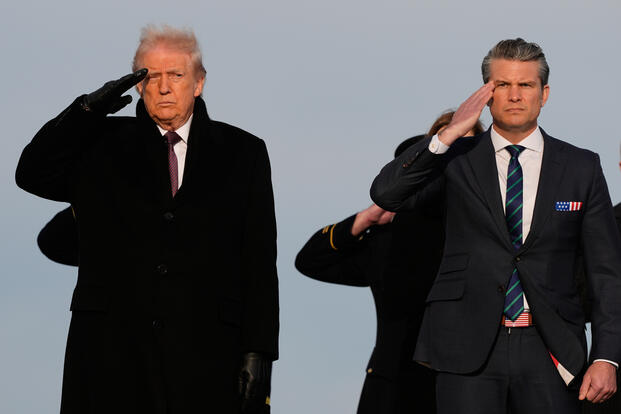
Defense Secretary Pete Hegseth characterized the operation as a measure of revenge rather than a declaration of war. On social media, he affirmed, “This is not the beginning of a war — it is a declaration of vengeance. The United States of America, under President Trump’s leadership, will never hesitate and never relent to defend our people.”
Strategic Shifts in U.S. Military Focus
Despite the recent focus on Syria, the Trump administration has been shifting its strategic priorities towards the Western Hemisphere. The U.S. has been deploying naval resources in the Caribbean to curb drug trafficking and has vowed to intercept sanctioned oil shipments as part of its pressure campaign against Venezuela’s leadership. For more information, please visit this article, this page, this information, and this link.
The redeployment of resources includes the arrival of the U.S.’s most advanced aircraft carrier in South American waters, indicating a strategic pivot from the Middle East. Further details can be found here and here.
Retaliation and Statements
President Donald Trump has been vocal about the U.S.’s stance following the attack in Syria. He promised “very serious retaliation” against IS, holding them responsible for the attack. His commitment to countering IS was reiterated during a speech, where he described the operation as a “massive strike” against “ISIS thugs in Syria who were trying to regroup.”
In addition, Trump expressed his support for Syrian President Ahmad al-Sharaa and issued a stern warning to IS through a social media post, stating, “All terrorists who are evil enough to attack Americans are hereby warned — YOU WILL BE HIT HARDER THAN YOU HAVE EVER BEEN HIT BEFORE IF YOU, IN ANY WAY, ATTACK OR THREATEN THE U.S.A.” More on Trump’s stance can be found here.
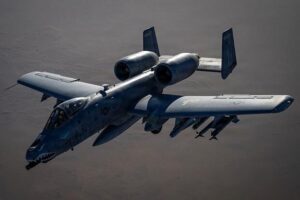
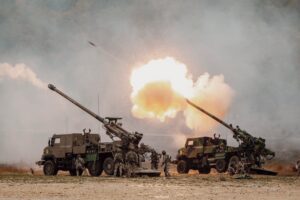
The military operation involved various aircraft and artillery, including F-15 and F-16 fighter jets, A-10 Thunderbolt aircraft, AH-64 Apache helicopters, and HIMARS rocket artillery. U.S. Central Command confirmed the deployment of over 100 precision munitions.
Implications for U.S.-Syria Relations
This military action represents a significant test for the evolving relations between the U.S. and Syria, especially following the removal of Bashar Assad a year prior. Trump emphasized Syria’s cooperation with U.S. forces and noted al-Sharaa’s displeasure with the attack, alongside ongoing efforts to expand military collaboration. The dynamics between the two nations are further discussed here and here.
Syria’s foreign ministry stressed the necessity for global cooperation against terrorism and reiterated its commitment to eradicating IS. Syrian state media reported that U.S. strikes targeted IS locations in Deir ez-Zor, Raqqa, and near Palmyra, focusing on weapons storage and command centers. A detailed report on Palmyra can be found here.
Remembering the Fallen
The tragic attack in Syria resulted in the deaths of Sgt. Edgar Brian Torres-Tovar and Sgt. William Nathaniel Howard, both members of the Iowa National Guard, along with Ayad Mansoor Sakat, an interpreter from Michigan. For more about the victims, visit this page.
The incident also wounded other U.S. and Syrian personnel. The gunman, who had recently joined Syria’s internal security forces, attacked a meeting between U.S. and Syrian officials, leading to his death during the ensuing confrontation.