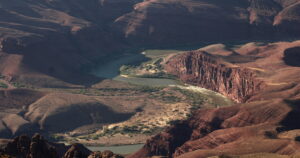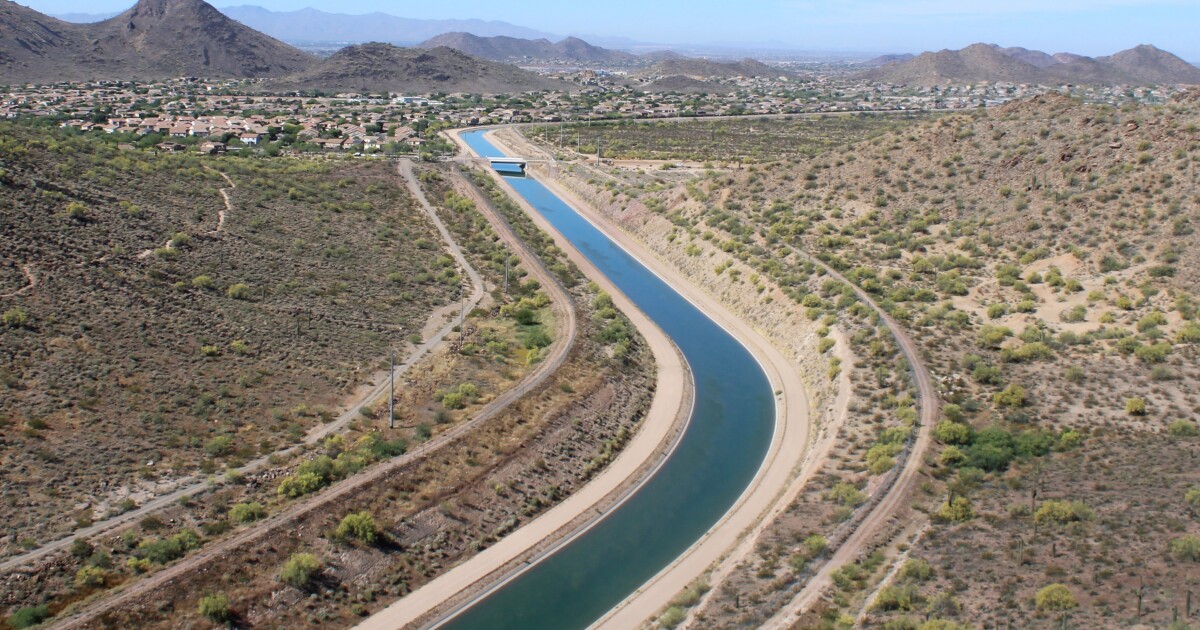
A new plan has been introduced to address the distribution of the Colorado River’s waters, potentially imposing significant water reductions on Arizona. This has sparked criticism from Arizona officials who are seeking ways to mitigate the impact of these proposed reductions.
The federal strategy, disclosed on Friday, permits the reduction of water supplies to Arizona, California, and Nevada by as much as 40%. Such drastic cuts would occur only under extreme circumstances, but they could become necessary if the current dry conditions persist over the next decade.
According to the Arizona Department of Water Resources, these potential reductions could “devastate Arizona’s water users and its economy.” The federal plan outlines a decade-long framework for river management, requiring policymakers to reconvene biennially to reassess conditions and adjust water-sharing rules as needed. More details about the reductions for 2027 and 2028 are expected soon, with Arizona officials anticipating the inclusion of elements from a collaborative proposal put forward by Arizona, California, and Nevada. This proposal suggests voluntary cutbacks of around 20% to avoid the more severe reductions outlined in the federal plan.
Arizona Governor Katie Hobbs expressed her concerns, stating that the federal plan includes “unacceptable options” that disproportionately affect Arizona and advocated for the adoption of a “commonsense, compromise proposal” from her state and its allies.
The governor’s press release emphasized that the Lower Basin agreement would “protect Arizona from massive water cuts” and ensure a fairer distribution of reductions among the Lower Basin States, thereby safeguarding the water supply crucial to Arizona communities.
Arizona’s senators, Ruben Gallego and Mark Kelly, issued a joint statement expressing concerns that the new plan “could place an unfair burden on Arizona.” They urged the Upper Basin states, including Colorado, Utah, Wyoming, and New Mexico, to contribute more to the solution, as these states have not volunteered for mandatory cutbacks despite being legally required to deliver a certain amount of water to their downstream neighbors.
Gene Shawcroft, Utah’s chief water negotiator, defended the Upper Basin states’ position, stating that they face natural reductions in water supply due to climate change and drought. He acknowledged the importance of a system based on available water rather than demand, appreciating the federal plan’s recognition of this need.
The ongoing stance of the Upper Basin states remains a contentious point in negotiations, with Arizona officials suggesting a shift in expectations is necessary for a long-term agreement among the seven states. The Arizona Department of Water Resources appears optimistic that its voluntary reduction proposal, a response to the “increasingly bleak scenario” of stalled talks, will gain federal approval.

Federal and state officials are still striving for a seven-state consensus, with the federal plan keeping open the possibility for states to devise a collective solution that could replace the federal management approach. John Berggren, a water policy expert with Western Resource Advocates, sees the federal framework as providing “short-term certainty” and an opportunity for states to explore new negotiation strategies.
More information is awaited regarding the federal government’s operational guidelines for 2027 and 2028. JB Hamby, California’s chief water negotiator, described the plan as “an important milestone” that sets the boundaries for operations over the next decade without finalizing the Basin States’ negotiations or specific operating decisions.