Arizona Legislature Anticipates Movement on Budget Proposal
The political landscape in Arizona might witness a significant shake-up as the state’s legislative Republicans prepare to unveil their budget proposal. With expectations that the plan could reach the governor’s desk by the week’s end, there’s hope this could lift the current pause on legislative bills imposed by Governor Katie Hobbs.
Howard Fischer from Capitol Media Services provided insights into the current legislative scenario in a recent conversation.
Inside the Budget Proposal
MARK BRODIE: Good morning, Howie.
HOWARD FISCHER: Good morning. We’re all out here praying for the end of the session, which should have ended — according to their own schedule — last week.
MARK BRODIE: Yeah, that never happens, though. Come on. What do we know about what might be in this budget proposal?
HOWARD FISCHER: The proposal notably lacks several elements from the governor’s original $18.7 billion budget. Key components absent include an $80 million cap on family incomes for vouchers, a tax on short-term rentals for utility relief funding, and a sports betting fee increase. Additionally, an extension of Prop. 123, which previously generated $300 million annually, appears to be excluded.
MARK BRODIE: Money for schools.
HOWARD FISCHER: None of that seems to be there.
MARK BRODIE: OK, so that stuff the governor wanted that won’t be in there. Is it safe to assume there’ll be stuff that is in there that the governor won’t want?
HOWARD FISCHER: The budget seems to be a “skinny” version, around $17.8 billion, a $900 million decrease from the original. Expected cuts include a 5% reduction across various agencies, alongside fund sweeps and slightly higher-than-anticipated revenue, though still less than hoped for.
Challenges persist, such as mandated increases in K-12 education funding to accommodate more students and inflation, and addressing court-ordered healthcare improvements in state prisons. The Arizona Health Care Cost Containment System faces increased costs due to more severe conditions among its reduced number of participants.
MARK BRODIE: So Howie, what are folks at the Capitol saying in terms of whether this is — like, this is the budget, whether the governor might actually sign it, whether this is sort of a restarting point for negotiations? Where do we think they stand?
HOWARD FISCHER: It’s unlikely the governor will sign this proposal as it doesn’t align with her priorities. However, it could reignite stalled negotiations. The governor previously halted discussions in March, expressing dissatisfaction with the lack of serious engagement from lawmakers. Subsequently, she initiated a moratorium on bill submissions, threatening vetoes, a stance she maintained by vetoing three bills sent her way.
MARK BRODIE: What are some of those bills, Howie? I know that you mentioned there’s a bit of a pipeline, a logjam in that pipeline of bills that the Legislature has not been sending to the governor, because they know that she’ll veto it. It sounds like — and you’ve reported that — she’s ready to end that moratorium.
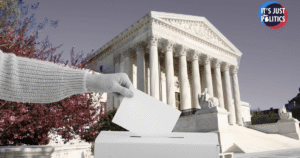
HOWARD FISCHER: The legislative backlog includes election-related proposals, some introducing additional ID requirements, and fraud deterrents like holographic foil for ballots. Also included are measures limiting vaccine mandates in businesses and government sectors, and contentious religious law debates.
There are proposals with potential gubernatorial support, such as legislation mandating income from children’s TikTok activities be placed in trust funds, and discussions on flag display rights in homeowner associations, potentially expanding to include Israeli flags.
MARK BRODIE: All right, lots to keep our eye on as usual. Howard Fischer with Capitol Media Services. Maybe happy budget week?
HOWARD FISCHER: Maybe, maybe, maybe. As my grandmother would say, “From your lips to God’s ears.”
KJZZ’s The Show transcripts are created on deadline. This text is edited for length and clarity, and may not be in its final form. The authoritative record of KJZZ’s programming is the audio record.