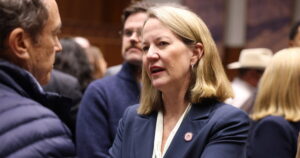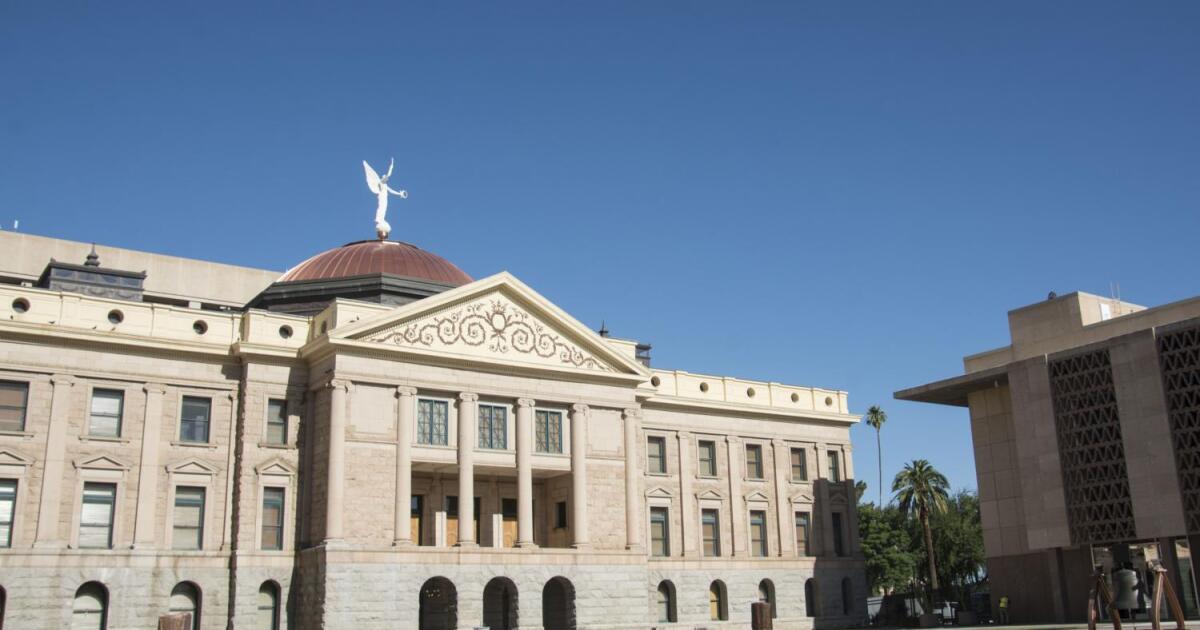
Arizona’s legislative salary debate is capturing attention as lawmakers and the governor navigate the complexities of pay raises amidst political and economic challenges. While Governor Katie Hobbs recalls her earlier days as a state senator earning $24,000 annually, she currently earns $95,000. Yet, her empathy for current legislators receiving the same $24,000 salary appears limited.
Governor Hobbs remarked, “It’s certainly not sustainable to live on $24,000 a year,” acknowledging the evolving nature of legislative work from a part-time to a more full-time commitment. Despite this, she remains hesitant to advocate for increased salaries without tangible legislative accomplishments, urging lawmakers to demonstrate fiscal responsibility and collaboration.
Republican legislators, in contrast, attribute the impasse to Hobbs, citing her budget proposal’s reliance on uncertain federal reimbursements and contentious educational funding reforms as unrealistic. They point out that Hobbs withdrew from budget discussions, complicating resolutions to the salary issue.
Several legislative salary reform proposals aim to address these challenges. The current system, requiring voter approval for any salary adjustments, has resulted in stagnant pay since 1998. Efforts to overhaul this system include proposals to eliminate voter ratification in favor of automatic adjustments or new commission structures.
Proposed Legislative Salary Reforms
Among the proposals is Republican Sen. Shawnna Bolick’s plan tying state senator salaries to a percentage of congressional pay, potentially raising them to $52,200. Her proposal also includes adjustments to terms and restrictions on post-office employment opportunities. Despite its complexity, this proposal failed to gain traction.
Phoenix Rep. Stacey Travers advocates for a $35,000 base salary with cost-of-living adjustments, paired with tenure limits to enhance voter appeal. Like Bolick’s, this proposal has not advanced.
Democratic Rep. Chris Mathis suggests relinquishing voter oversight on legislative pay, empowering lawmakers to set salaries independently. This proposal also stalled.
Advancing Measures
Two proposals are progressing through the legislature. Sen. John Kavanagh’s initiative introduces inflation indexing for salaries, retroactive to 1998, potentially doubling current pay to $48,000. While this could be seen as a sharp increase, it aligns with historical voter-approved compensation levels.
Sen. David Gowan’s SCR 1012 proposes a new commission to establish state official salaries, with legislative pay linked to a percentage of the governor’s salary. This could increase legislator earnings to $57,000. However, the initiative might pressure the commission to elevate gubernatorial pay, indirectly benefiting legislators.
Governor Hobbs remains non-committal on what constitutes appropriate gubernatorial compensation, emphasizing broader economic challenges faced by Arizonans. She contrasts her position with gubernatorial candidate Hugh Lytle, who pledges to donate his salary if elected, noting her financial constraints as a non-billionaire.