In the heart of Beijing, culinary traditions from China’s imperial past continue to thrive, offering a taste of history with every bite. At the renowned Fangshan Restaurant, the legacy of imperial cuisine remains alive, with dishes that once graced the tables of China’s emperors.
According to legend, Empress Dowager Cixi dreamed of a pastry known as the ‘minced pork pancake’ during the Qing Dynasty, which was later served to her delight. Chef Zhou Tong, from Fangshan Restaurant, recounts, “It was originally called ‘minced pork pancake,’ but because it had fulfilled her dream, it later became known as ‘dream pastry.’” This establishment, founded in 1925 by chefs from the Qing Dynasty, is located in Beihai Park, a historical royal retreat.
Meals Steeped in Tradition
Imperial cuisine is a rich tapestry of daily meals and grand feasts held at the emperor’s court. Each meal followed strict protocols, as explained by Teng Deyong from the Palace Museum, where rituals such as drinking milk tea were precursors to Qing-dynasty banquets. The emperor’s offering of wine or food to his guests involved ceremonial acts of respect before consumption.
Rituals extended beyond banquets. The Palace of Earthly Tranquillity hosted sacrificial ceremonies featuring unsalted boiled pork, considered an honor to receive. Wandi Wang, a professor at Lehigh University, highlights the cultural significance of unseasoned dishes, linking them to ancient traditions of simplicity as described in the “Book of Rites.”
Crafting Pastries with Precision
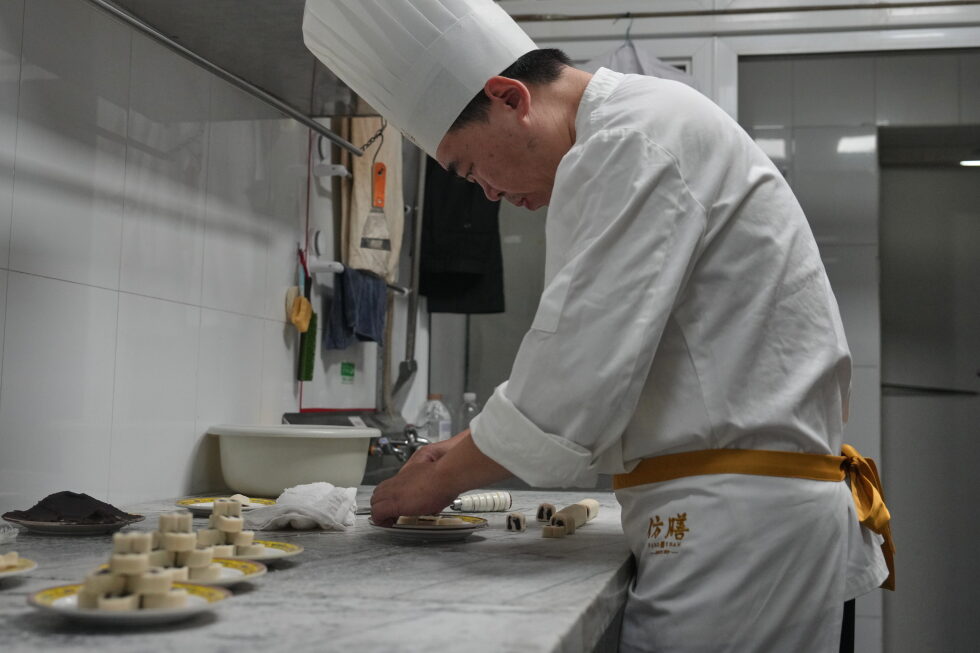
Pastries hold a special place in imperial cuisine, with Fangshan’s chefs like Zhou preserving recipes from the past. The creation of these sweets, including the dream pastry, adheres to traditional methods passed down through generations. Because of this, Fangshan chefs use no modern appliances, ensuring an authentic texture and taste that machines cannot replicate.
Fangshan’s menu includes popular items like pea flour cake and red bean roll, with customers frequently ordering them by the hundreds. As Zhou notes, “A machine may be more convenient, but the texture is completely different.” The dedication to preserving the delicate qualities of handcrafted pastries is evident in every dish.
Rediscovering Ancient Techniques
Executive chef Fan Liangliang of Fangshan Restaurant had to adapt his culinary skills to align with traditional methods after joining the restaurant. Techniques like “Nizihuo,” which involves shaping minced ingredients into decorative forms, exemplify the uniqueness of imperial cuisine. Fan describes this as a balance of innovation, aesthetics, and nutrition, a hallmark of dishes once served at the imperial table.
While rare ingredients such as bear paws are no longer used, adaptations ensure the essence of each historic dish is maintained. Chef Fan emphasizes, “It’s not simply a collection of dishes from the two cultures. It represents the blending of their different approaches to food into a unified cuisine.”
Reflecting Cultural Heritage Through Food
Chinese cuisine has always been more than sustenance; it embodies cultural values and historical narratives. Professor Wandi Wang explains that dishes like cold noodles described by poet Du Fu symbolize political loyalty and ambitions. This rich culinary heritage continues to evolve, merging historical practices with contemporary tastes.
At Fangshan, diners experience more than just a meal. Chef Fan hopes they feel “the weight of history” through the fusion of Manchu and Han traditions, reflecting the cultural tapestry of the Qing era and beyond.
___
AP video journalist Wu Jia contributed to this report.
___
Associated Press religion coverage receives support through the AP’s collaboration with The Conversation US, with funding from Lilly Endowment Inc. The AP is solely responsible for this content.